Gatherings & Moments
Events
Meaningful gatherings, retreats, and experiences that have enriched this sabbatical journey.
August 27, 2026
Fitted for a Cassock at Harcourts, Toronto
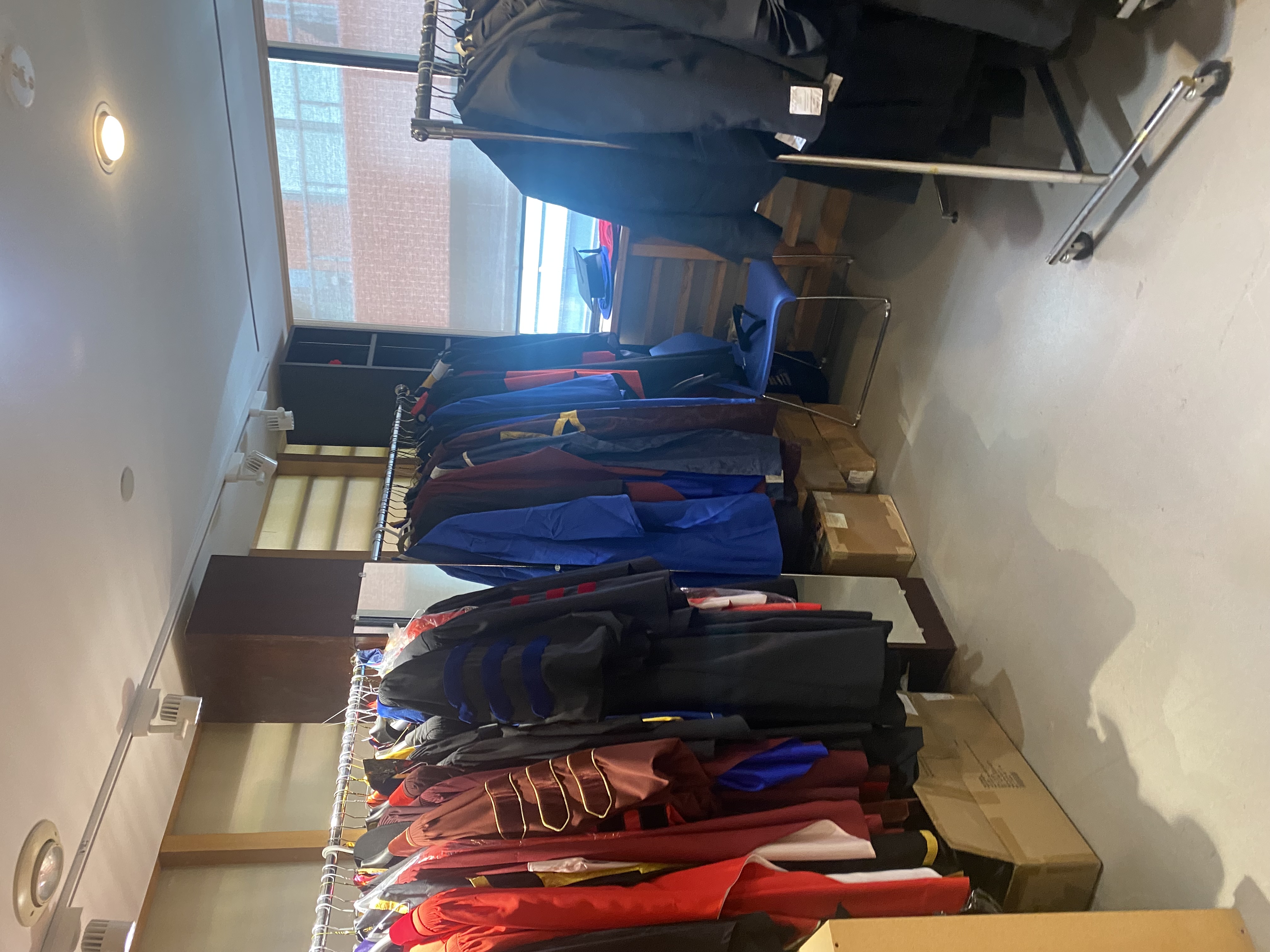
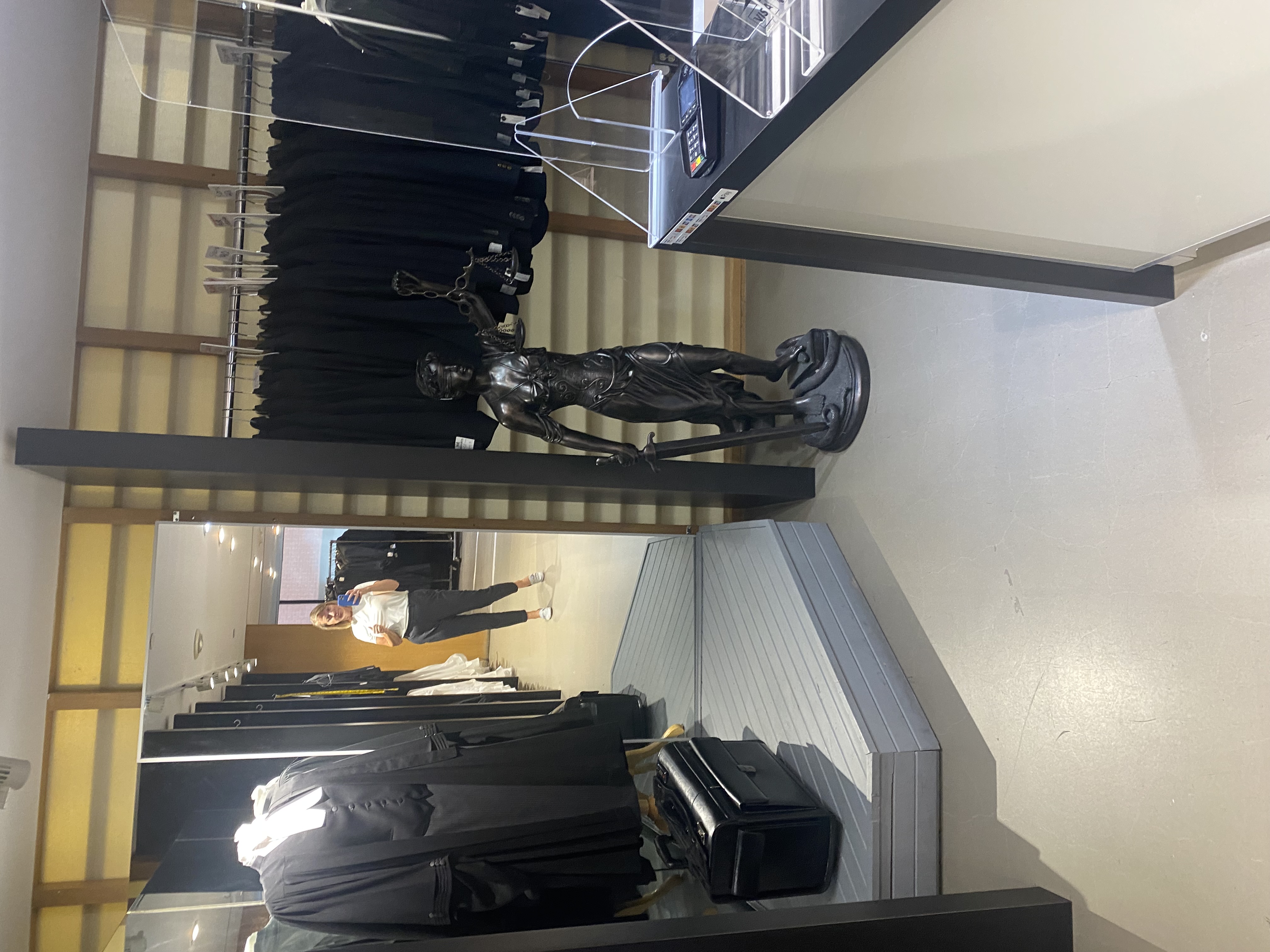
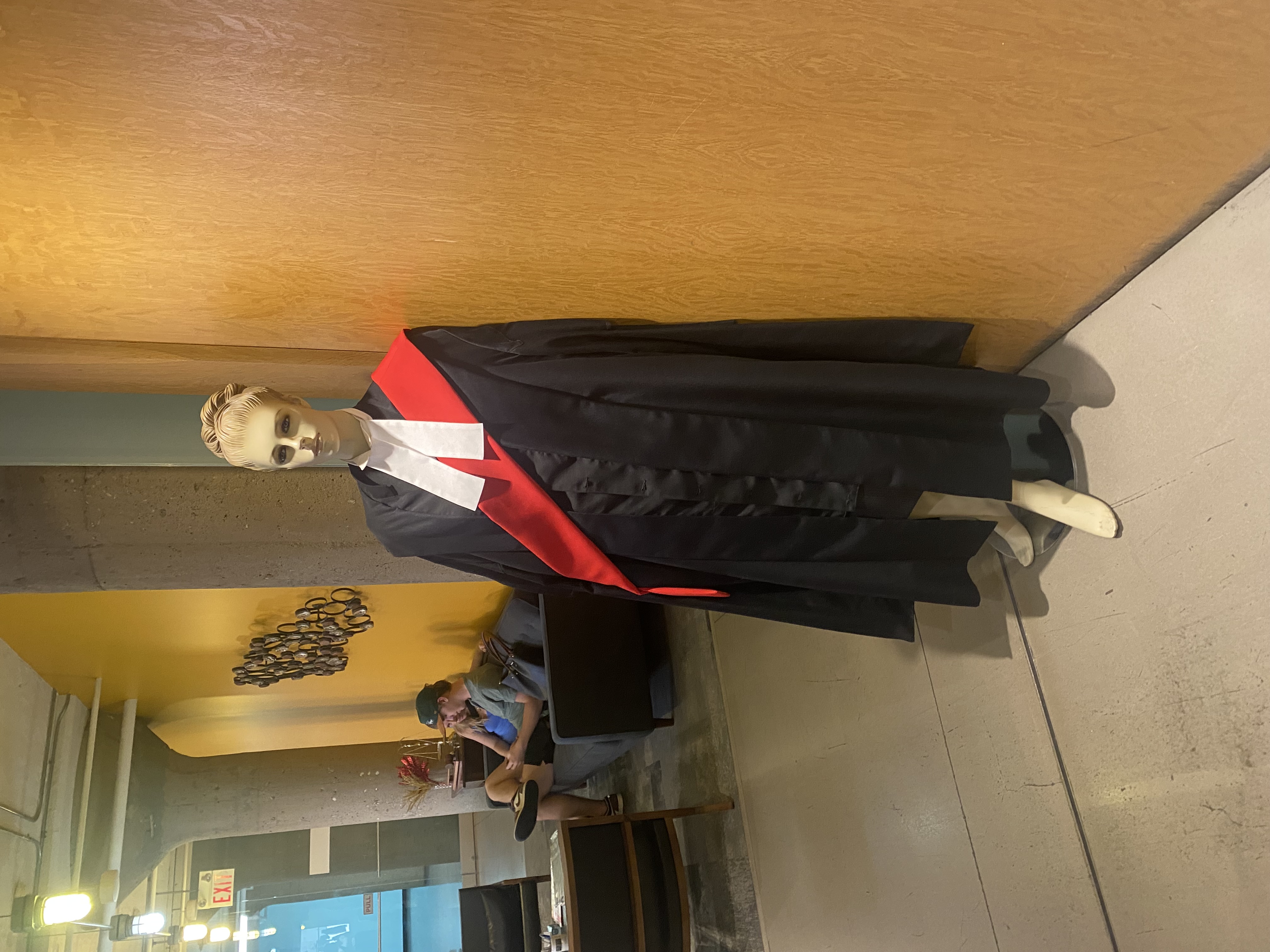
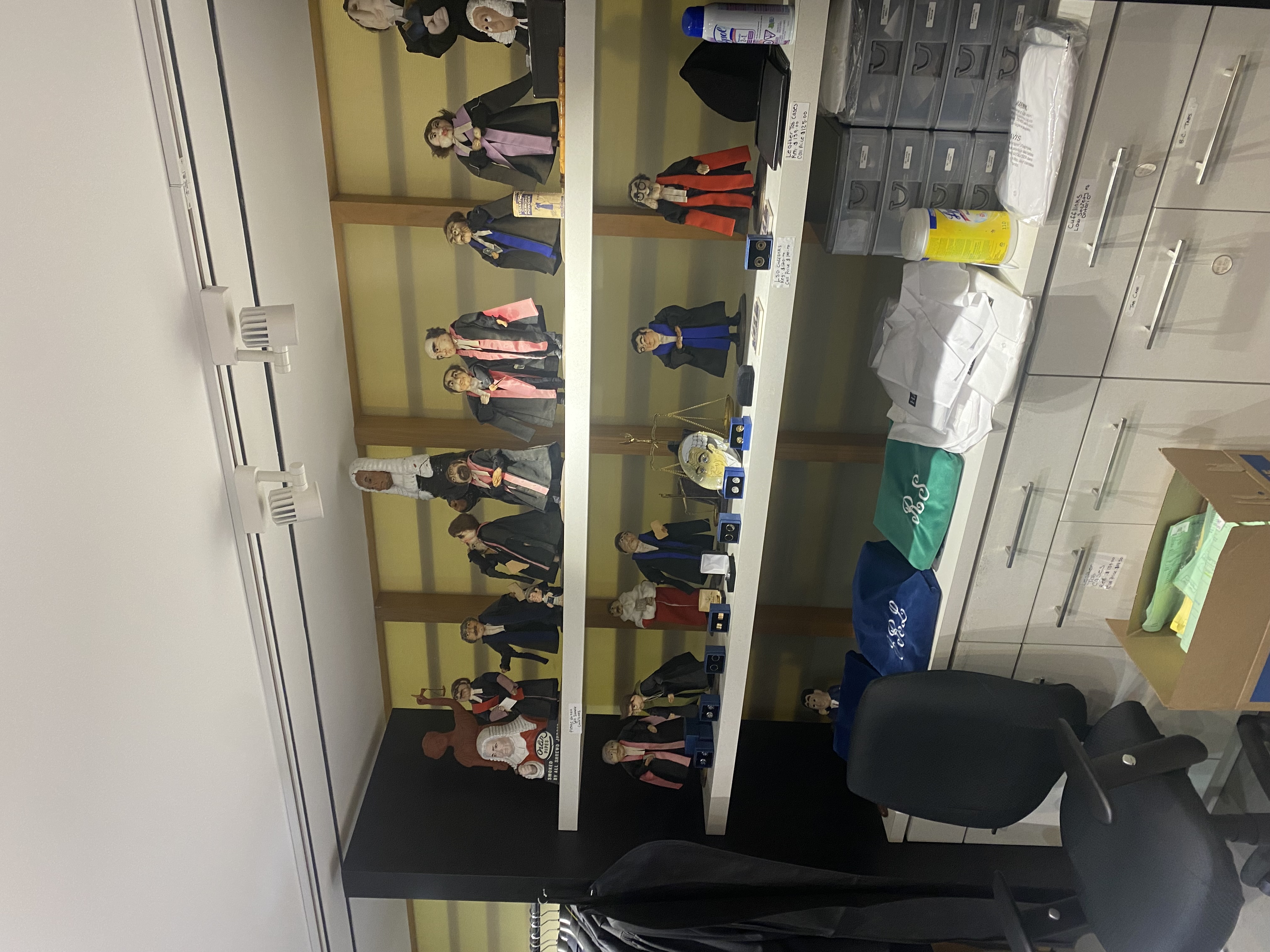
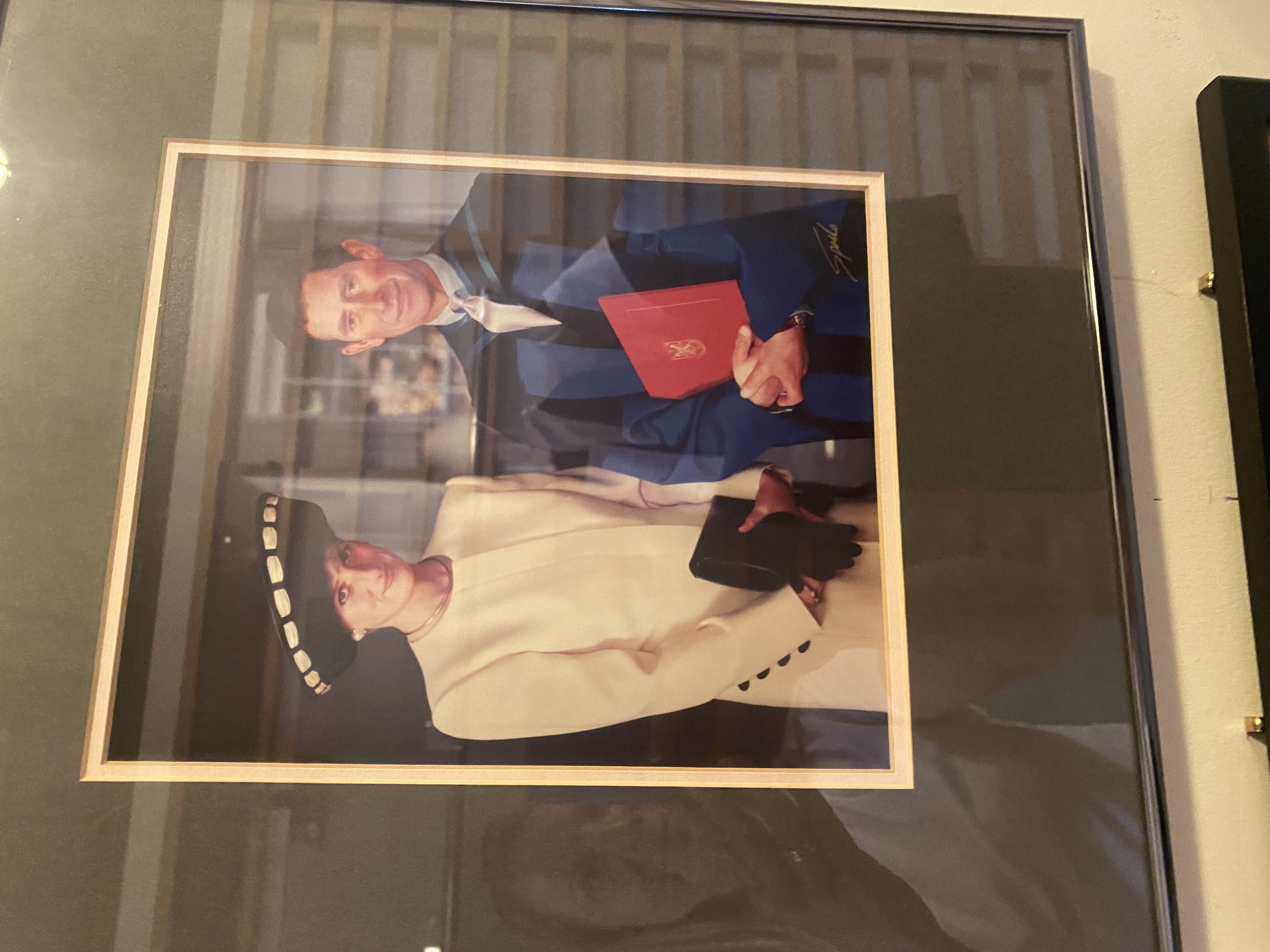
On August 27th, I made the journey into Toronto to Harcourts — makers of robes and gowns since 1842 — to be measured for my own clergy cassock. For twelve years I have served in ministry clothed in a hand-me-down academic robe, a garment borrowed from another vocation and made to suffice. Today, at last, I was measured for a cassock that is properly and entirely my own.
There is a quiet dignity in being fitted for a garment meant to carry the weight of sacred work. Standing in the workshop, surrounded by rows of academic, judicial, and clerical robes — black and scarlet and midnight blue — I was measured and marked with care, the cloth chosen and the cut decided in conversation. The cassock will be ready in five weeks, when I will return for a final fitting and the last adjustments.
Harcourts has clothed the legal, academic, and clerical communities for over 180 years. To be measured in the same rooms where judges' robes and doctoral gowns are still made by hand felt, in some small way, like a rite of passage. A borrowed robe served me faithfully through a decade of ministry. Now, in this season of sabbatical rest, I am preparing to step into a garment of my own — a small but meaningful threshold, and a reminder that even the outward things we wear can carry inward meaning.

July 30, 2026
An Afternoon of Painting in the Backyard
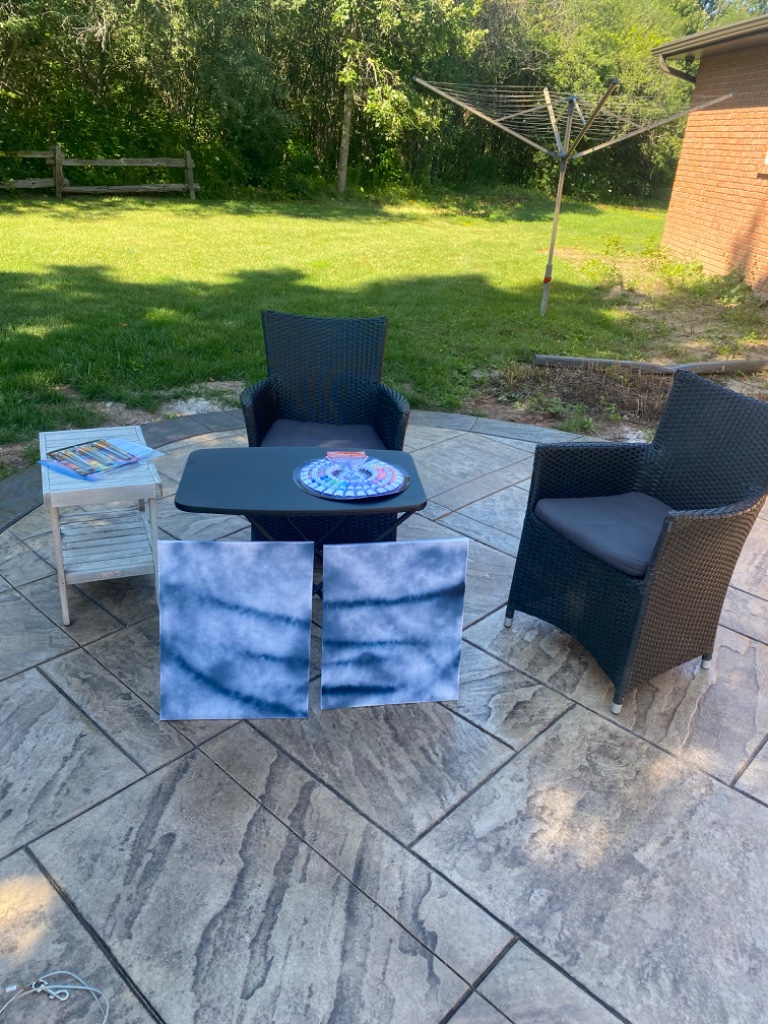
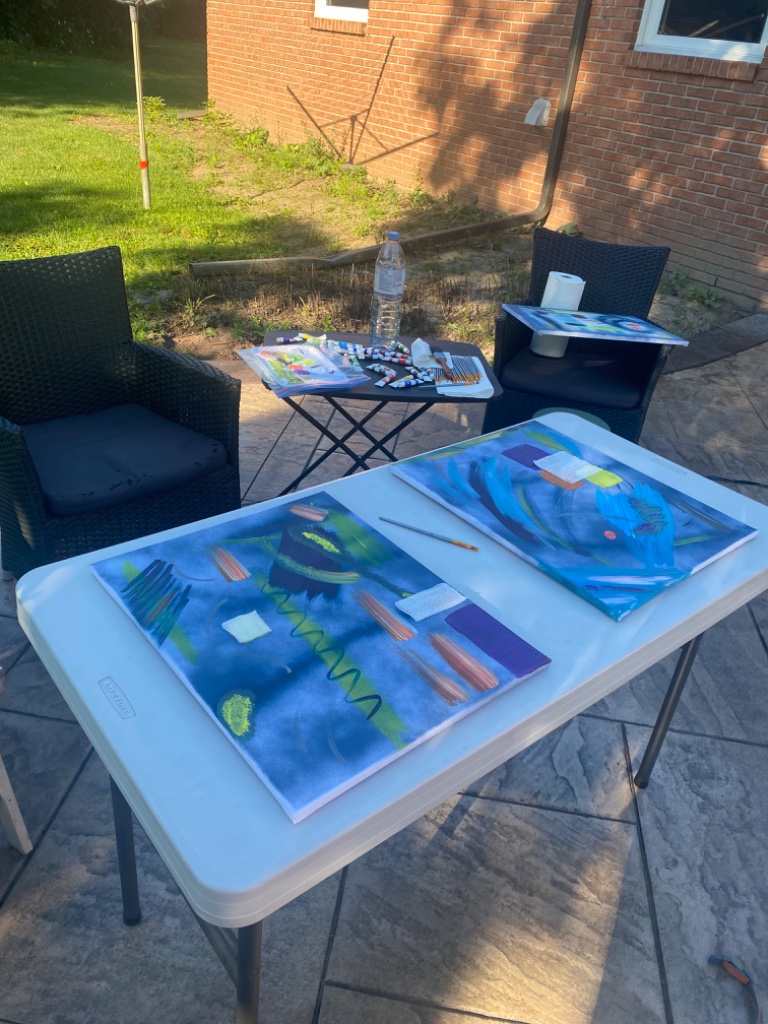
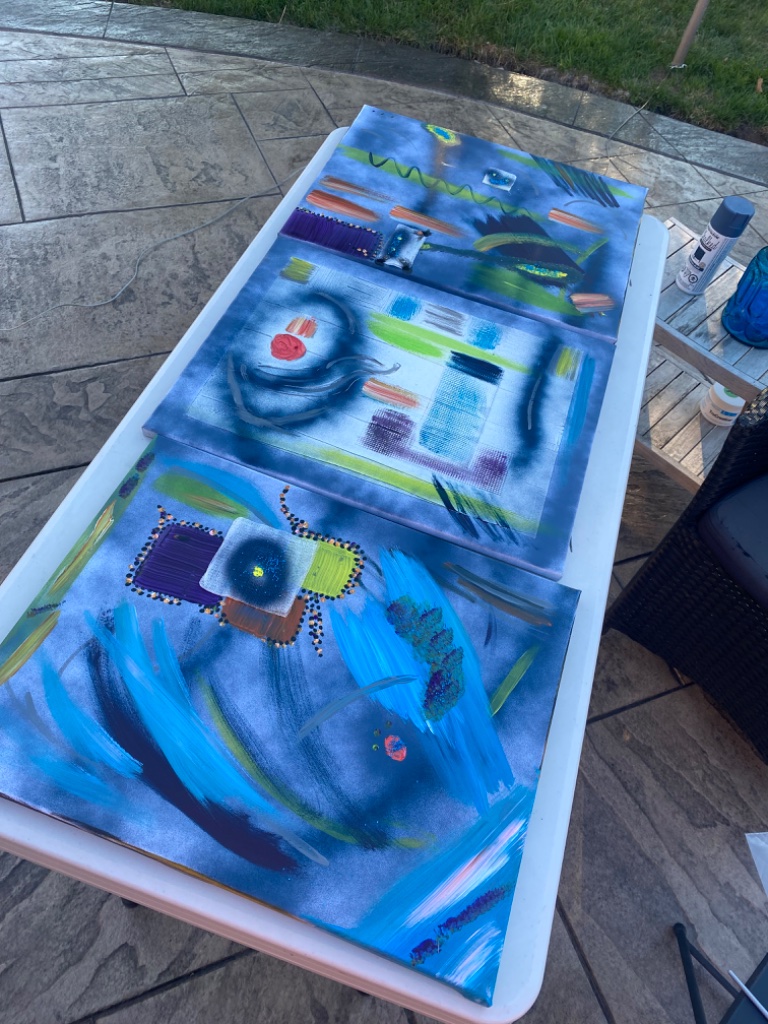
On July 30th, still carrying the inspiration of the previous day's gallery tour, I set up a folding table on the patio and gave myself over to the quiet adventure of making something — not to produce a masterpiece, but simply to answer the impulse that beauty awakens in us: the desire to create.
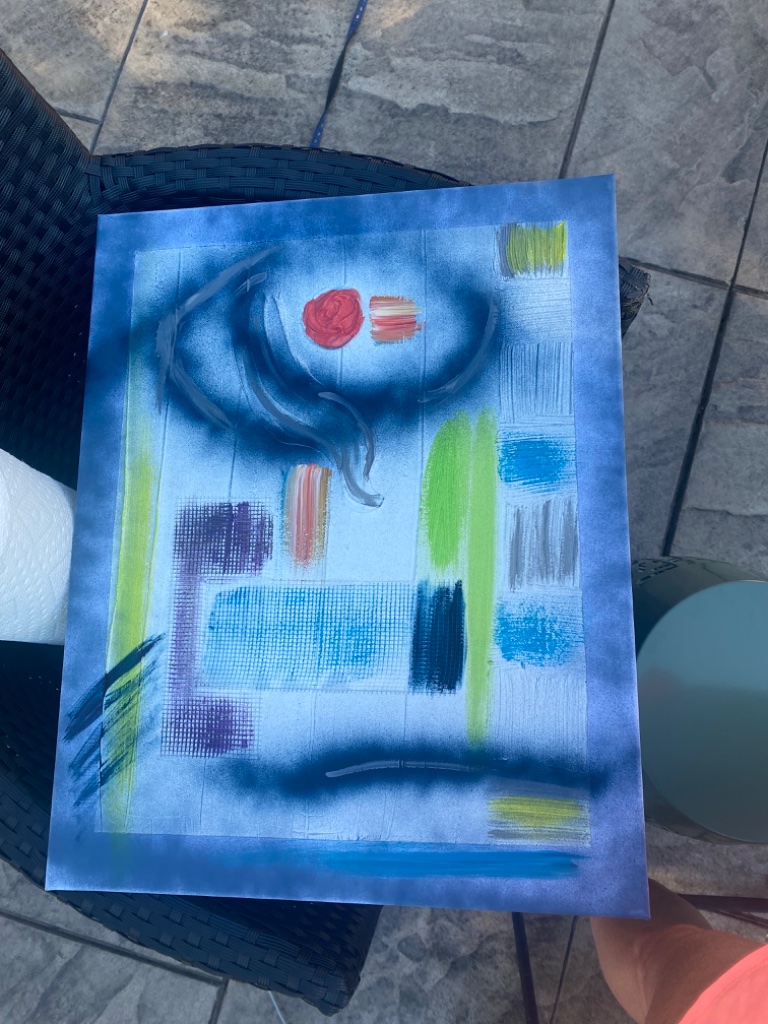
What unfolded was a slow, unhurried afternoon of colour and play — blue washes laid down with a spray can, impasto daubs of red and orange worked in with a brush, grids and streaks of lime and purple and cyan finding their place across the canvas. There is a particular kind of peace that arrives when the hands are busy and the mind is free, when the only demand is the next brushstroke and the only judge is the work itself.
This abstract creation is no masterpiece. But it is mine — a small record of an afternoon spent in the company of my own imagination, in the quiet of my own backyard, learning again that the joy of art lies not in the finish, but in the journey of creation.
July 29, 2026
An Art Tour — Three Galleries in One Day
On July 29th, I gave myself over to a day devoted entirely to beauty — a slow, intentional pilgrimage through three galleries in a single afternoon: the Alton Mill Arts Centre, the Paul Morin Gallery, and the Art Gallery of Guelph. There is a particular luxury in moving from one space of art to the next, letting each room leave its mark before carrying its impressions into the next.
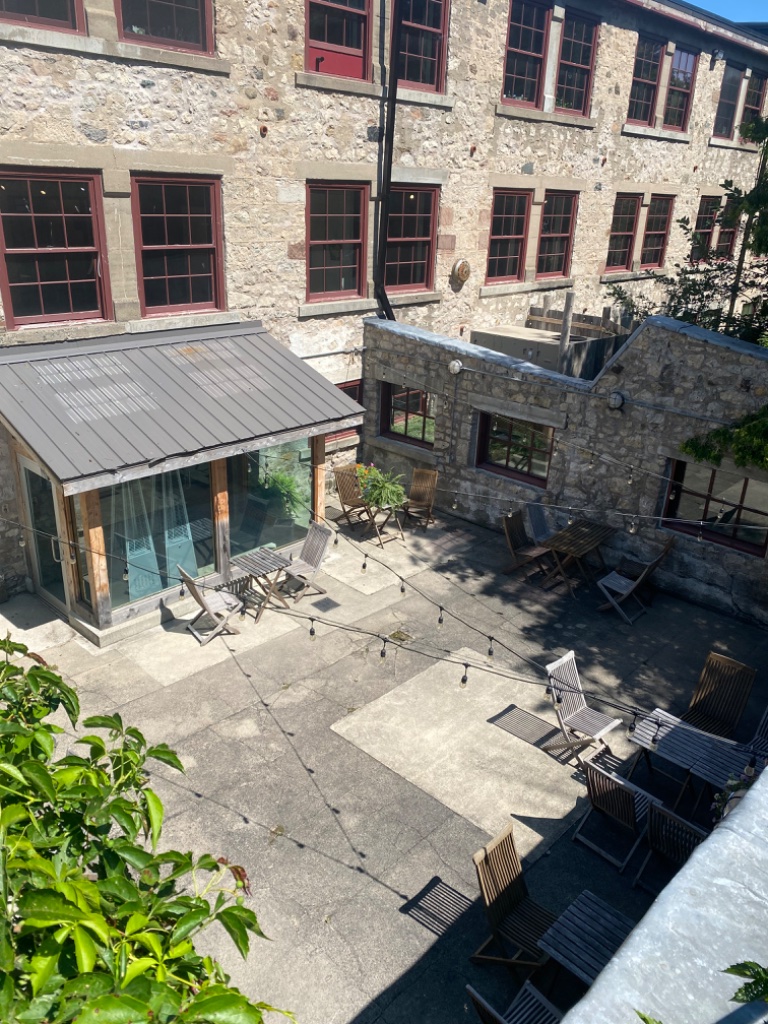
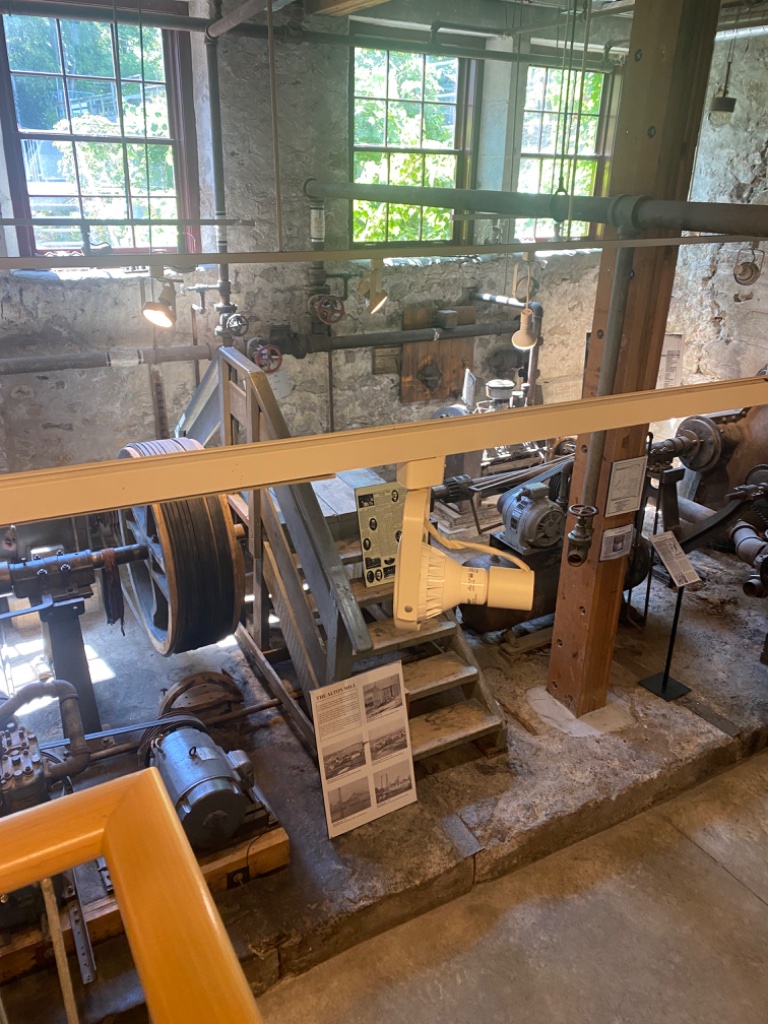
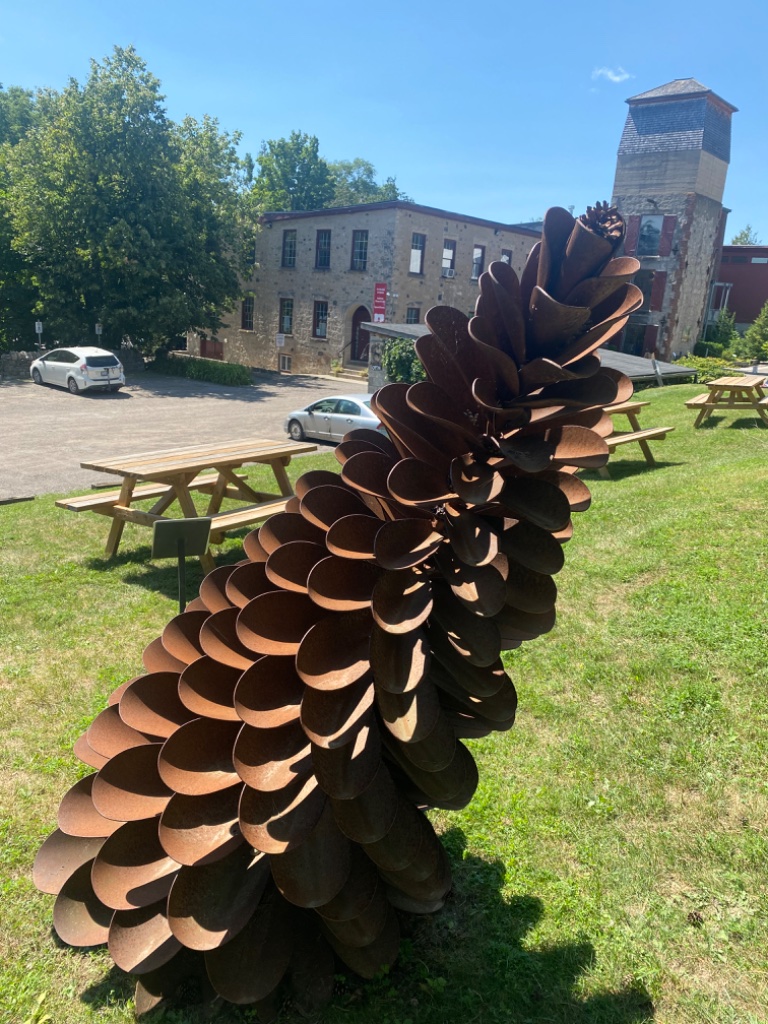
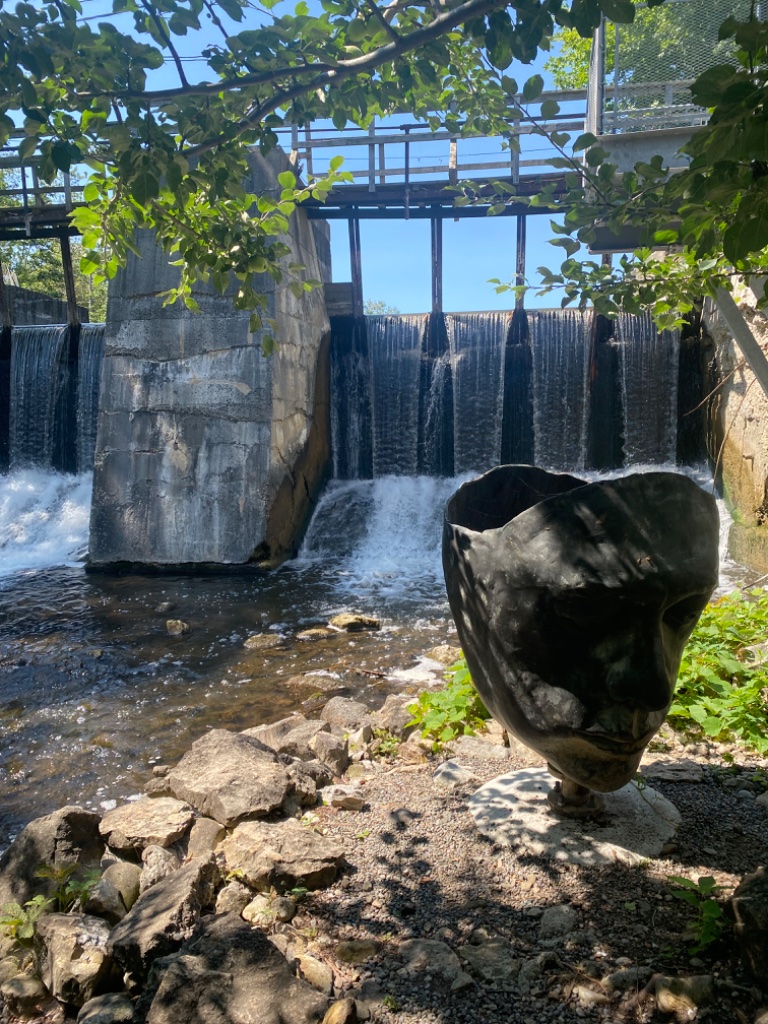
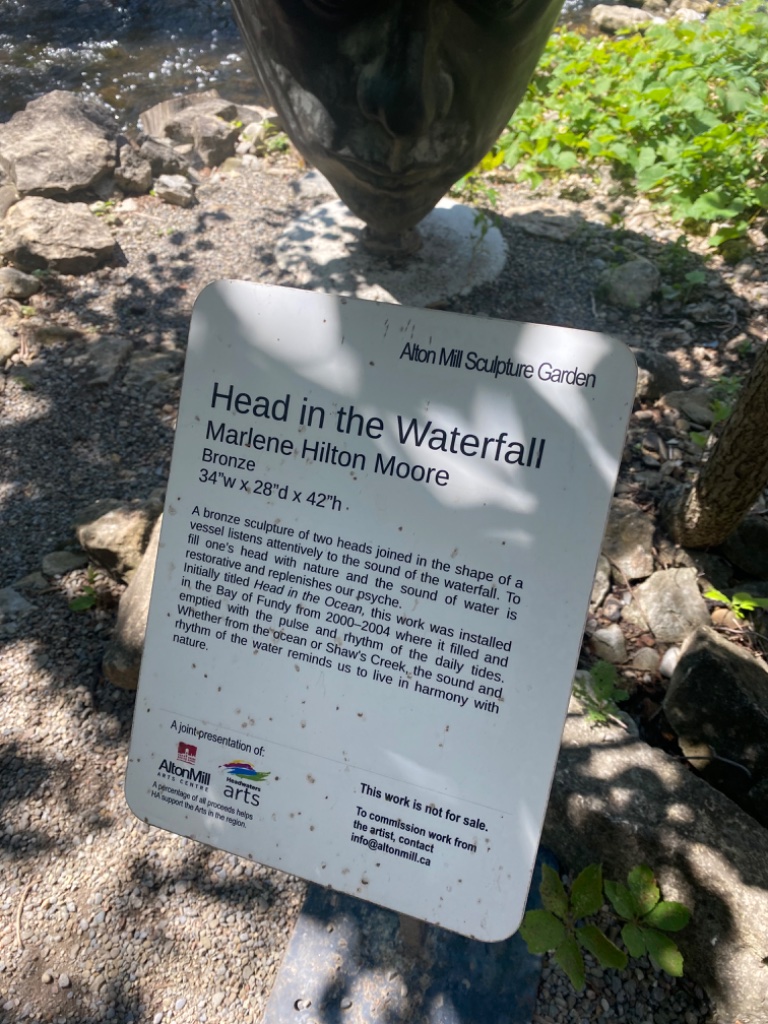
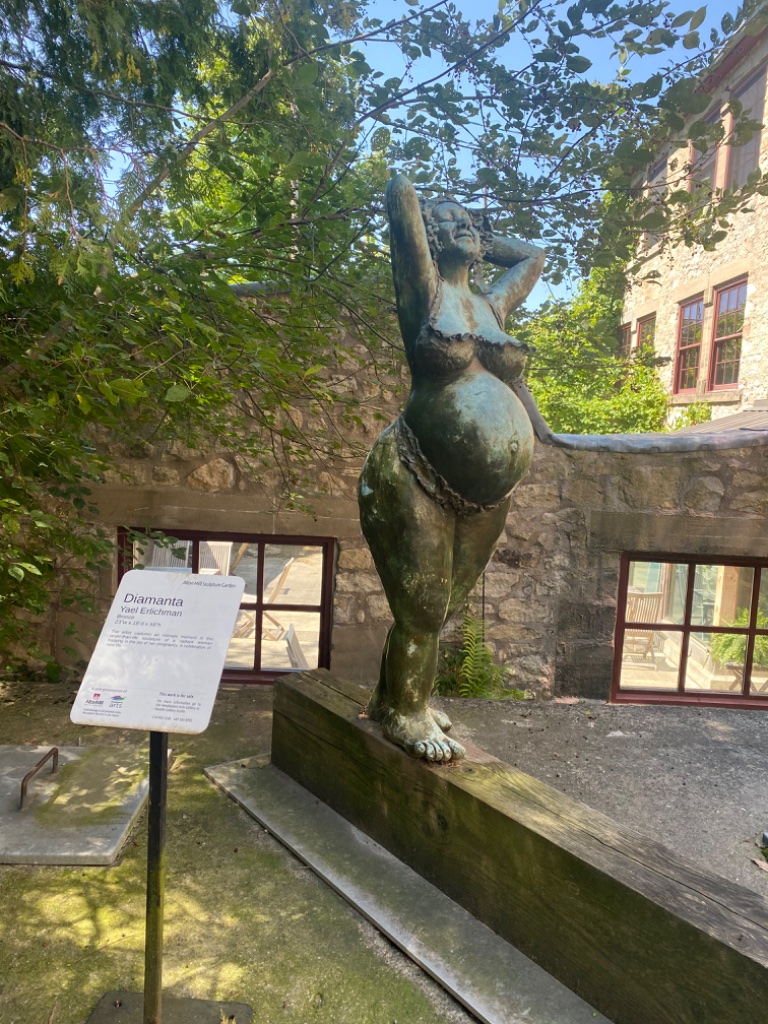
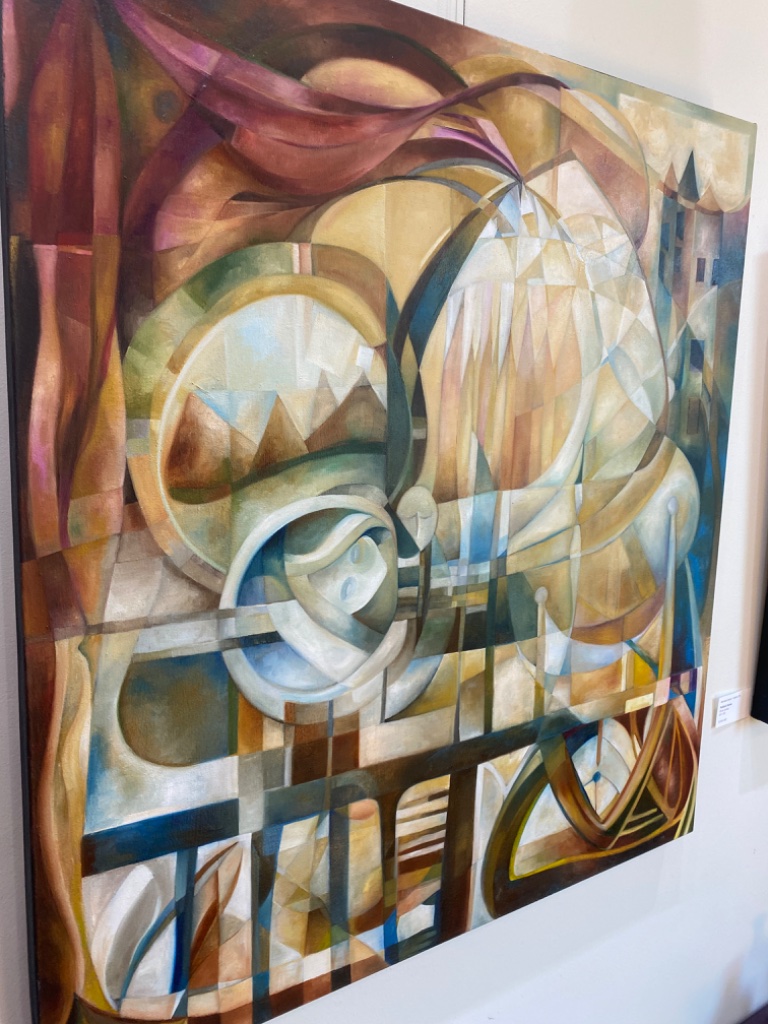
The day began at the Alton Mill Arts Centre, a 1881 mill transformed into a home for working artists. Walking its courtyard of string lights and fieldstone, then inward through preserved industrial machinery and stone walls softened by a century of light, I felt the way certain places hold creative energy — the building itself still humming with its earlier labour. The sculpture garden followed, set against the cool rush of Shaw's Creek: Marlene Hilton Moore's "Head in the Waterfall," a bronze vessel-listening to the water; Yael Erlichman's "Diamanta," a celebration of pregnancy cast in greened bronze; and Floyd Elzinga's "Colonization Device," a great weathered-steel pinecone asserting the aggressive, unrealized potential of a single seed.
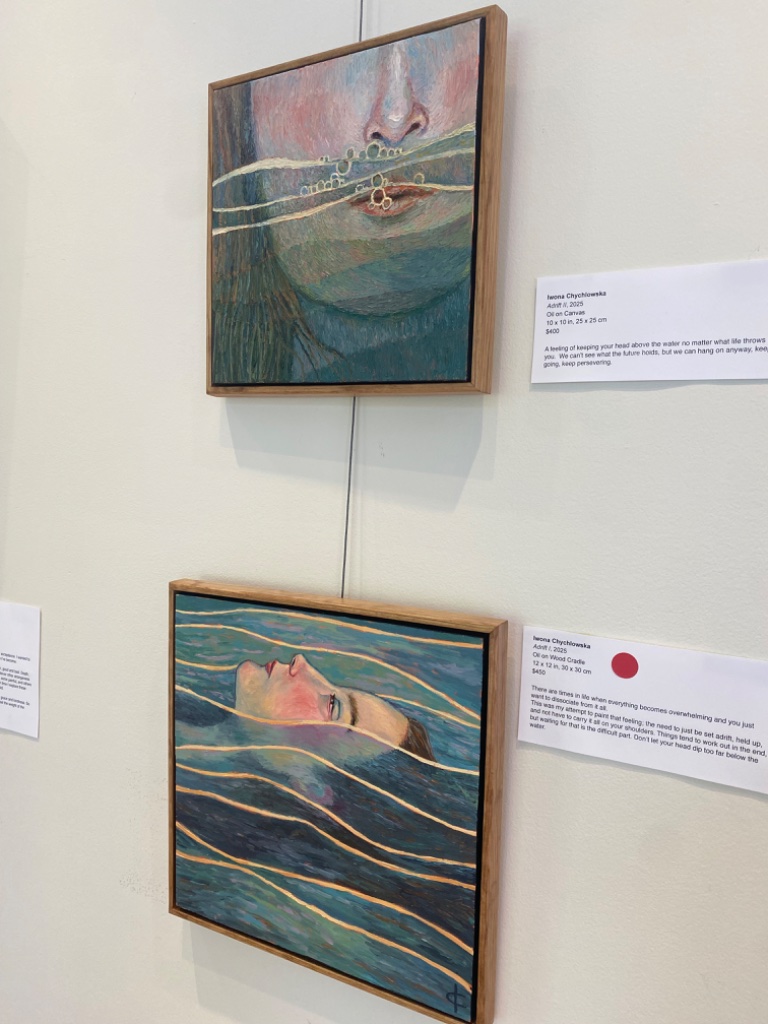
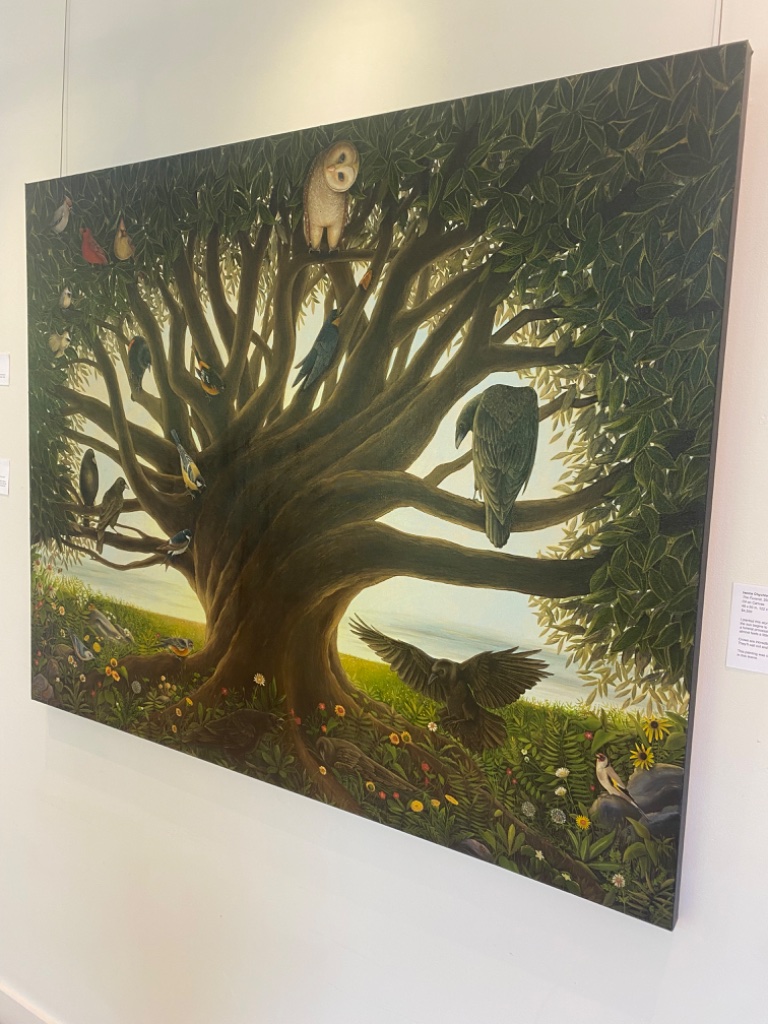
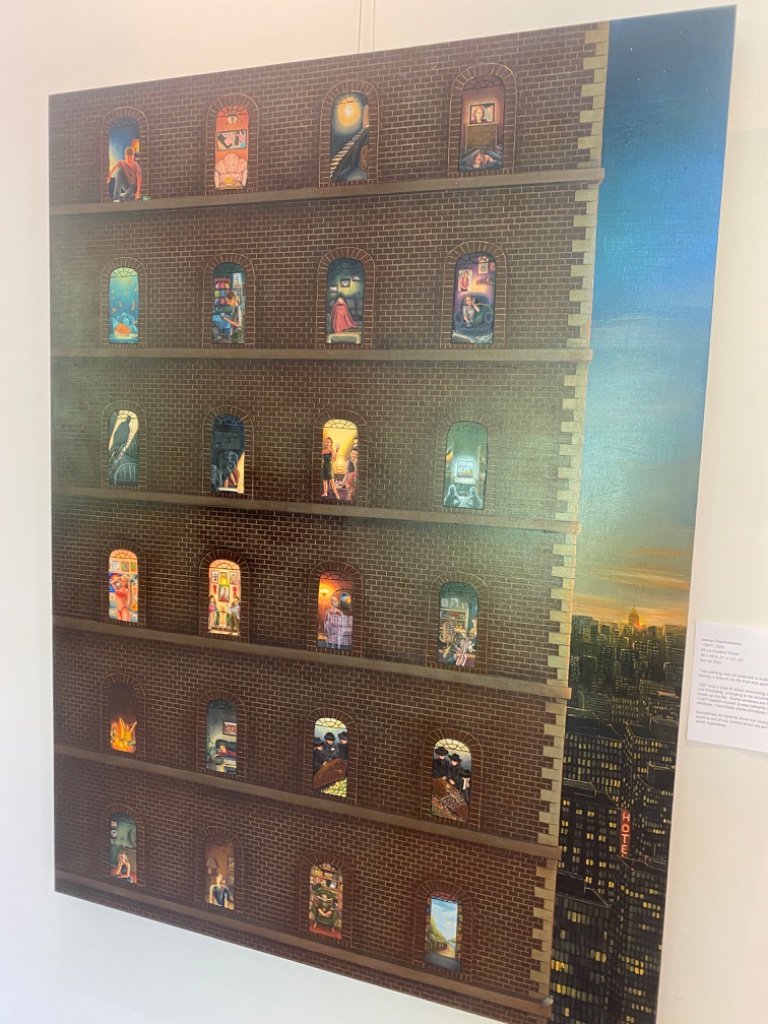
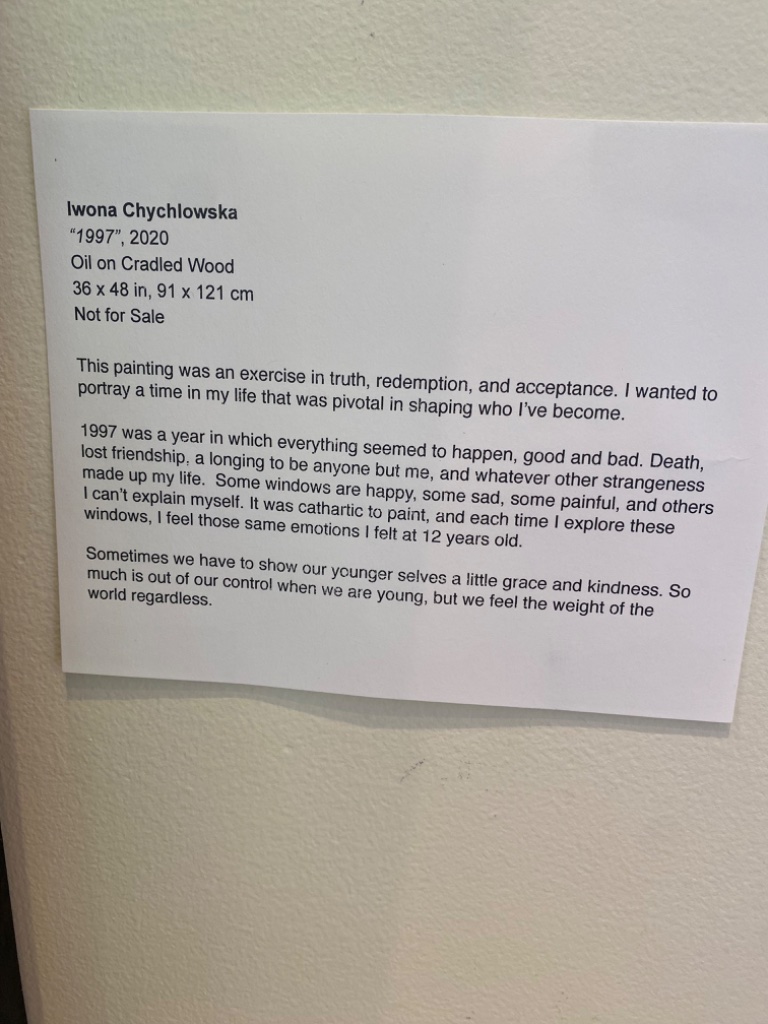
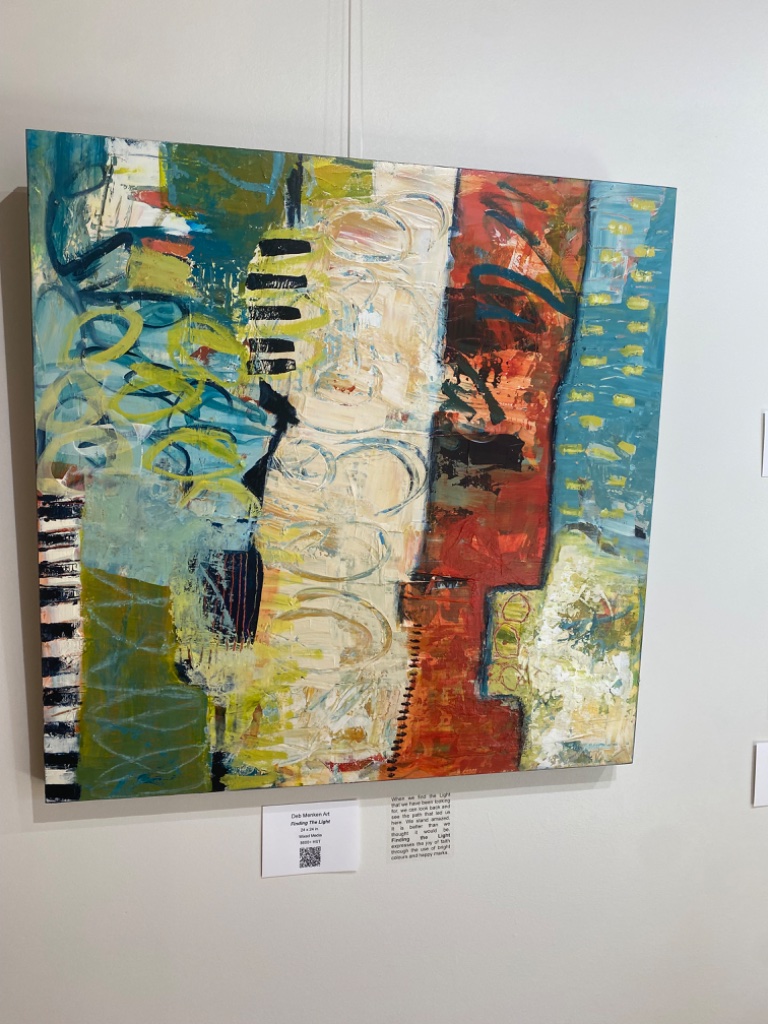
Inside, the galleries held quiet revelations. Iwona Chychlowska's paintings stayed with me long after I left them — "Adrift I" and "II," faces held at the surface of water, speaking of perseverance and the grace of being kept afloat; "The Funeral," a great tree gathering every bird of grief and memory beneath a luminous sky; and "1997," a façade of arched windows each holding a fragment of a girlhood the artist revisited with tenderness — her placard a small confession of truth, redemption, and the kindness we owe our younger selves. Deb Menken's "Finding The Light" rounded the visit with colour and joy: a reminder that when we find the light we have been searching for, we look back amazed at the path that brought us here.
From Alton I carried the afternoon onward to the Paul Morin Gallery and then to the Art Gallery of Guelph, each adding its own voice to the day's quiet conversation. Three galleries, one day — a sabbatical's small feast of looking, and a reminder that art, like prayer, is simply the practice of paying close attention.
Alton Mill Arts Centre
www.altonmill.caA 1881 mill transformed into a home for working artists — its courtyard, sculpture garden, and galleries humming with a century of creative energy.
Paul Morin Gallery
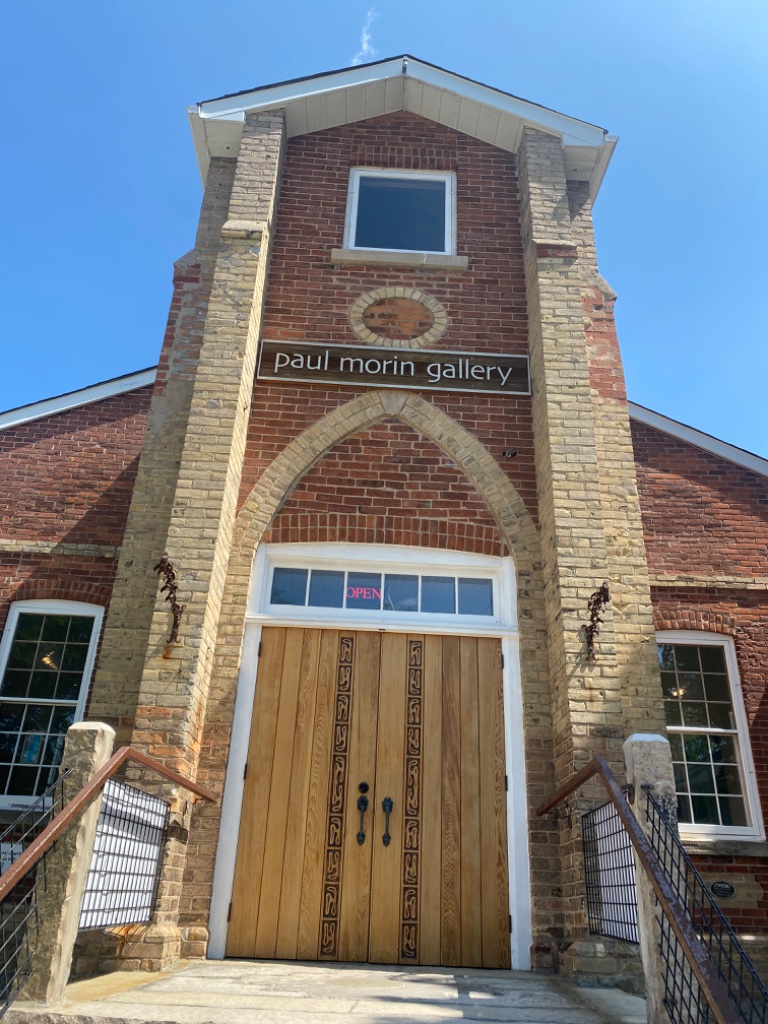
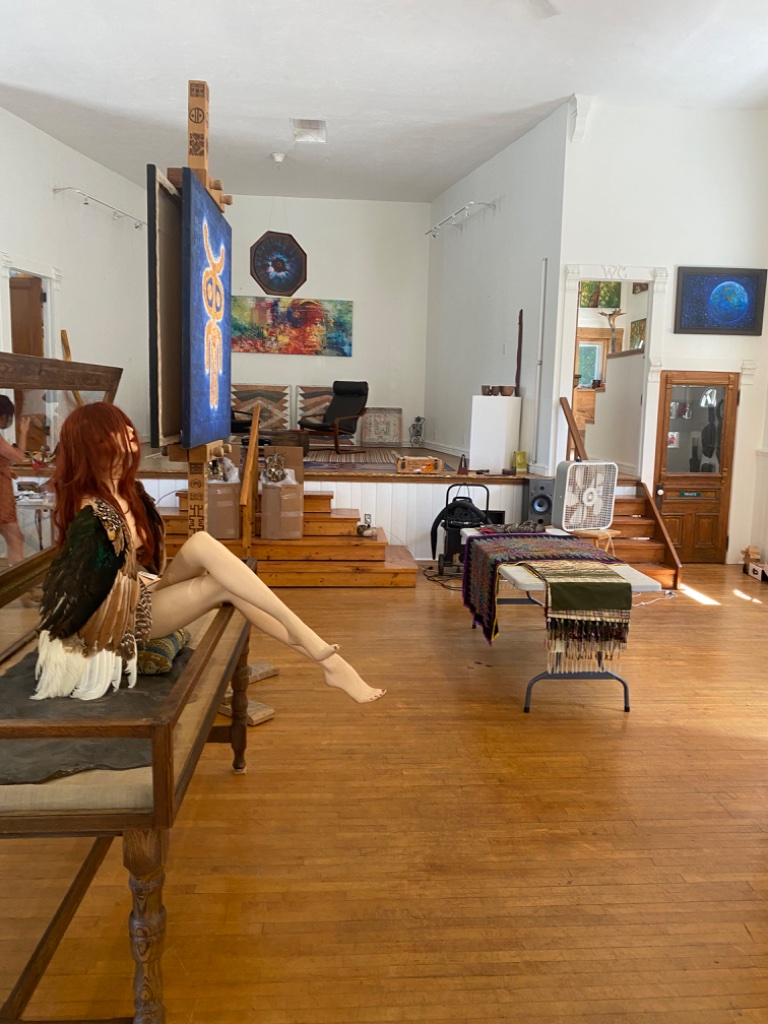
www.paulmorinstudios.comA red-brick studio of gothic-arched doors and a glowing 'OPEN' sign, holding the luminous, deeply felt work of painter Paul Morin.
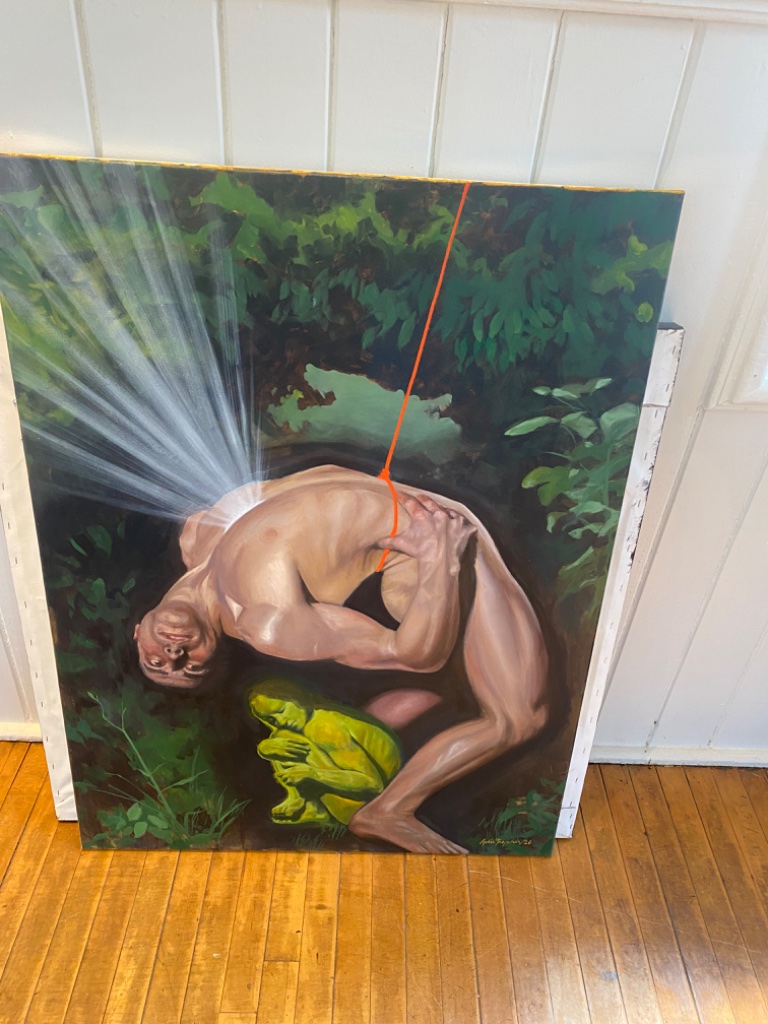
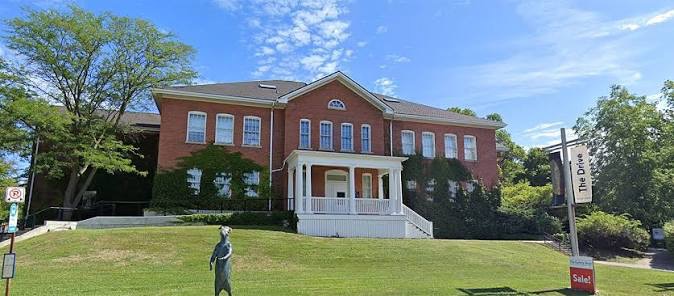
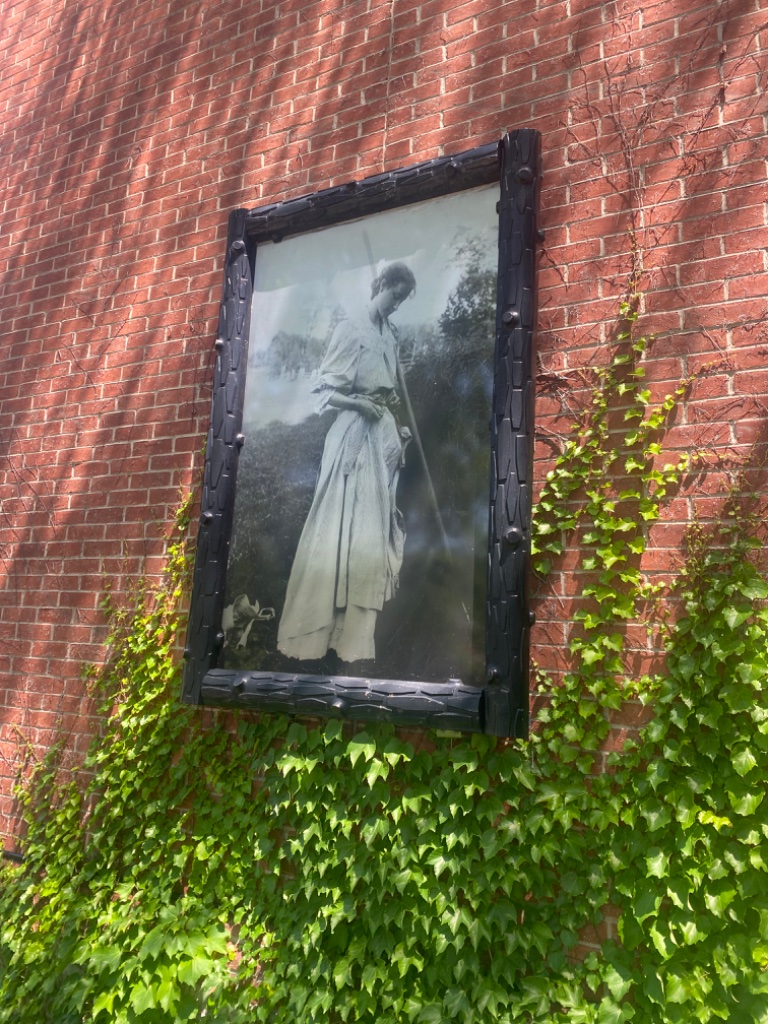
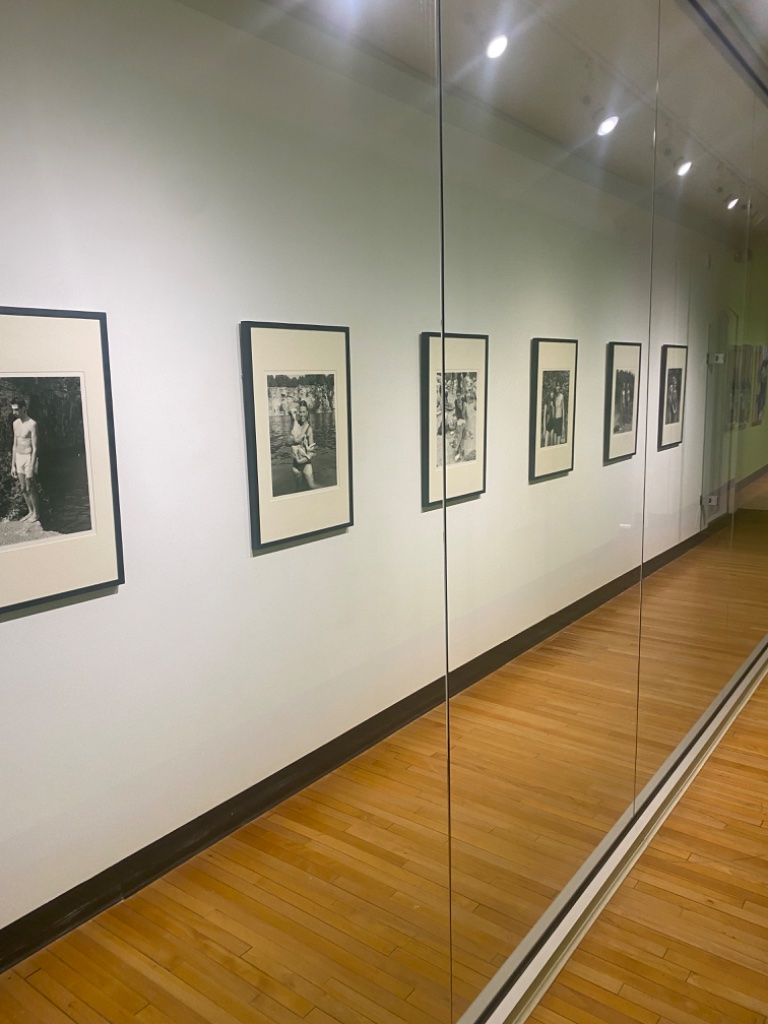
Art Gallery of Guelph
artgalleryofguelph.caA contemporary gallery whose voice completed the day's quiet conversation about art, attention, and the sacred.
July 1, 2026
Cheltenham Badlands — Canada Day Hike
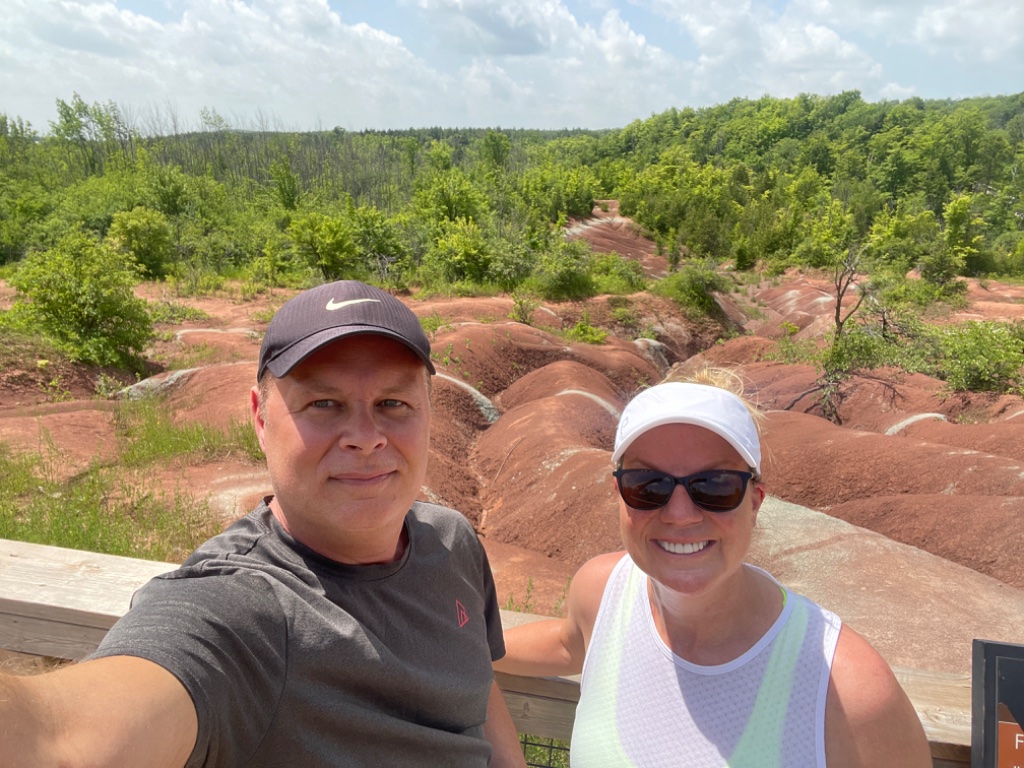
On Canada Day, we set out to explore one of Ontario's most extraordinary and unexpected landscapes — the Cheltenham Badlands. Tucked into the rolling countryside of Caledon, these striking red-earth formations seem almost to belong to another world entirely, their undulating ridges and gullies carved by millennia of water and wind into a terrain that feels ancient, otherworldly, and humbling.
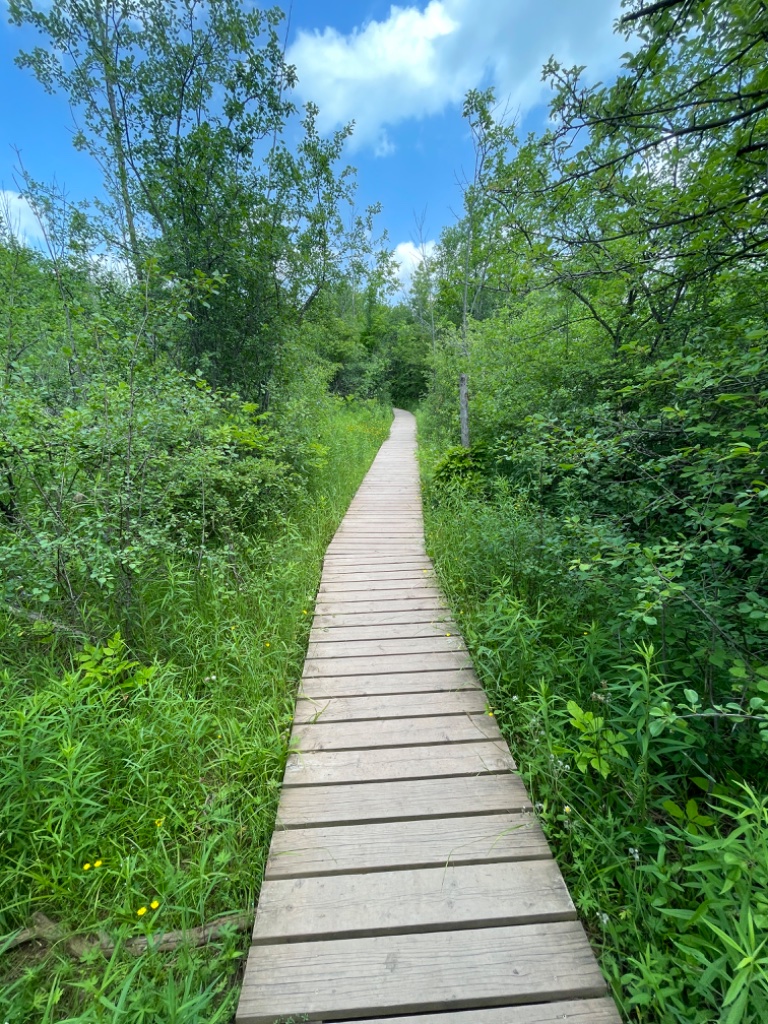
We walked the boardwalk trail that threads through the surrounding meadow, lush and green and alive with summer, the path narrowing as it carried us toward the badlands themselves. There is something deeply moving about standing before land that tells the story of deep time — layers of Queenston Shale, iron-rich and rust-red, exposed by erosion that began long before any of us walked here. The contrast is arresting: the soft, warm hues of the exposed earth set against the vivid green of the forest that now embraces it.
It was a beautiful way to spend the day — a quiet act of exploration, a reminder that wonder is never far from home, and a fitting tribute to this land on the day we celebrate it.
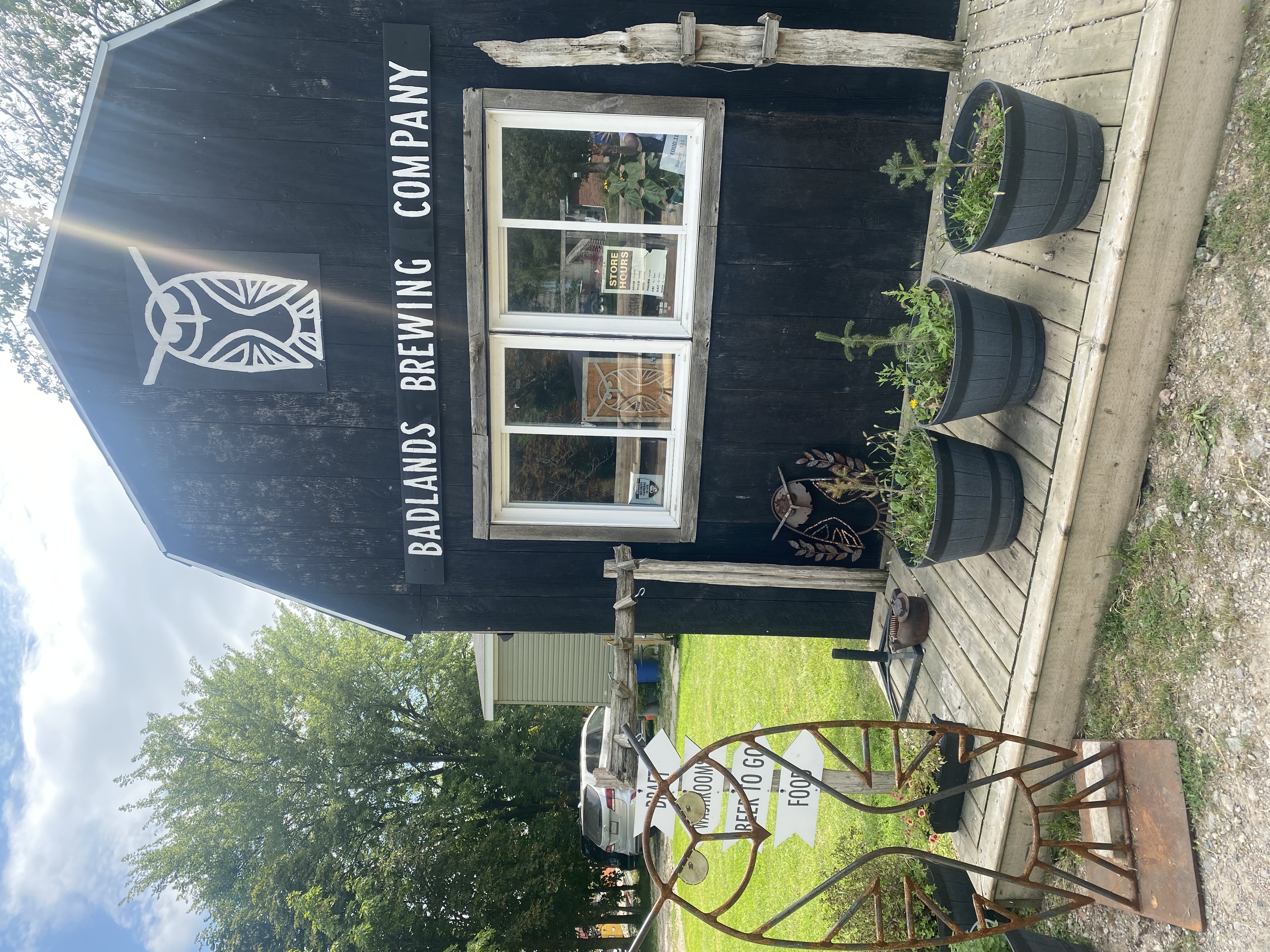
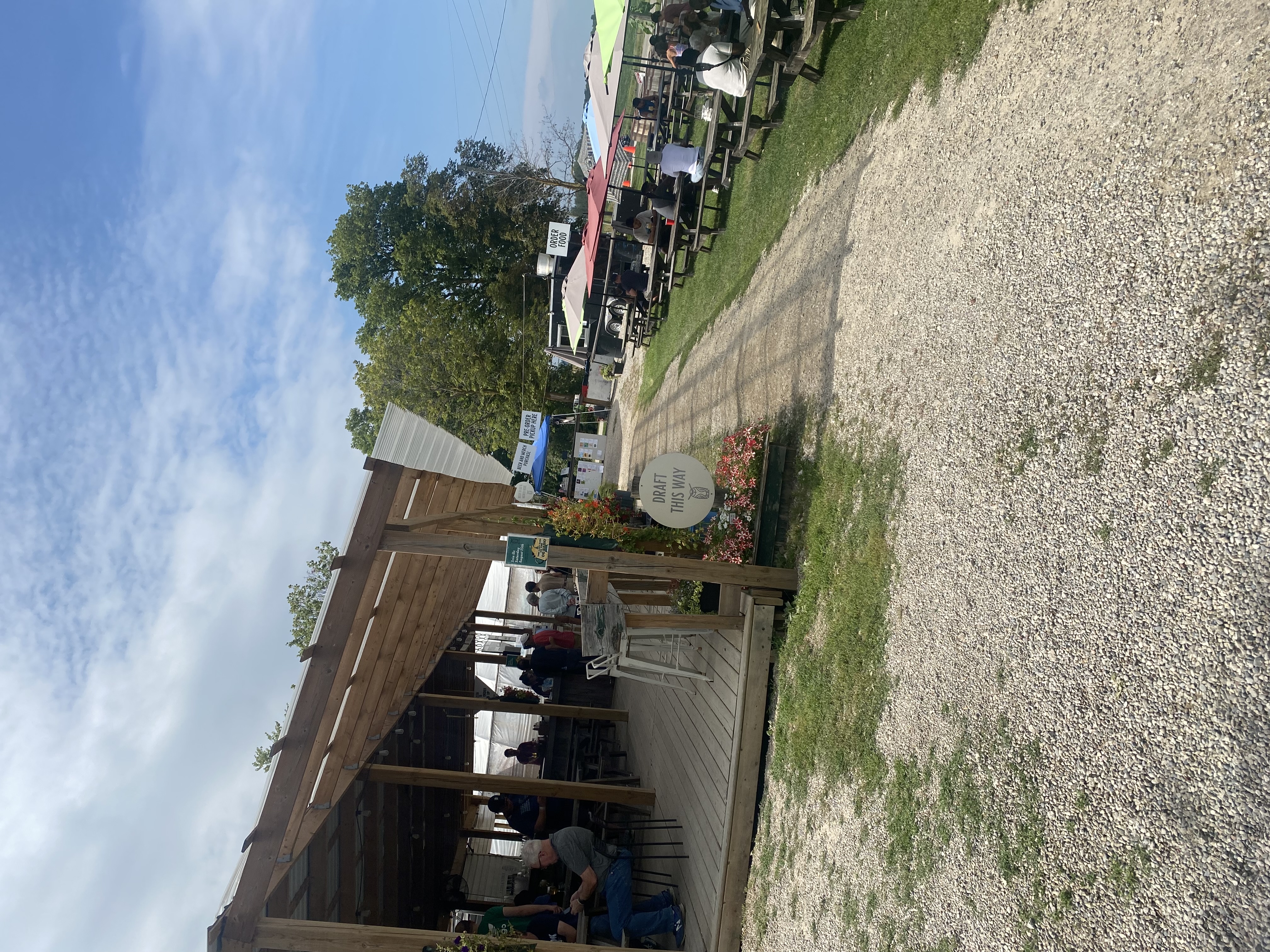
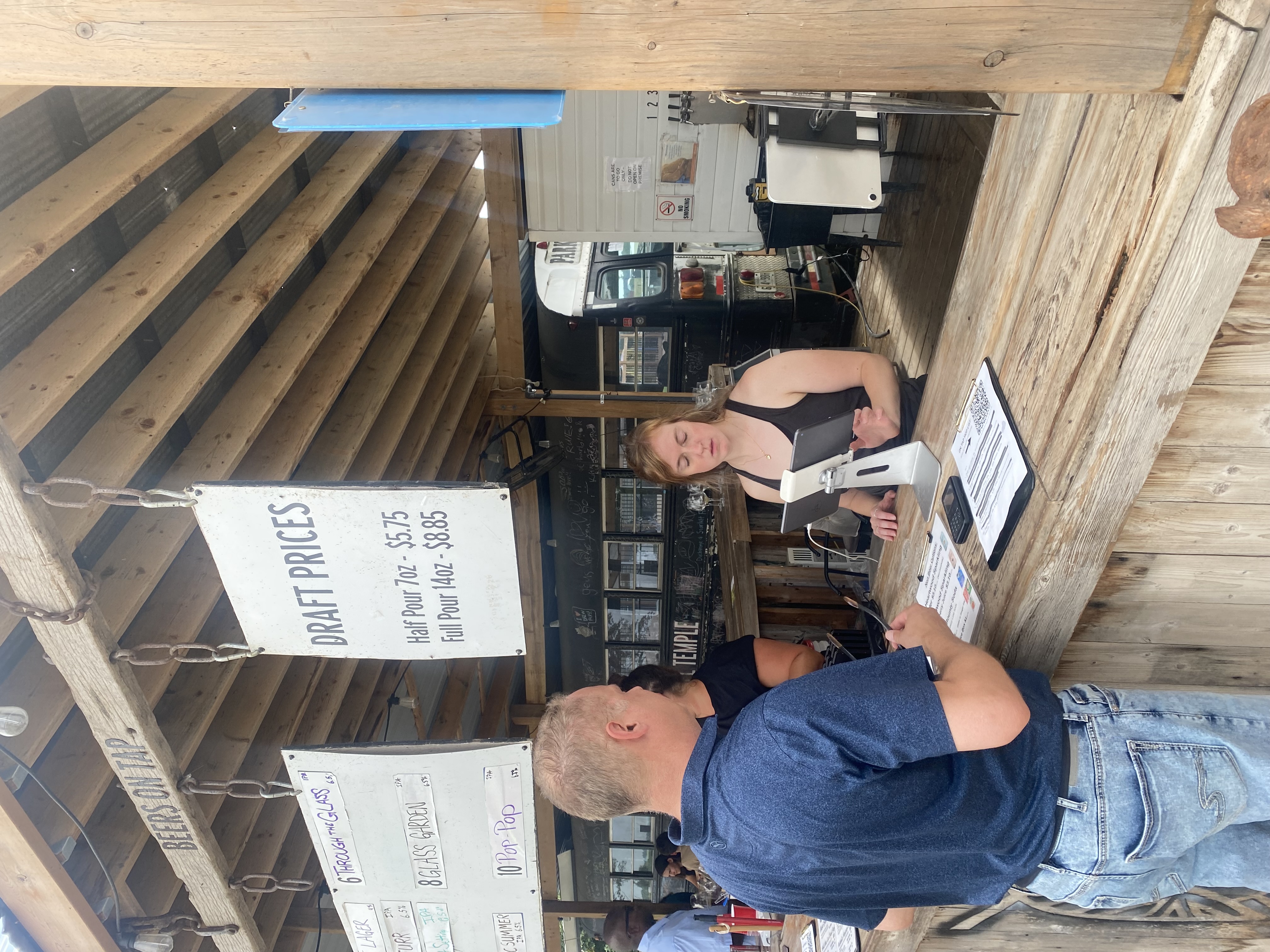
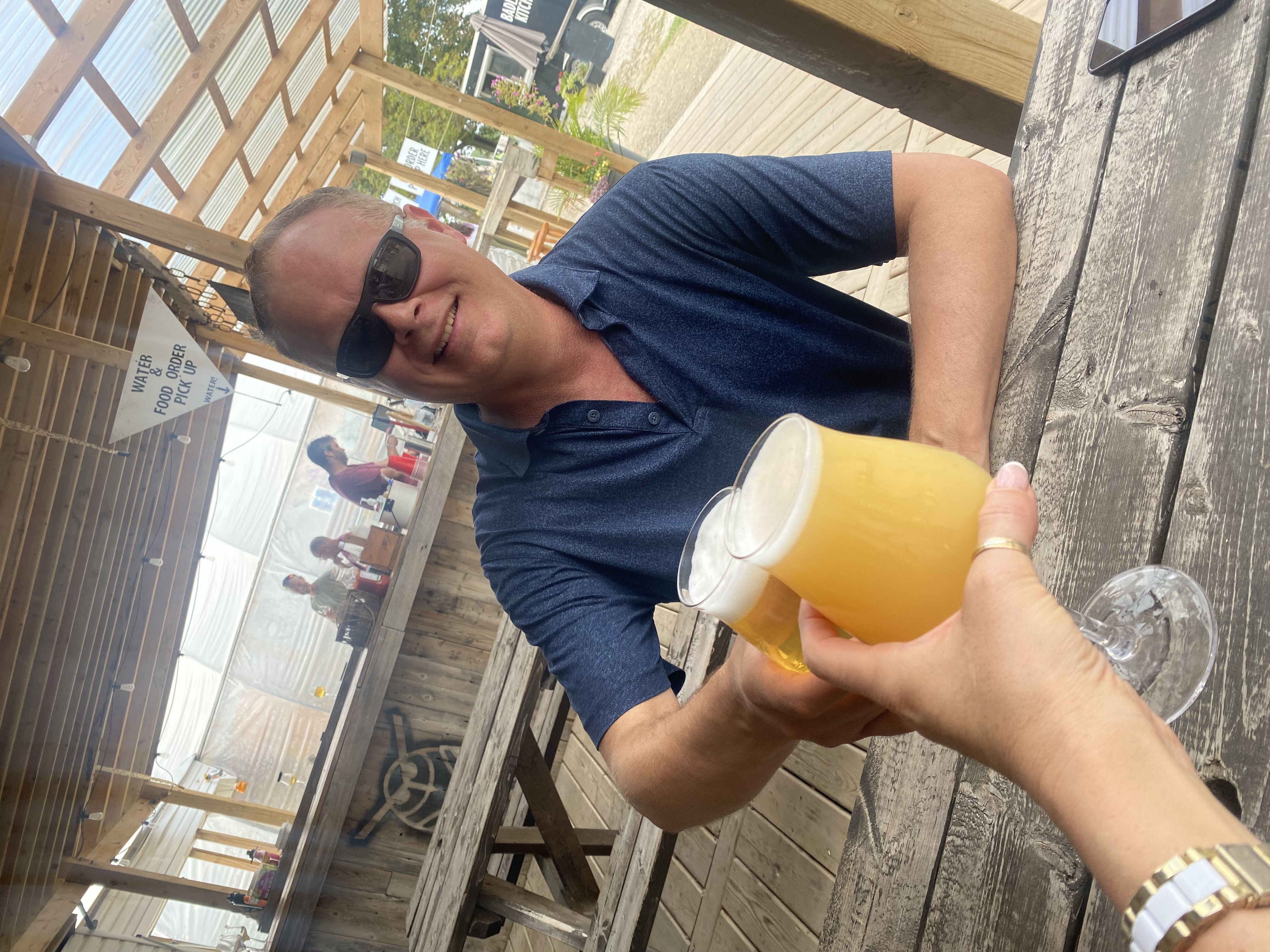
Our Canada Day pilgrimage concluded just down the road at the Badlands Brewing Company — a rustic, open-air brewery where craft beer is poured under weathered beams and a corrugated roof, the owl logo watching over picnic tables scattered across the grass. There is a particular delight in being local tourists — in discovering, a short drive from home, the kind of place travellers cross counties to find. We studied the beers on tap, ordered at the counter, and let the afternoon slow right down, tasting our own region as visitors and locals at once. Perhaps that is the truest gift of this sabbatical: learning to see home with the eyes of a guest, and to love it all the more.
June 27, 2026
A Bike Ride with Isaac on the Caledon Trail
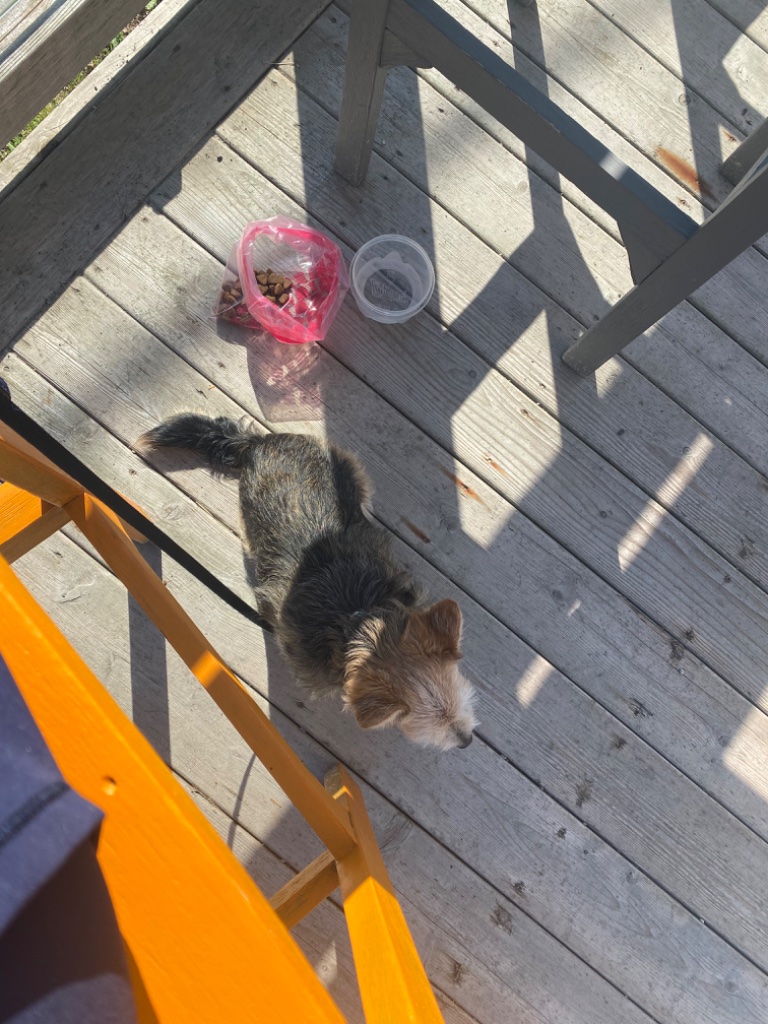
On a golden June morning, I lifted Isaac into his basket, settled him in, and set off down the Caledon Trail right from our home. There is a particular joy in beginning a journey from your own doorstep — no drive, no loading, just the quiet click of the pedals and the path unfurling ahead.
Isaac rides like a seasoned traveller. Perched in his basket, ears catching the breeze, he watches the woods glide past with a calm and steady curiosity, as though he has done this a thousand times and would gladly do it a thousand more. The trail was lush and green, dappled with light filtering through the canopy, the air cool and fragrant with summer.
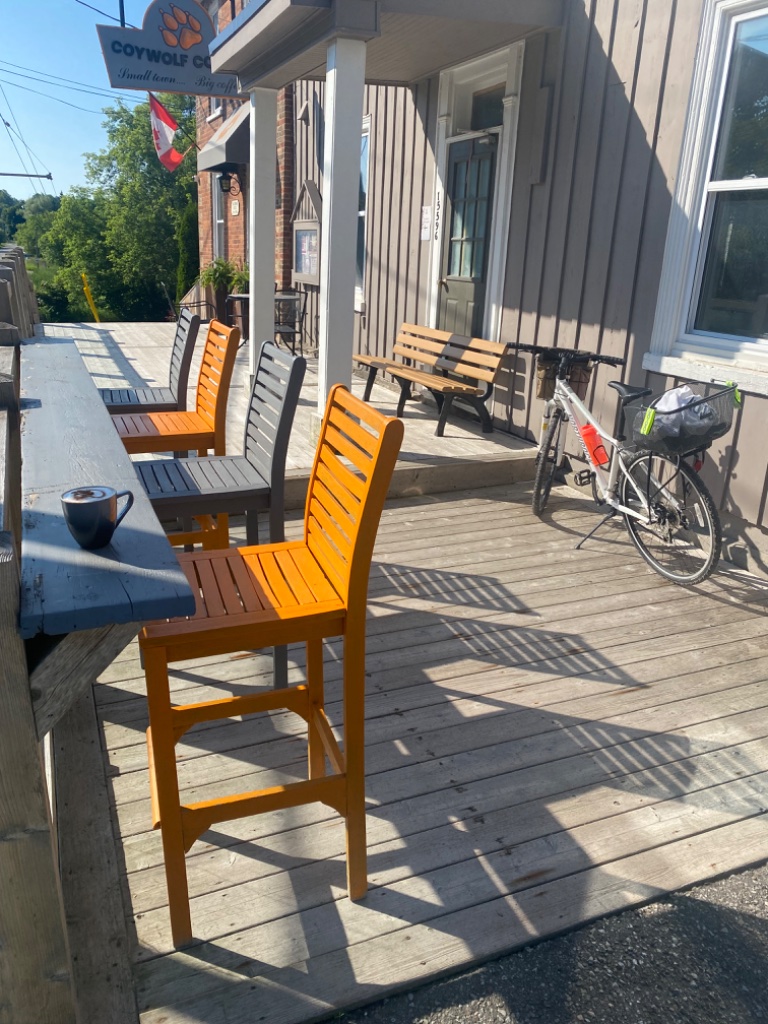
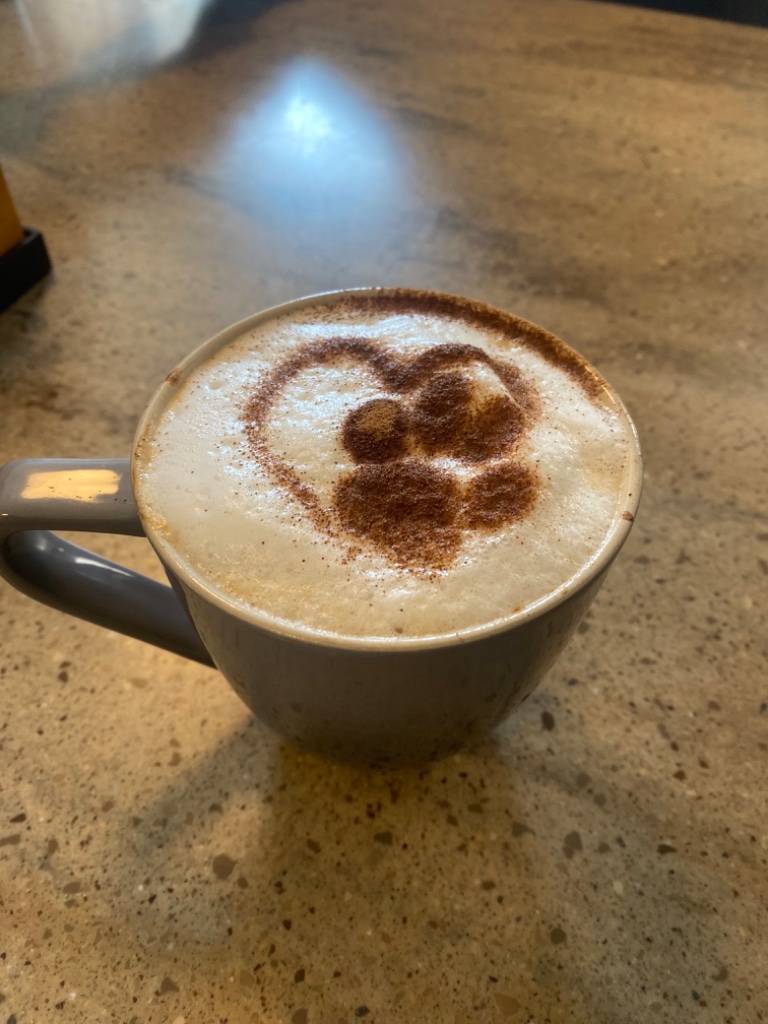
We rode until the trail delivered us to Coywolf Coffee — a little haven of warmth and craft nestled in the countryside. The deck was bright with orange chairs and the easy pleasure of slow mornings. A cappuccino with a paw print in the foam felt like it was made just for us, a small grace note in an already grace-filled day.
Isaac had a rest, I had a coffee, and then we turned for home — the trail just as beautiful in reverse, the late morning sun warmer now, and the quiet contentment of a morning well spent settling over us both.


June 9, 2026
Elmvale Spring Water
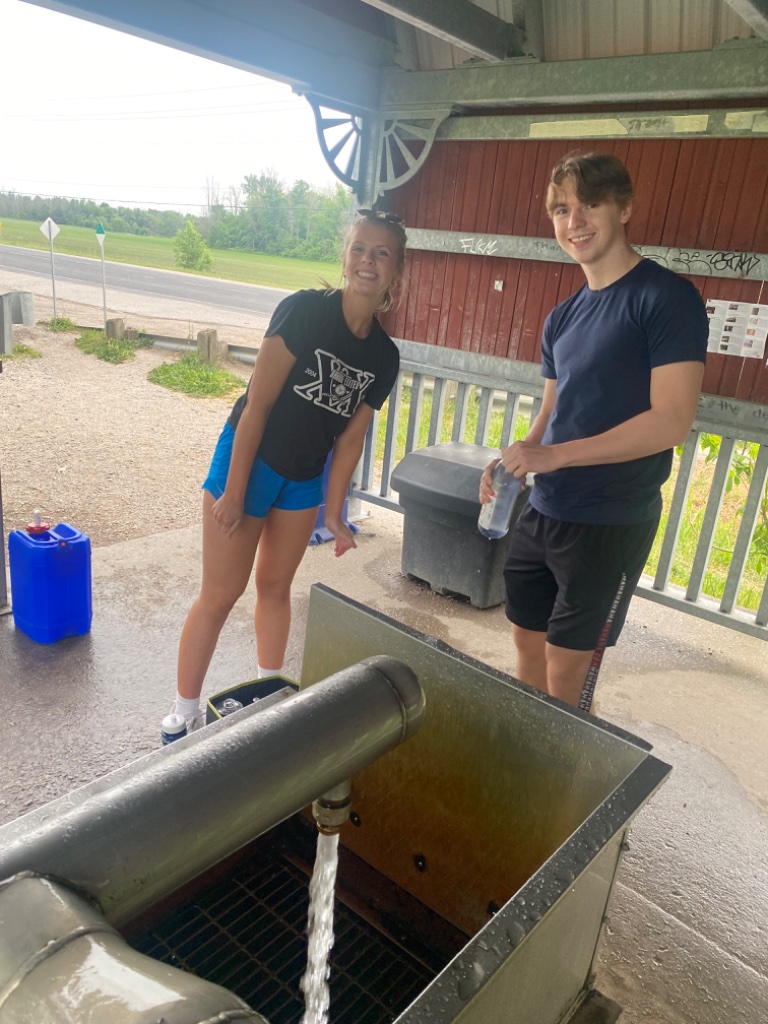
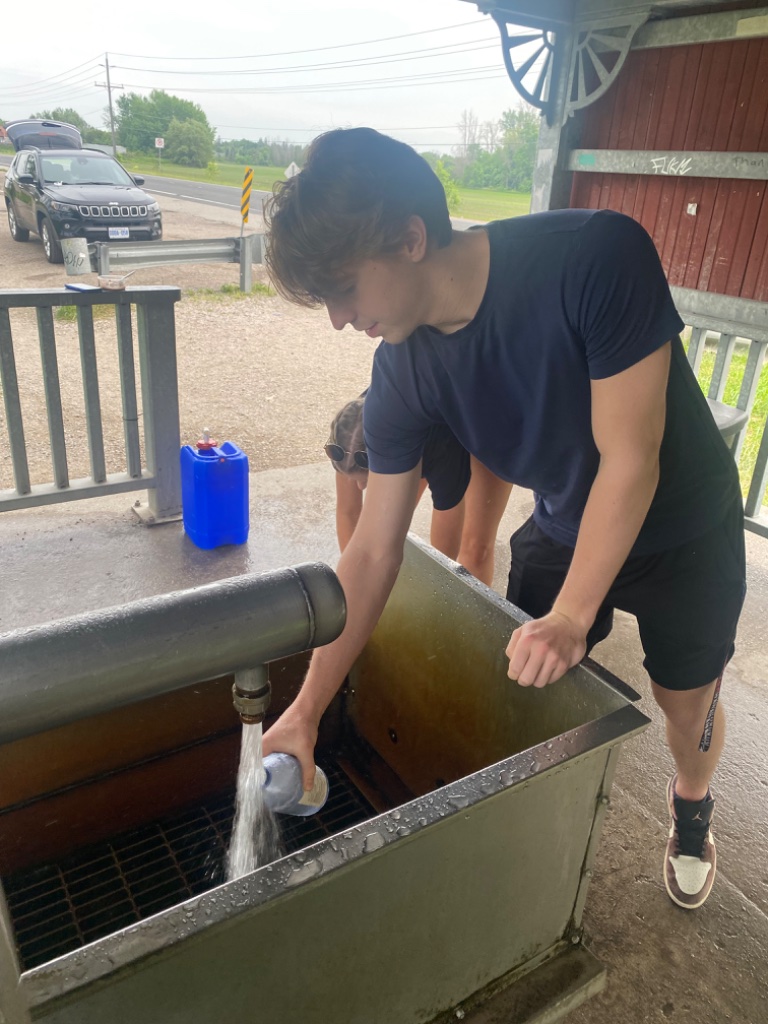
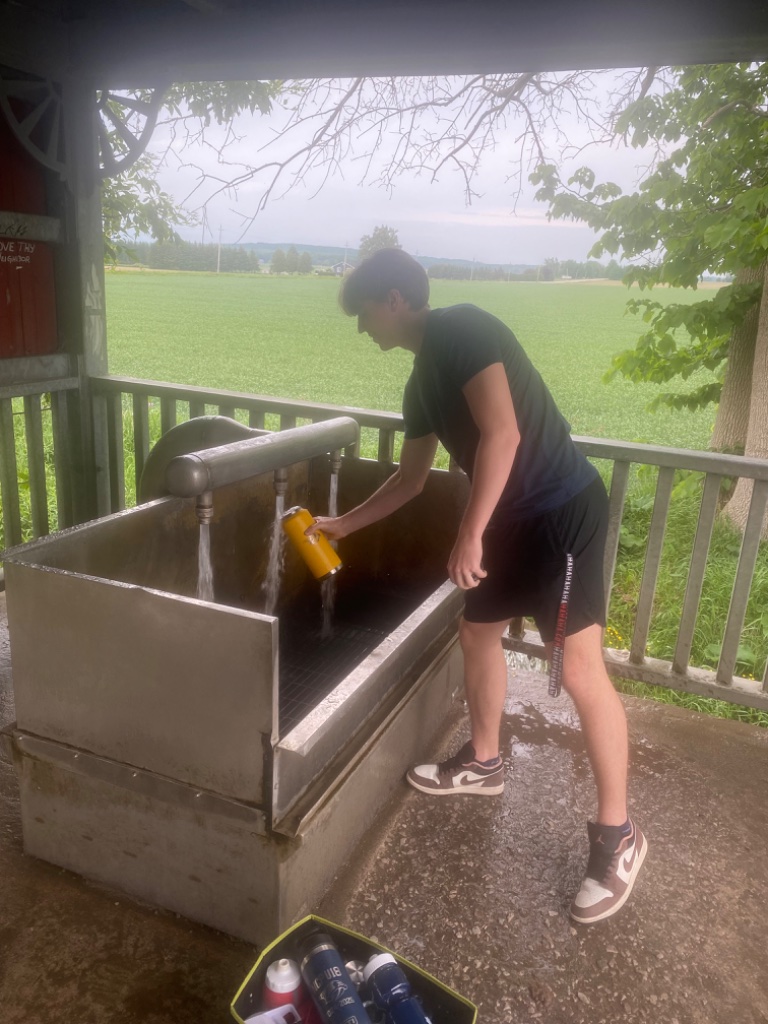
Elmvale is home to some of the purest water on earth — naturally artesian, drawn from deep glacial aquifers that have been filtering through the earth for generations. There is something quietly remarkable about standing beneath a simple wooden shelter in the open countryside, watching crystal-clear water pour from the pipes, knowing that this is among the cleanest water the world has to offer.
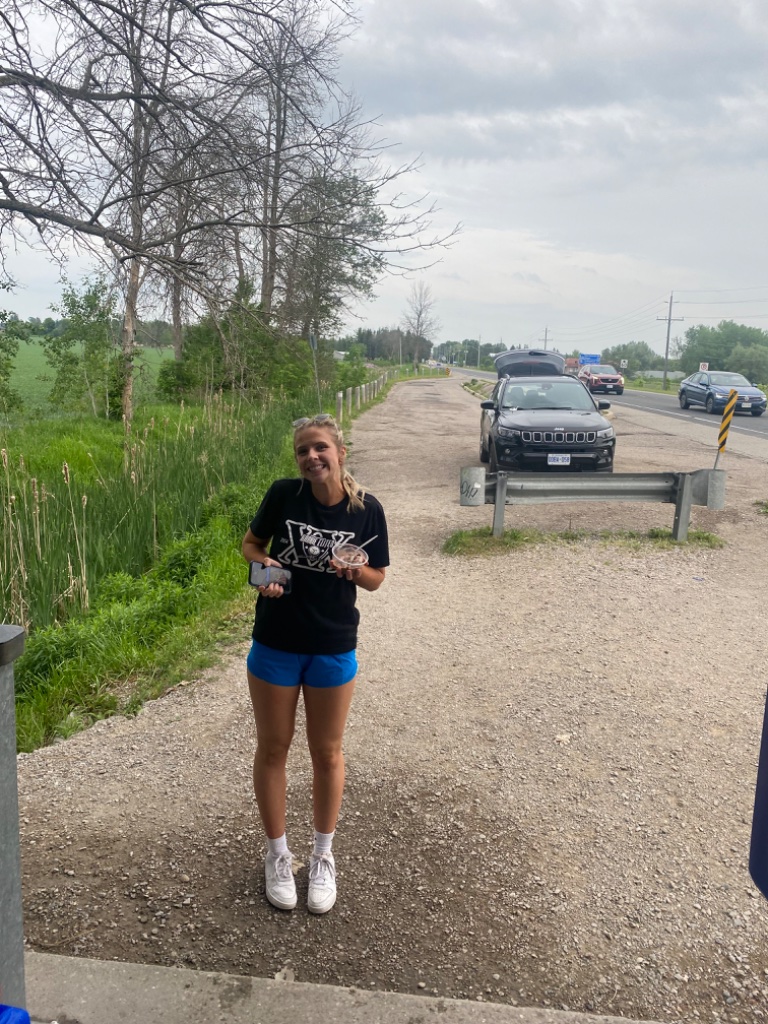
Bryce and I used to make this journey together nearly every month, filling our bottles and jugs and carrying a little of that purity home with us. Then life grew busy — as life so often does — and somehow three or more years slipped past without a single visit. Returning now, in this season of sabbatical rest, felt like a homecoming of sorts: a gentle reclamation of a small ritual that had quietly slipped away.
There is grace in revisiting the practices we have let lapse. The water tastes the same — clear, cold, and impossibly clean — and the land around it is as green and unhurried as memory left it. We may make the journey once more before the sabbatical draws to its close, and for that possibility I am grateful.
May 25, 2026
Isabella Stewart Gardner Museum, Boston
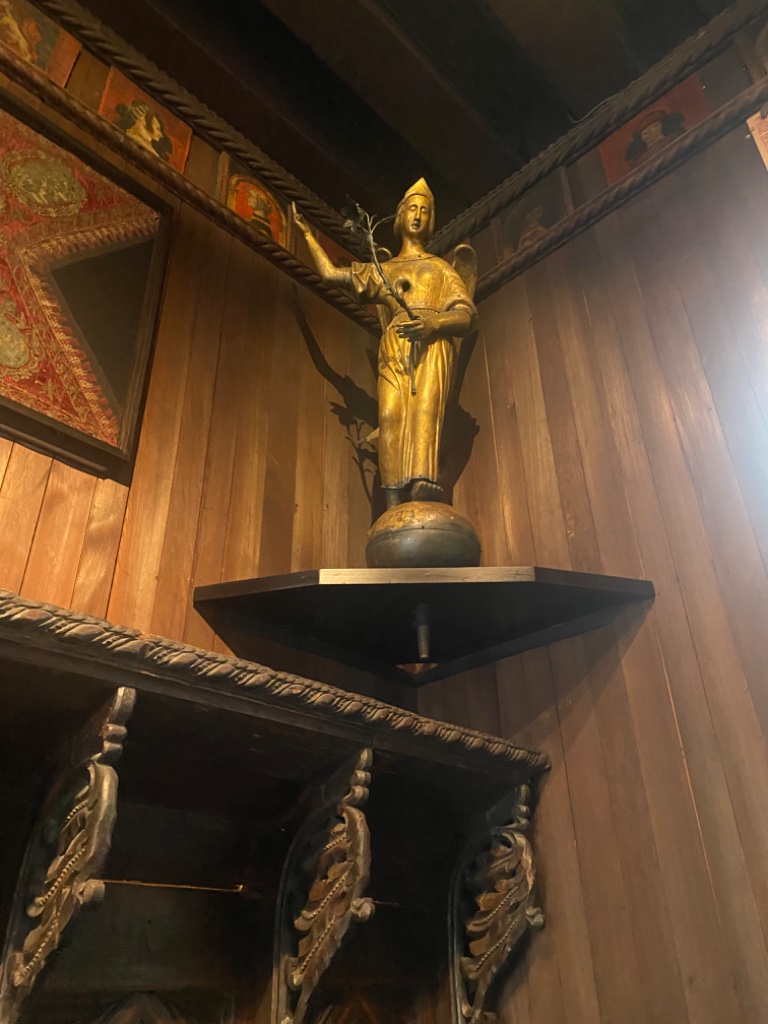
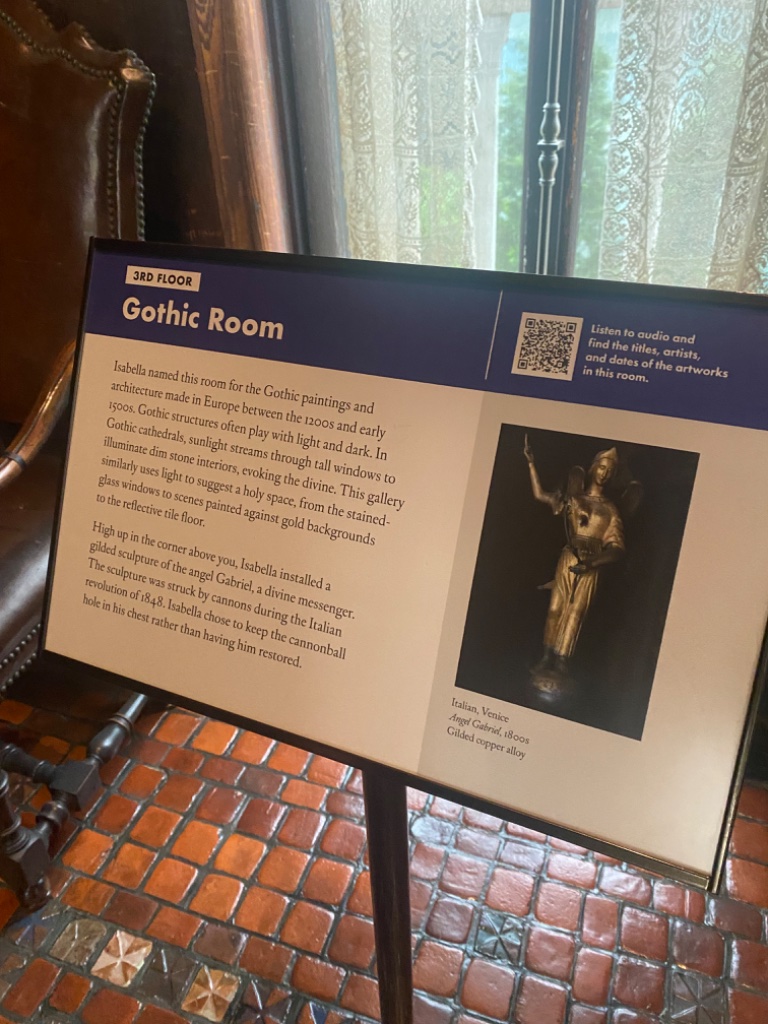
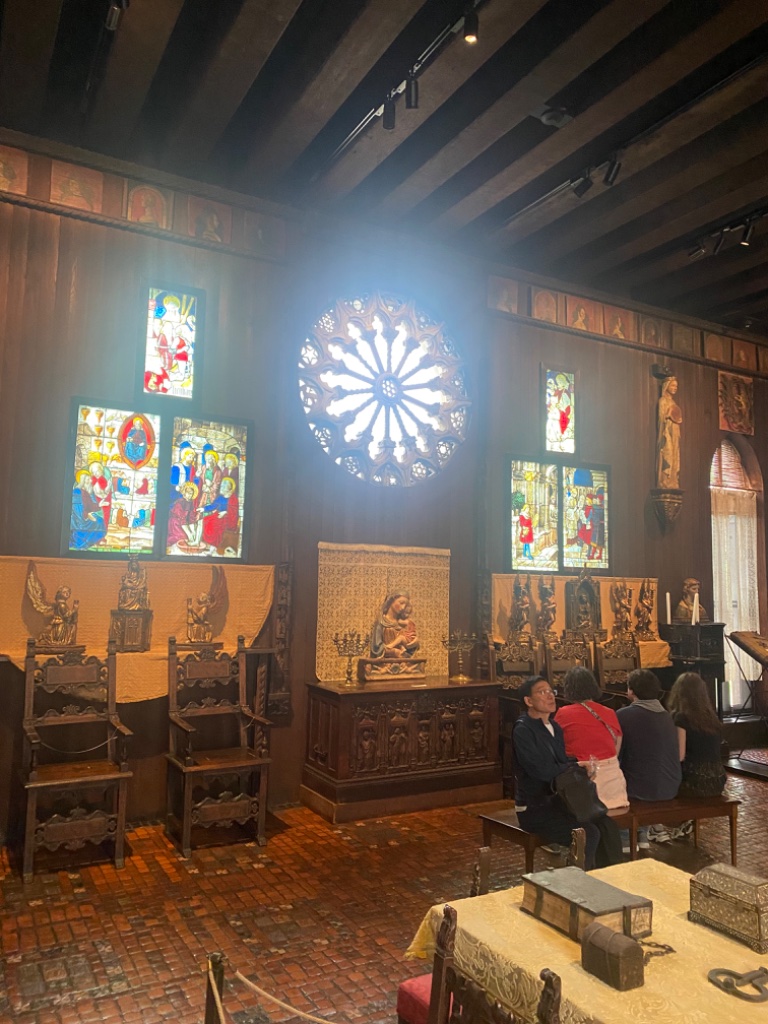
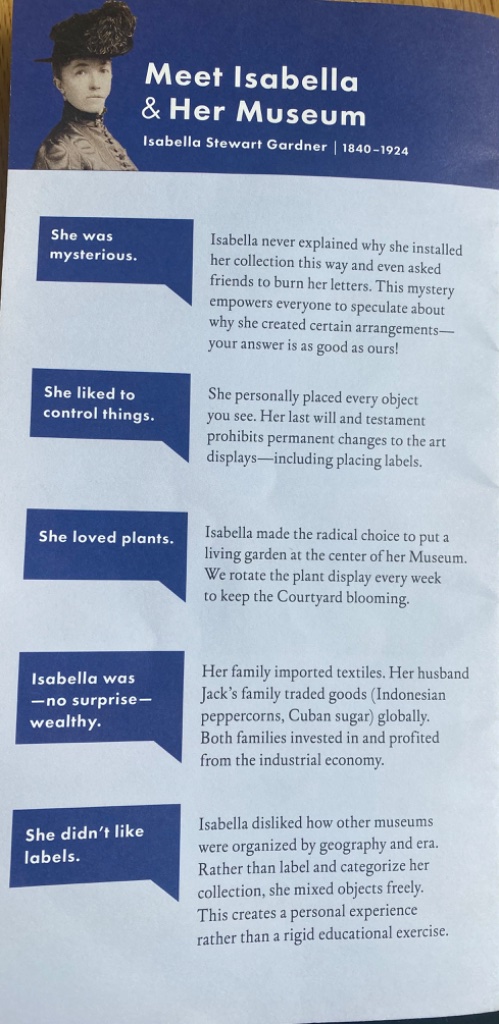
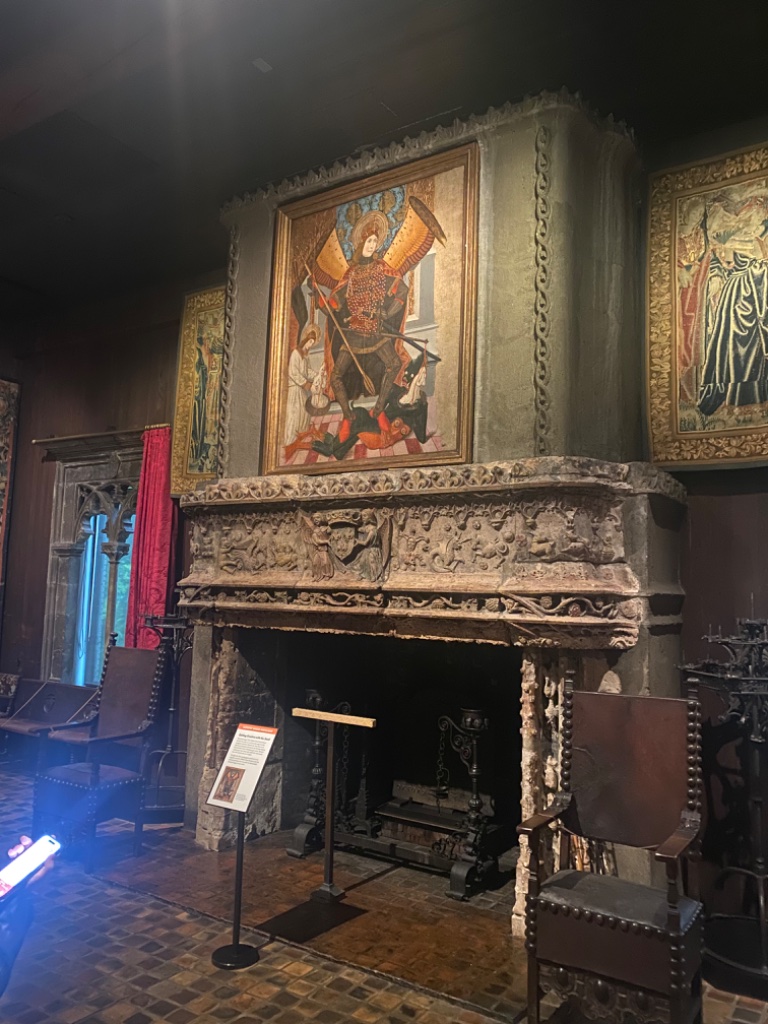
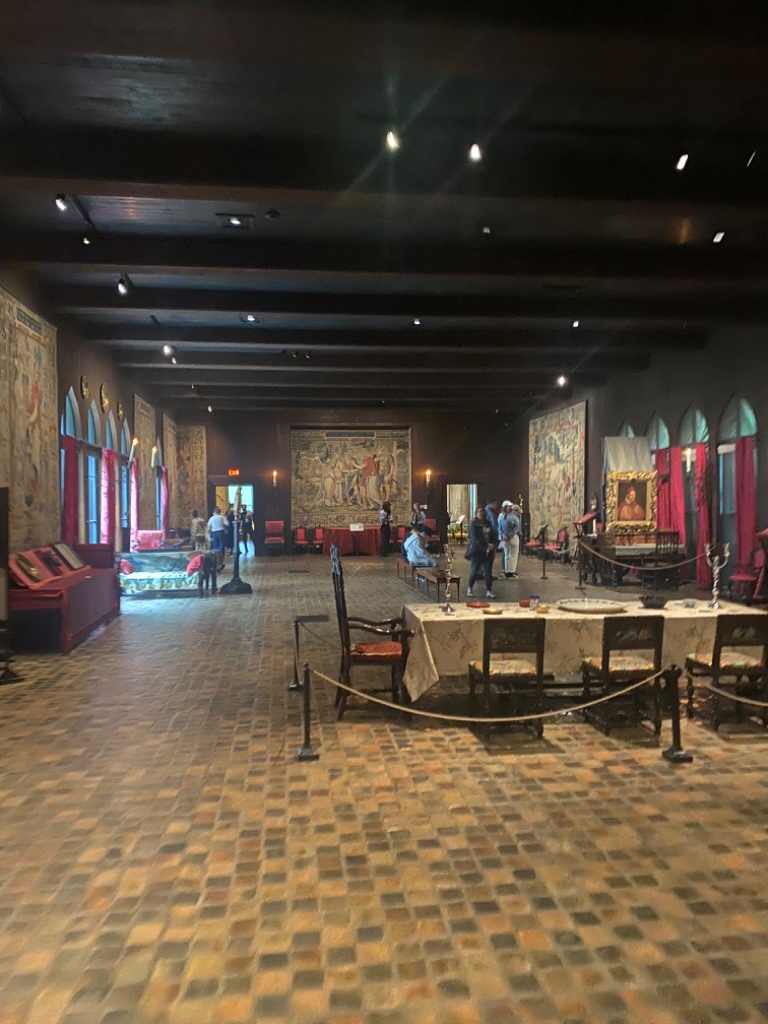
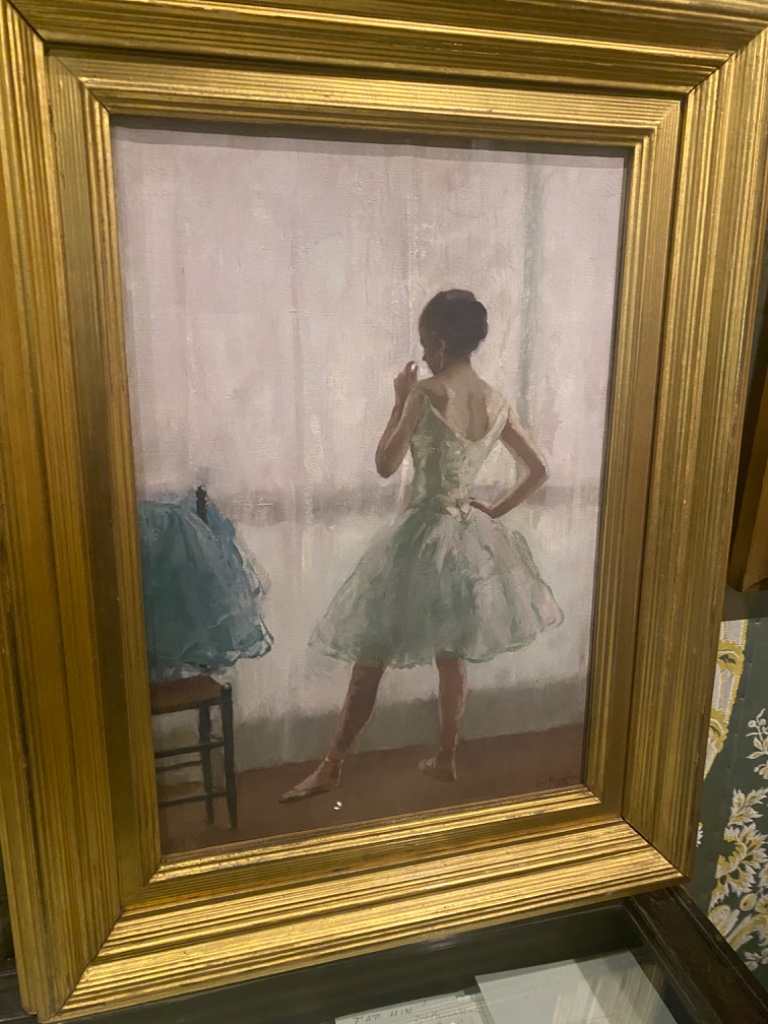
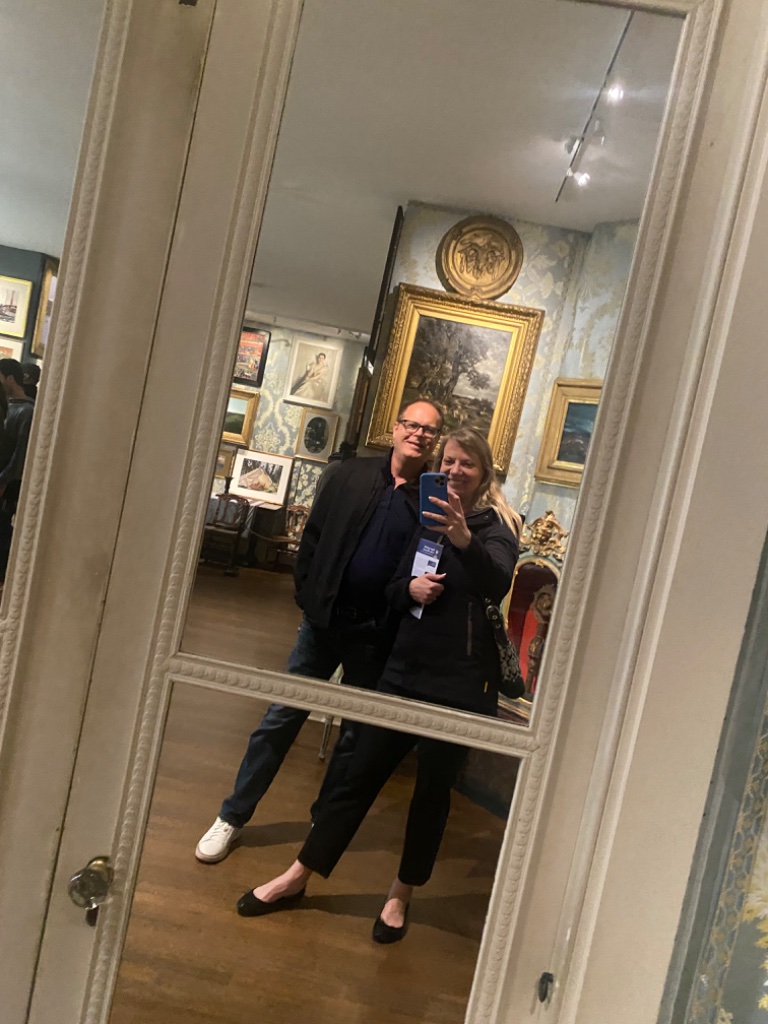
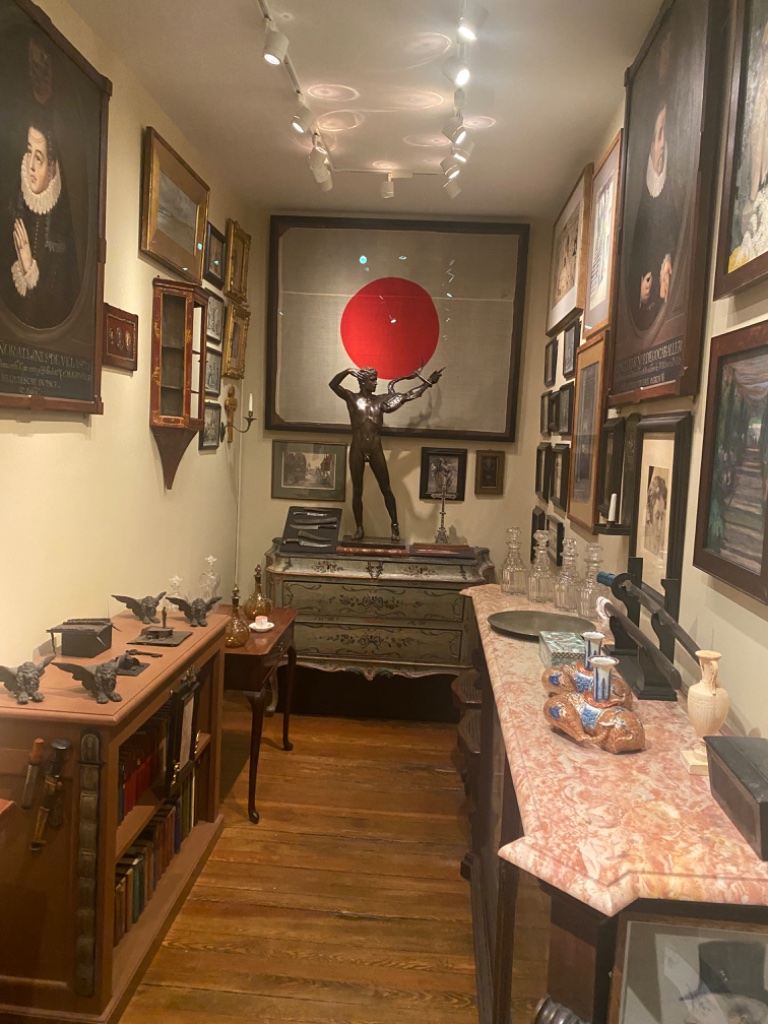
The Isabella Stewart Gardner Museum is unlike any other museum in the world. Built in the image of a Venetian palazzo, it houses a collection assembled entirely according to one extraordinary woman's singular vision. Isabella Stewart Gardner (1840–1924) was mysterious, deliberate, and deeply spiritual — she never explained her arrangements and asked friends to burn her letters. Her last will and testament prohibits any permanent changes to the displays, including labels. What you see is exactly what she willed into being. To walk through her museum is to step inside a mind shaped by beauty, faith, and an insatiable love for the world's great art.
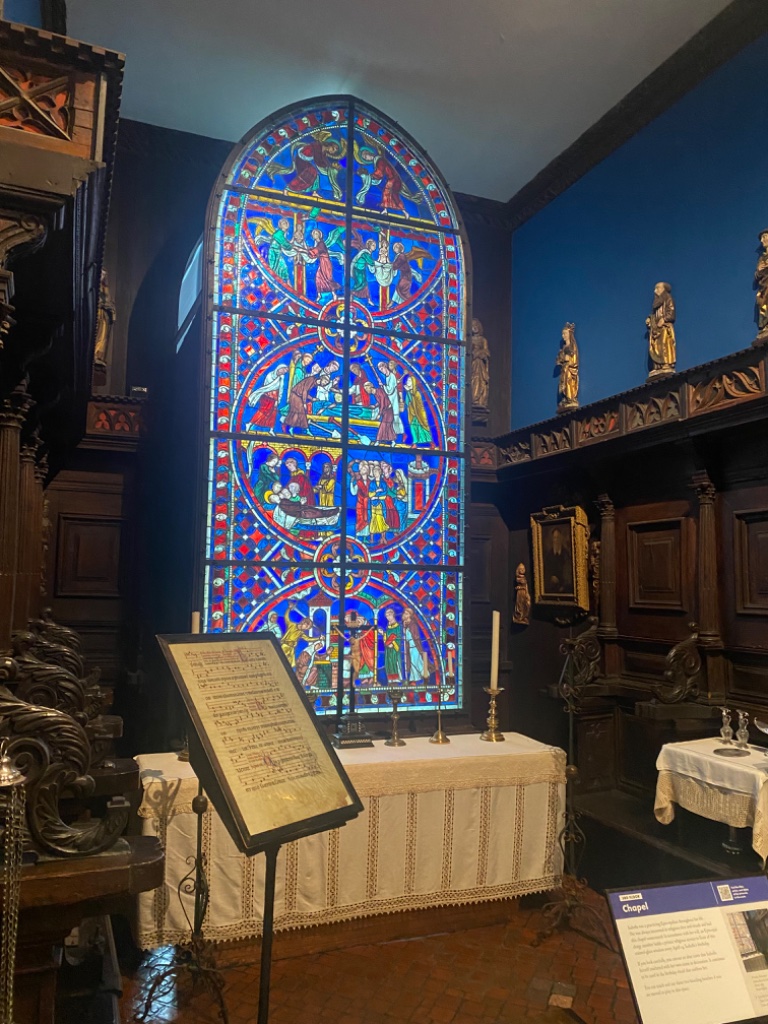
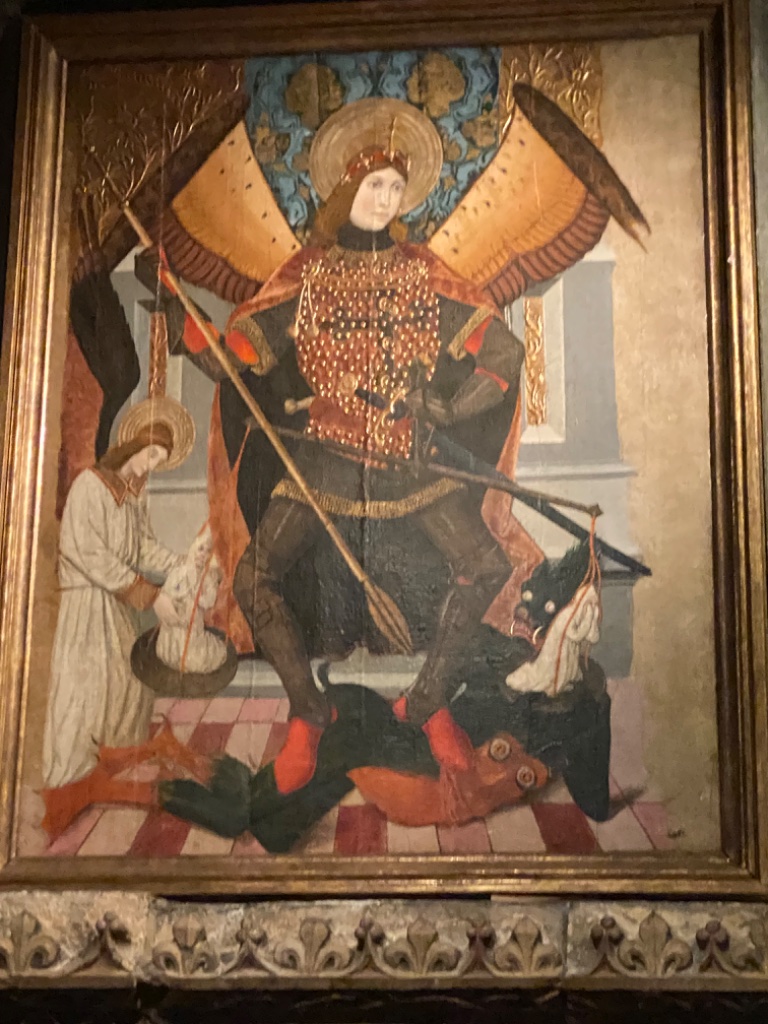
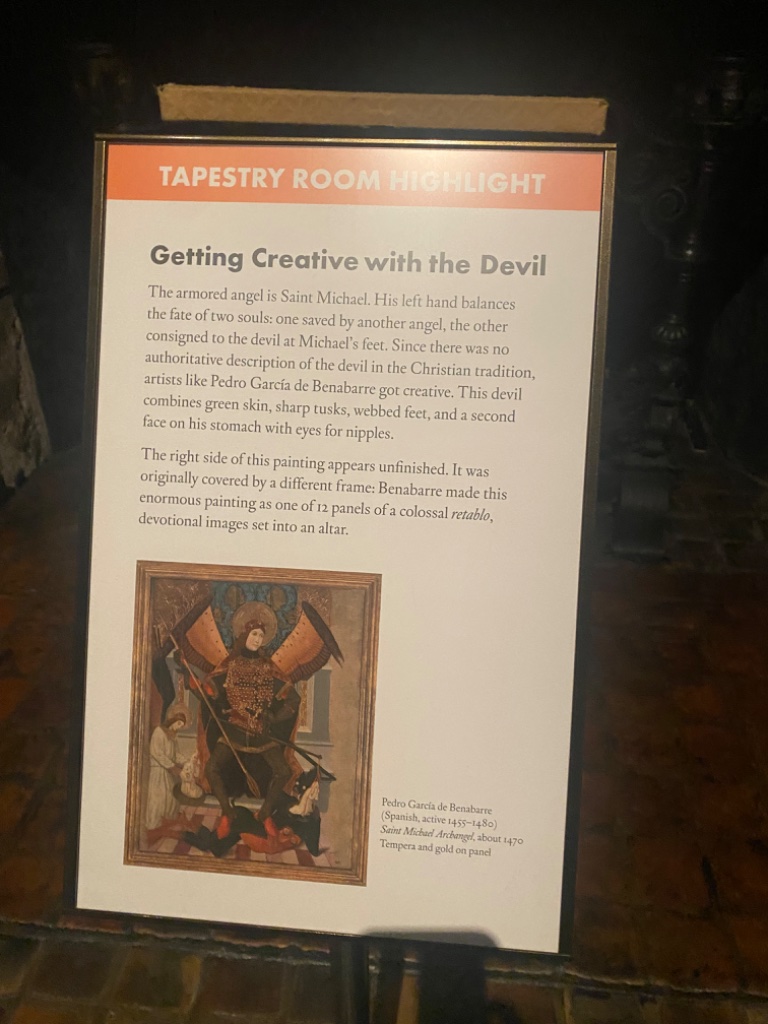
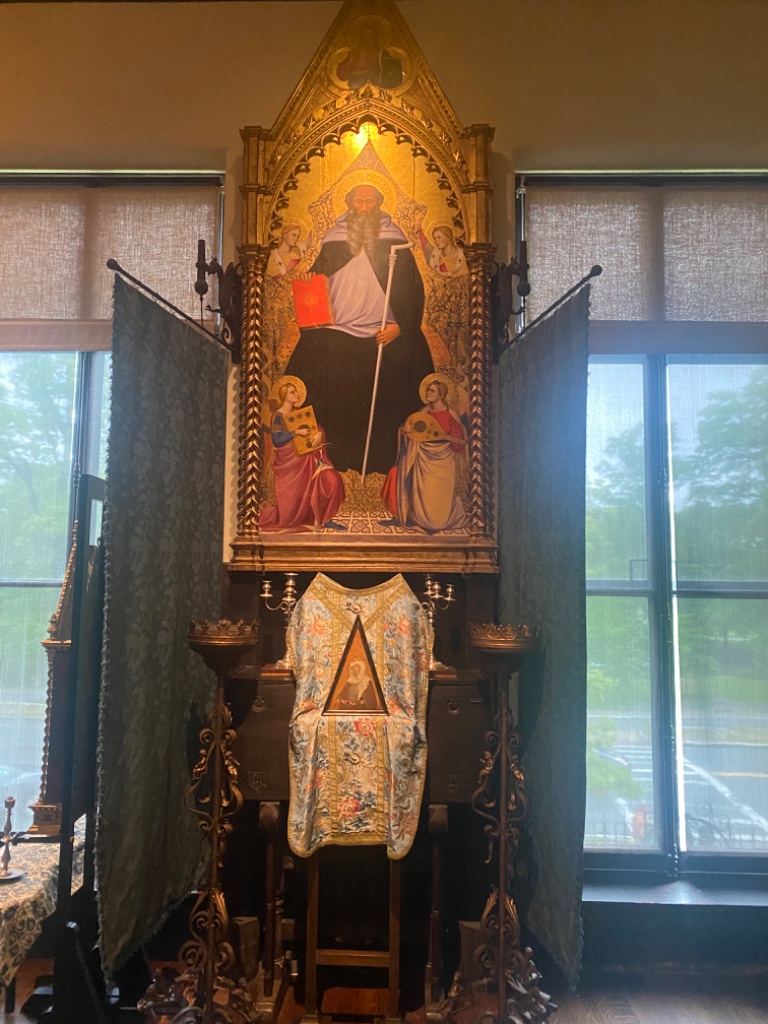
What struck me most was how consistently and lovingly Isabella gathered art that pointed toward the sacred. Throughout her collection — across every century, culture, and medium — one finds devotional objects, images of Christ, representations of the saints, and works saturated with theological meaning. Hers was not merely an aesthetic project. It was an act of reverence.
A Reflection · Images of Christ
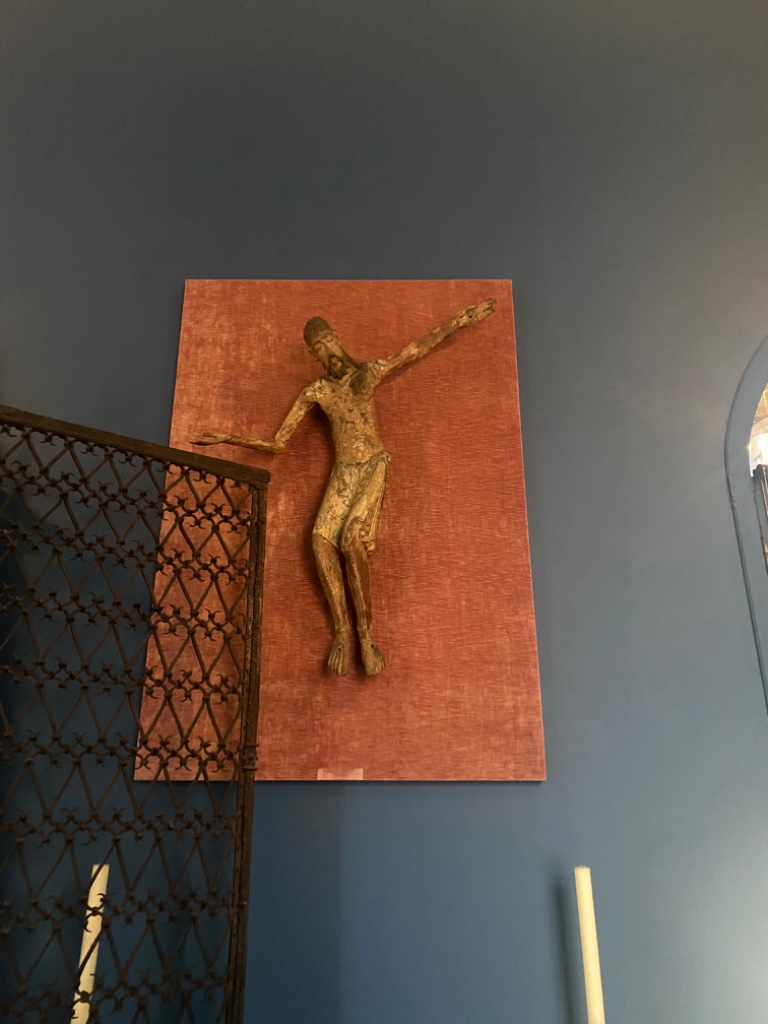
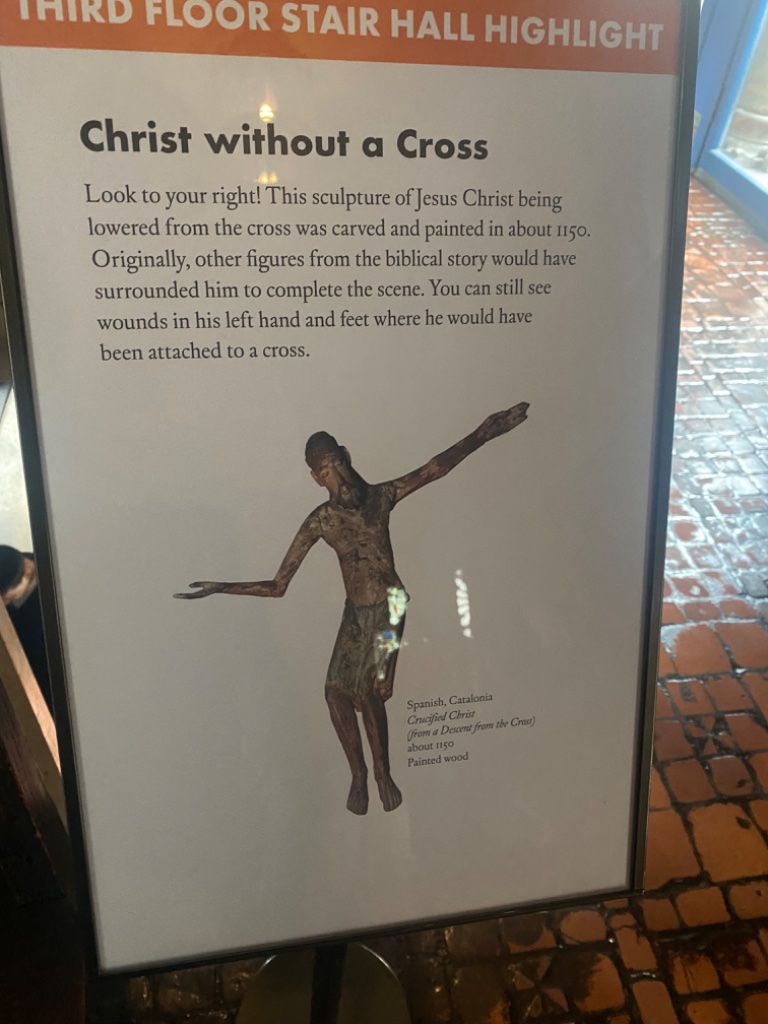
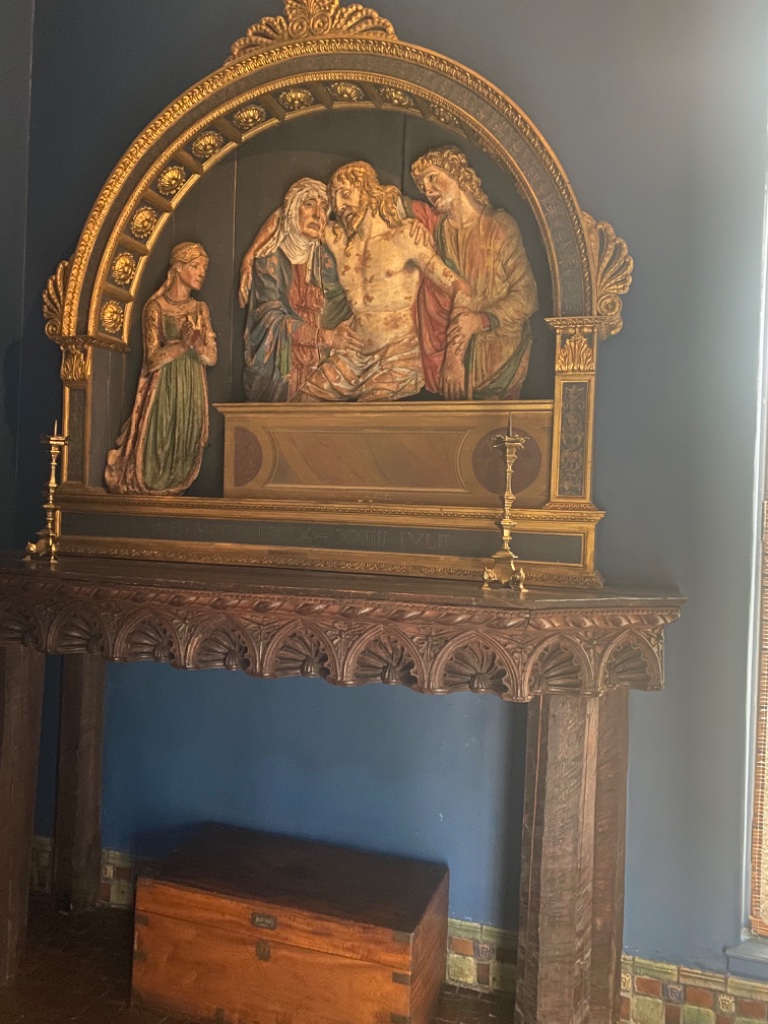
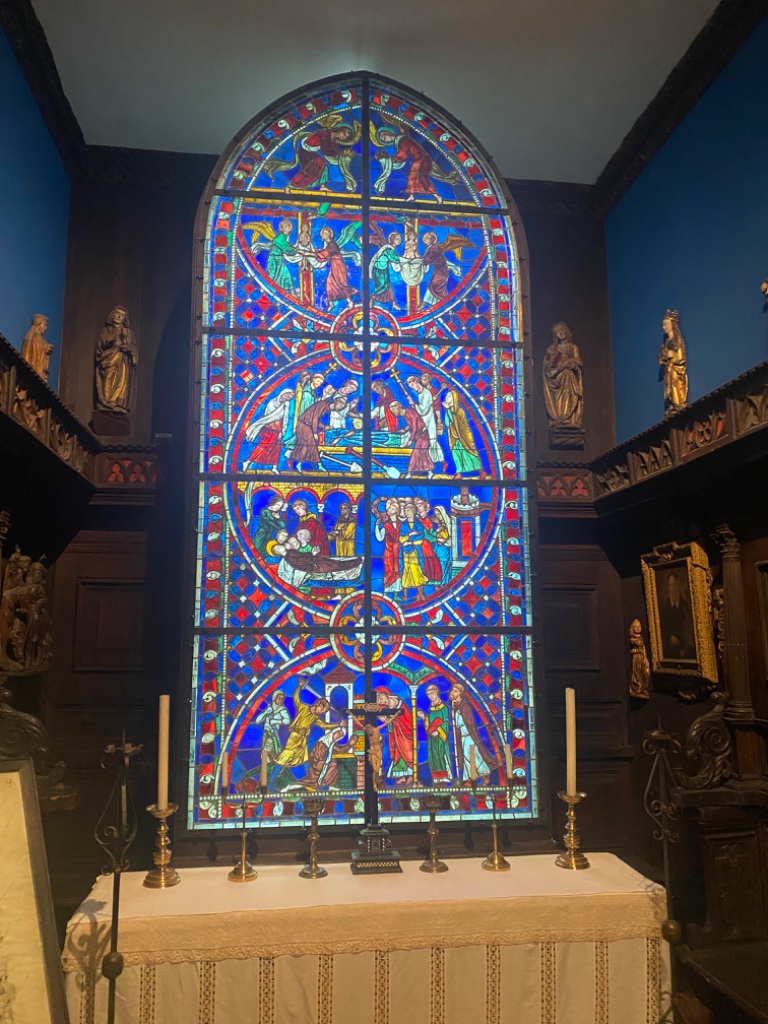
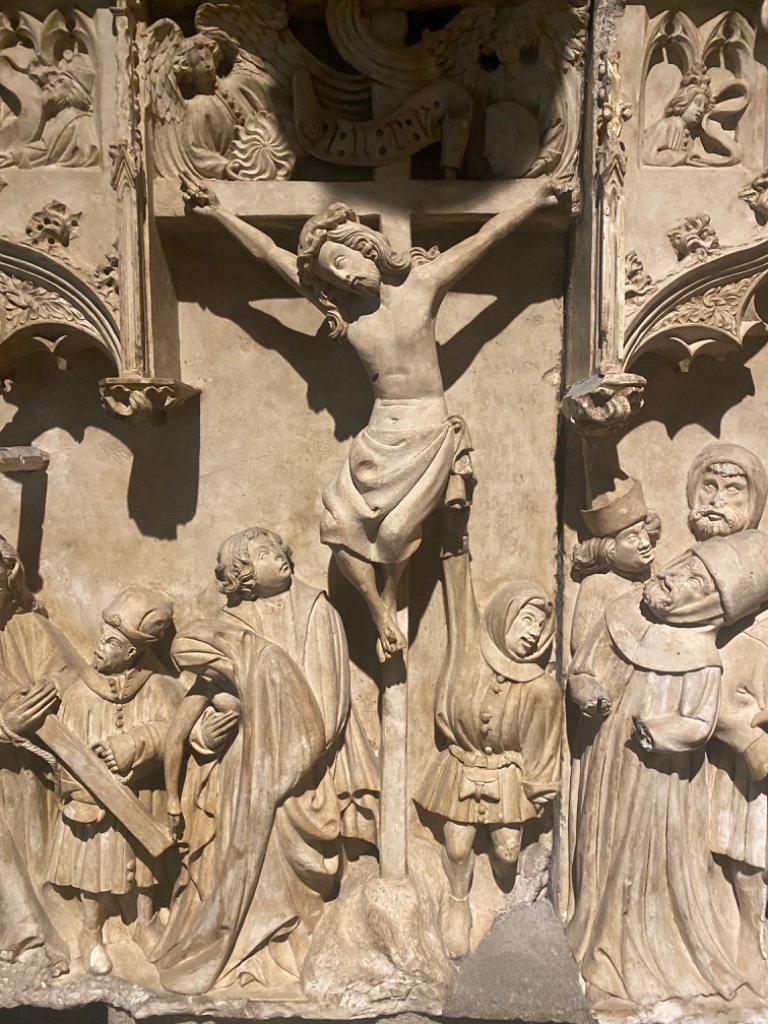
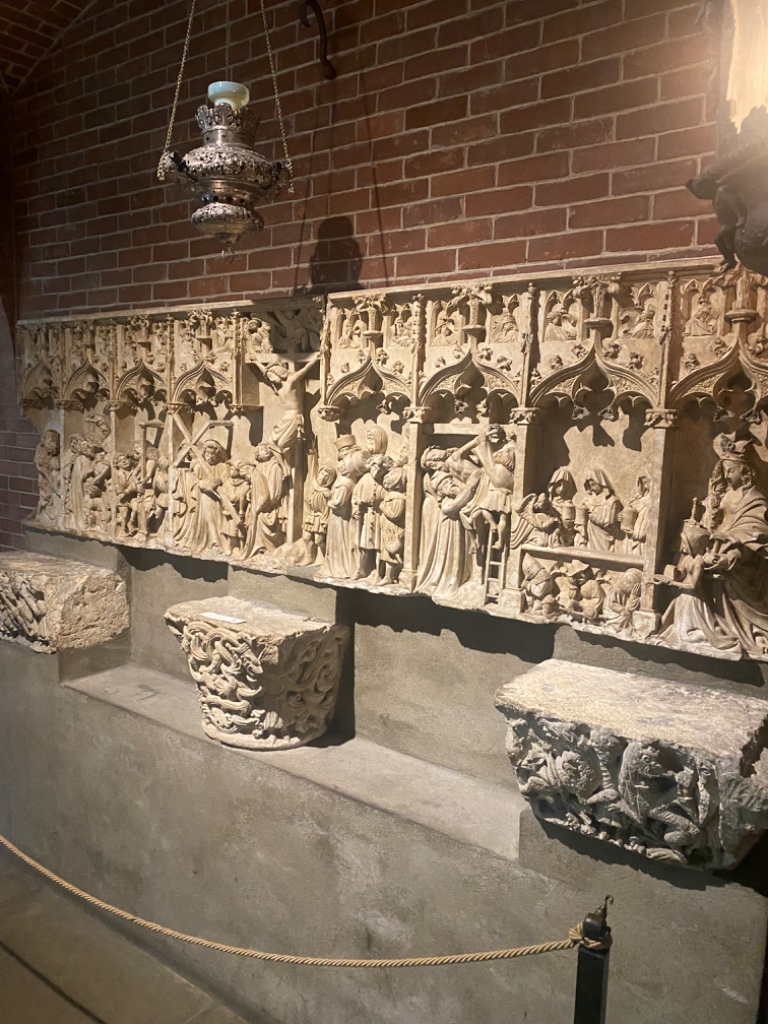
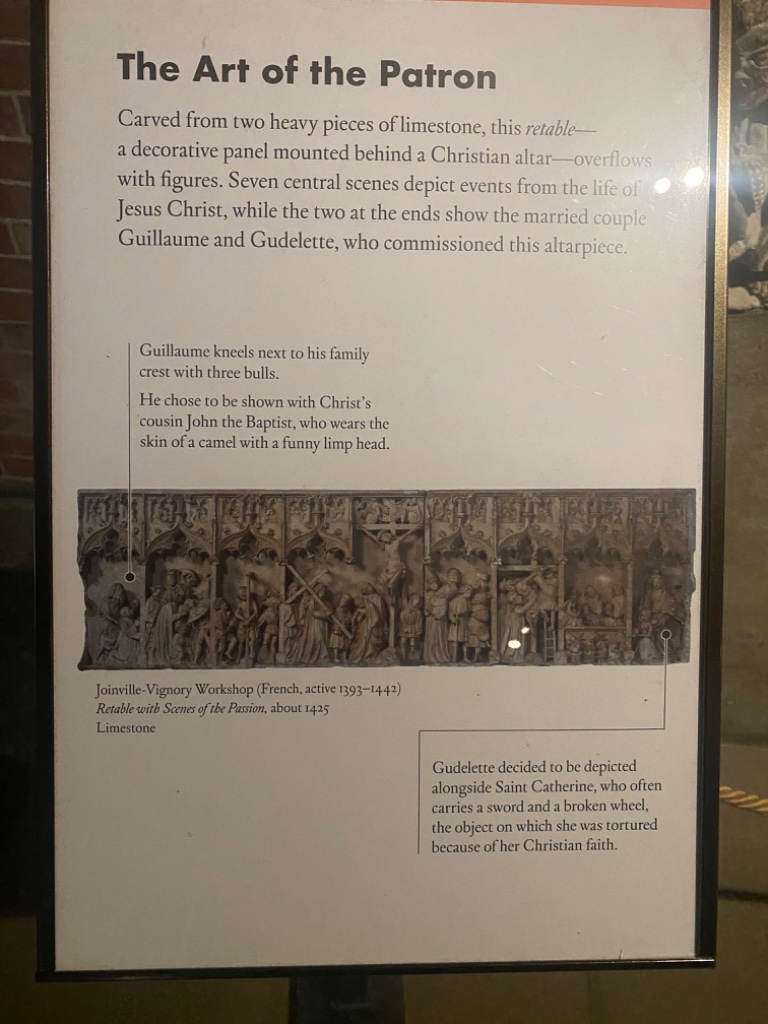
Again and again throughout the museum, I encountered the face and form of Christ — carved in limestone, cast in relief, rendered in stained glass blazing with medieval colour. A twelfth-century wooden crucifix, titled "Christ without a Cross," stopped me in my tracks: carved and painted around 1150 in Catalonia, it depicts Jesus being lowered from the cross — wounds visible, arms extended in that posture of surrender and mercy. Beside it, a limestone retable from the Joinville-Vignory Workshop (about 1425) narrates the entire Passion in exquisite carved scenes. Seven central panels depict events from the life of Christ, each face full of grief and grace.
In the Gardner, Christ is not a decorative motif. He is a presence. And for me, moving through these rooms on a Monday morning in late May, He felt very near.
The Art Heist · March 18, 1990
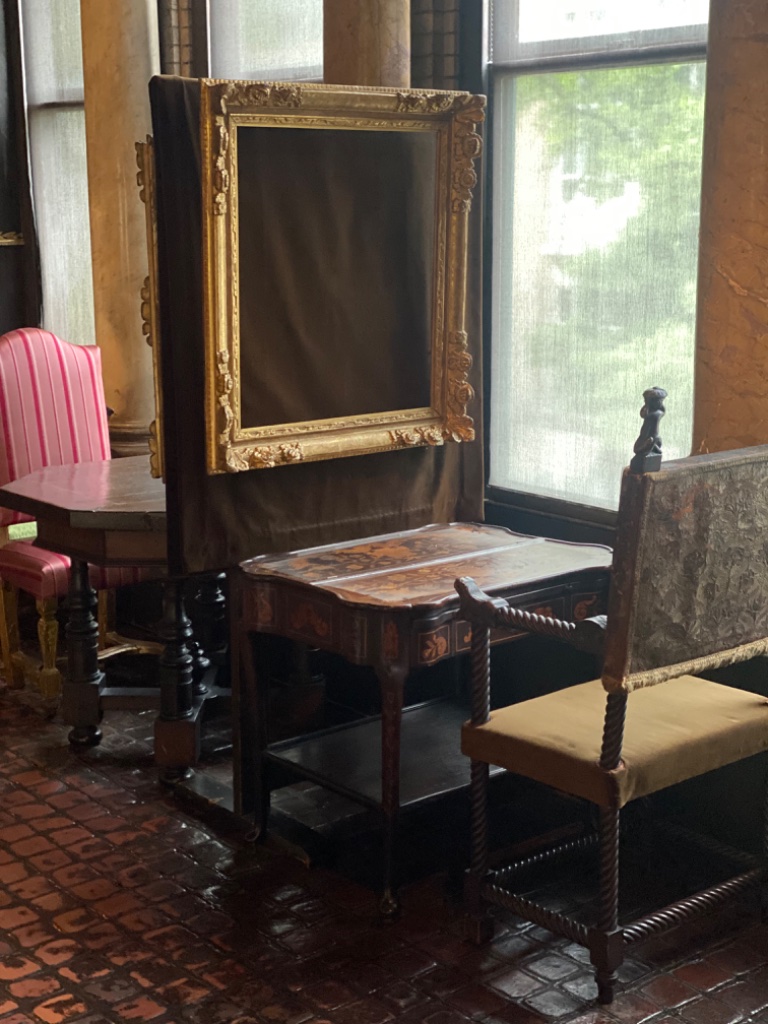
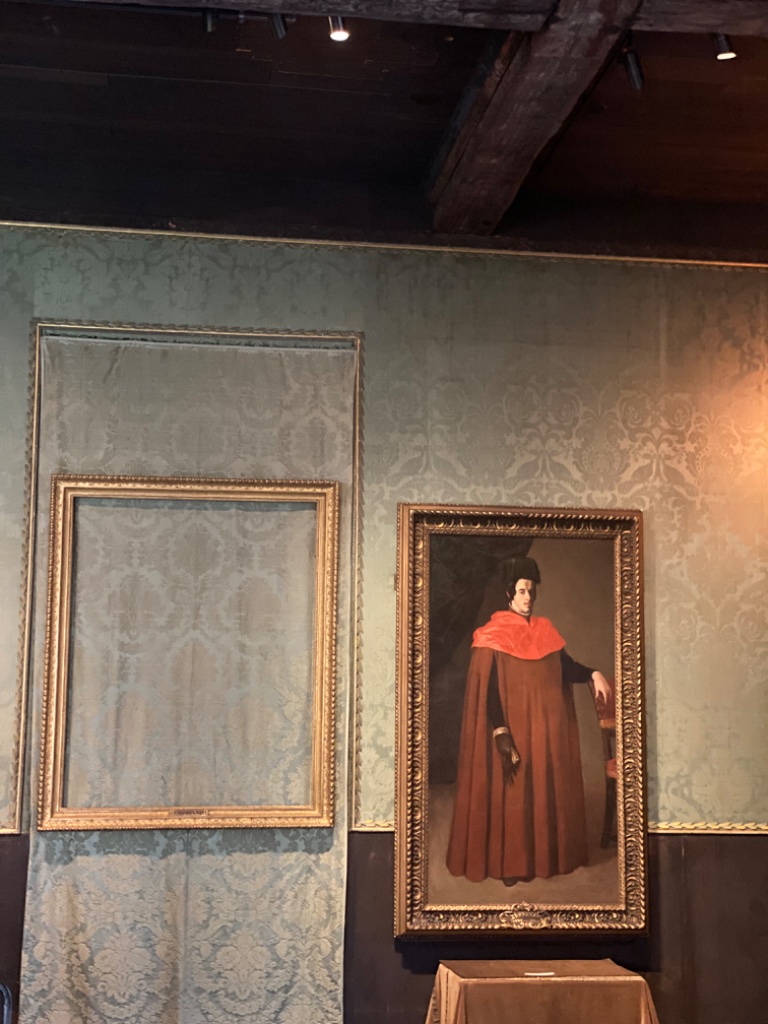
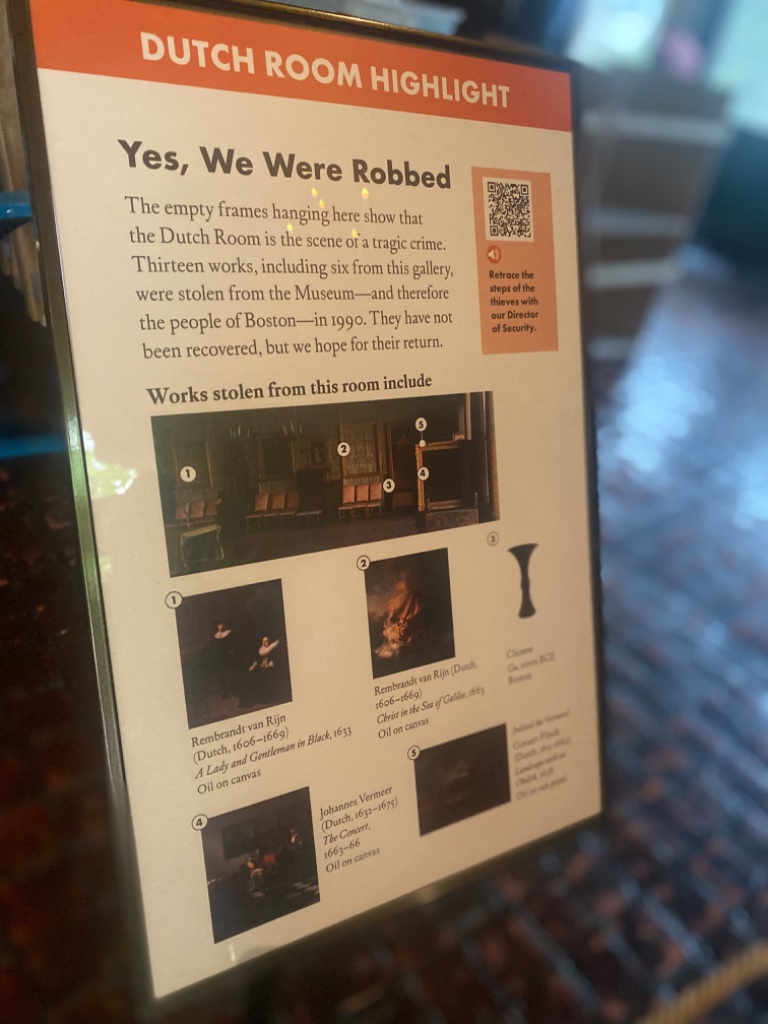
The empty frames are the most haunting things in the museum. On the night of March 18, 1990, two men posing as police officers bluffed their way past the guards and spent 81 minutes removing thirteen works of art — including masterpieces by Rembrandt, Vermeer, and Degas — worth an estimated $500 million. It remains the largest art theft in history. The works have never been recovered.
Per Isabella's will, nothing in the museum can be moved or changed. And so the empty frames remain, hanging exactly where the stolen paintings once hung — a quiet, devastating testimony. The Dutch Room sign reads simply: "Yes, We Were Robbed." The museum still hopes for the return of these works, and a $10 million reward stands unclaimed.
Watch: The Story of the Heist
The Gardner Heist — YouTube DocumentaryThe Courtyard Garden
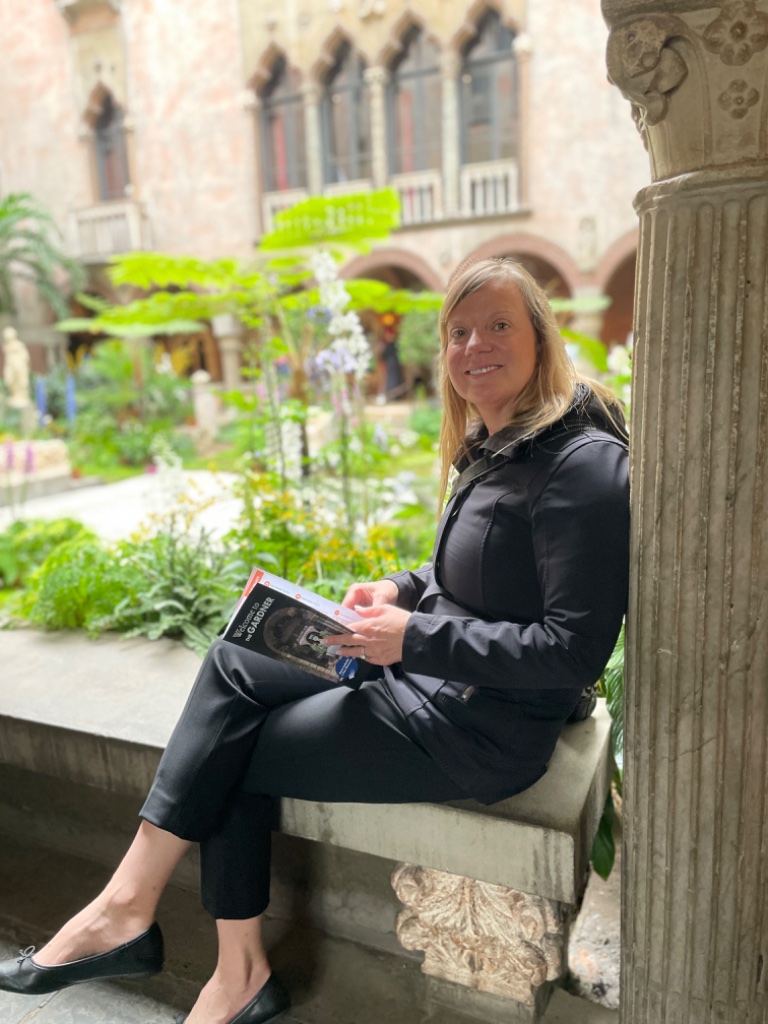
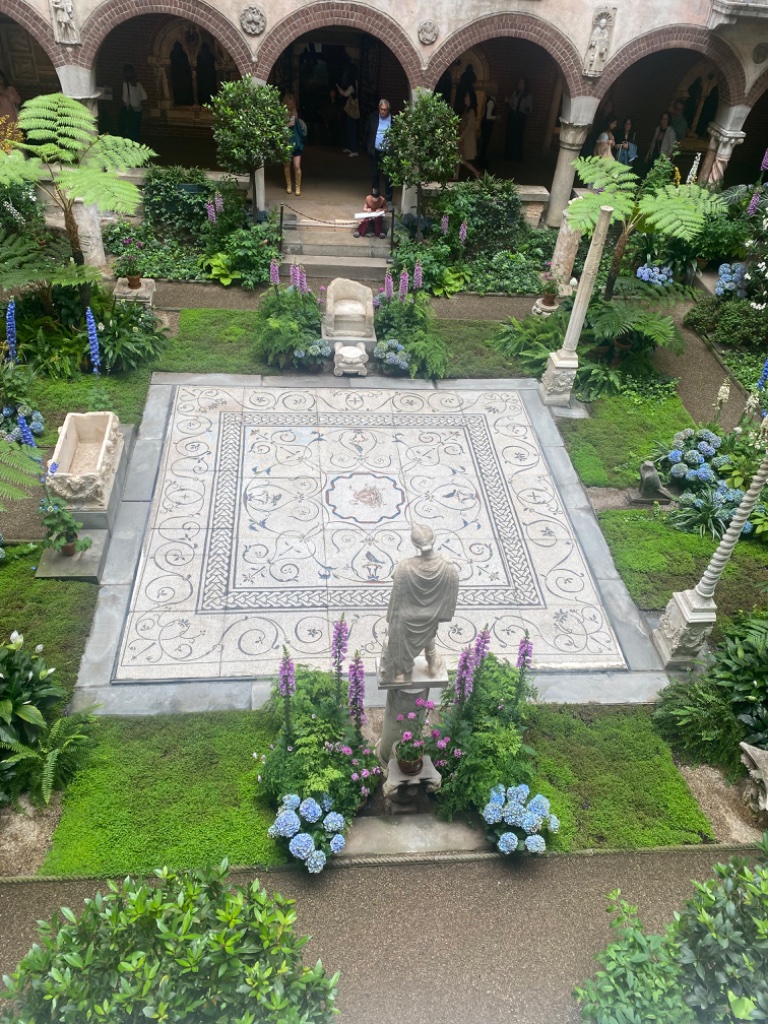
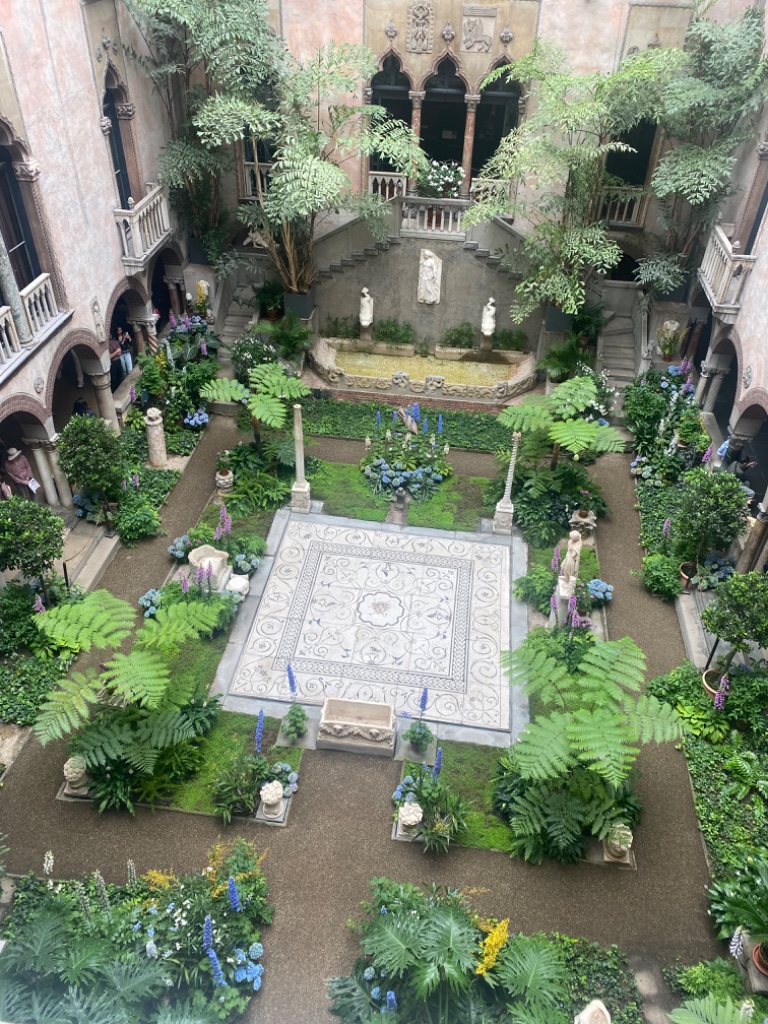
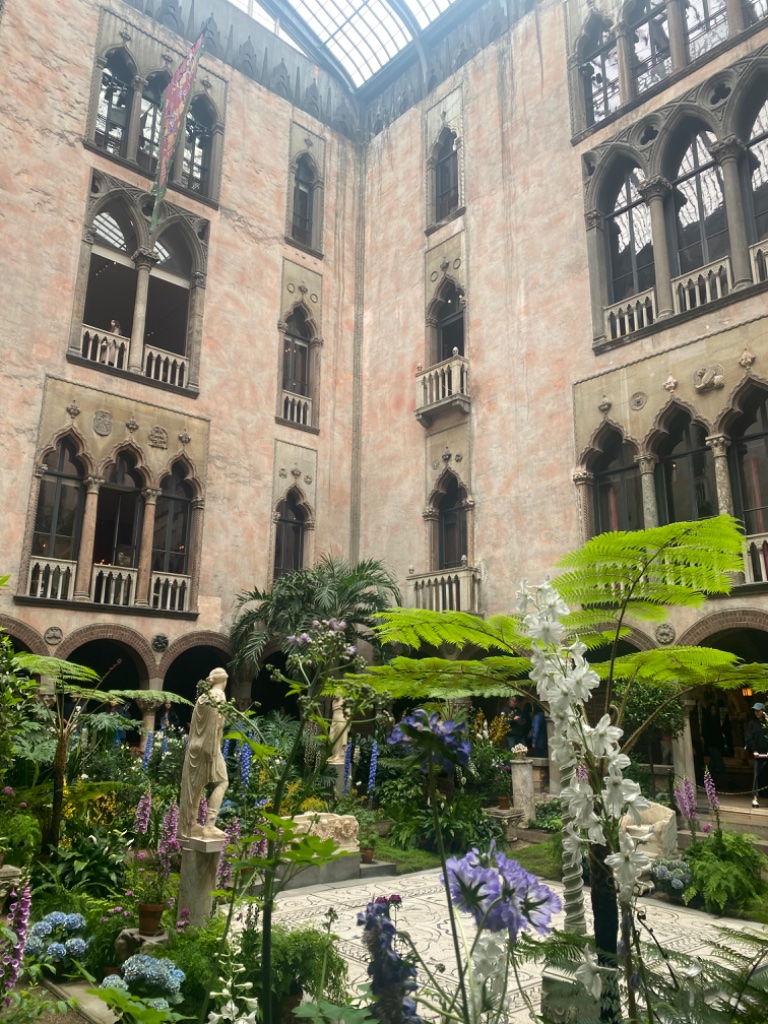
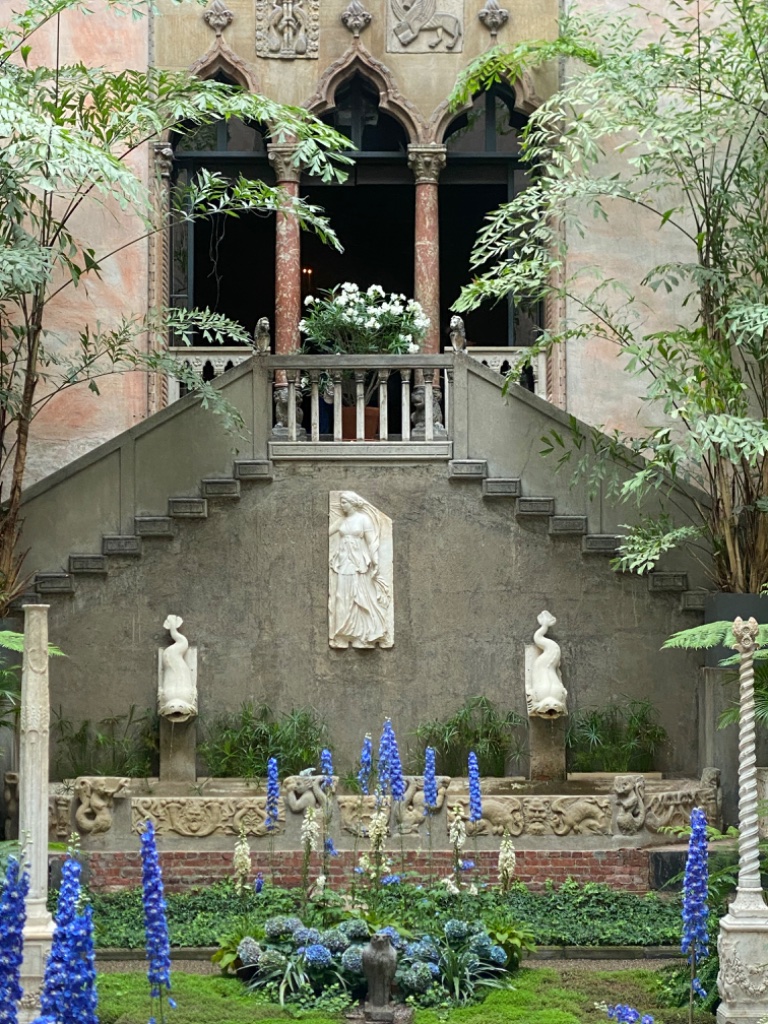
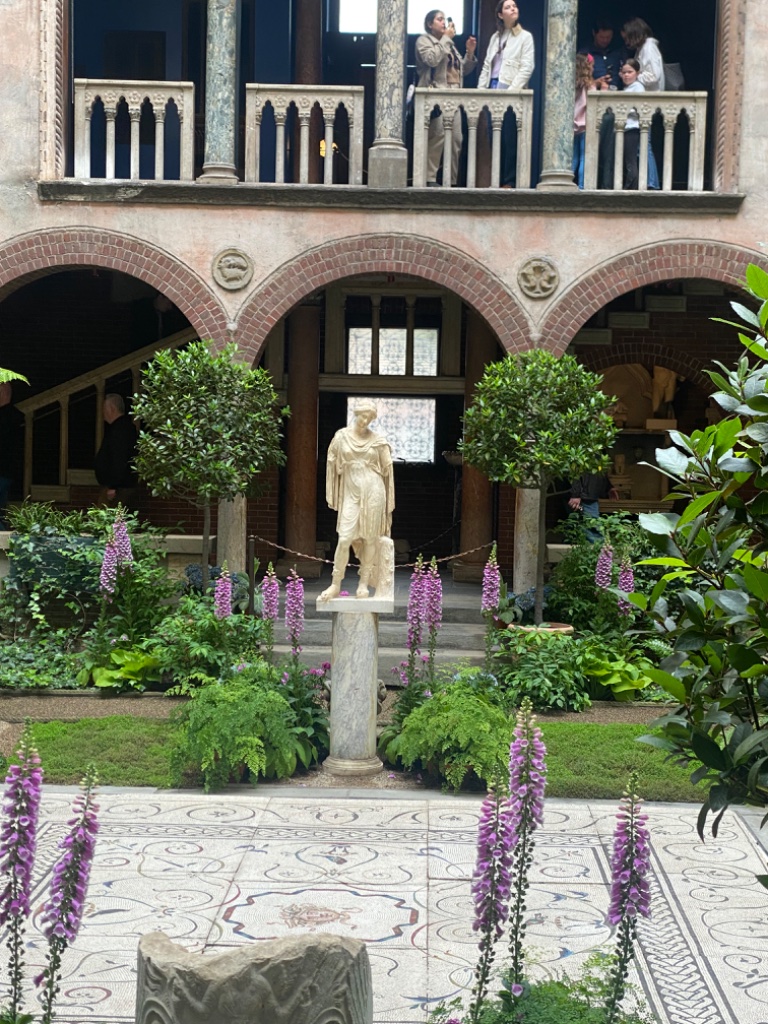
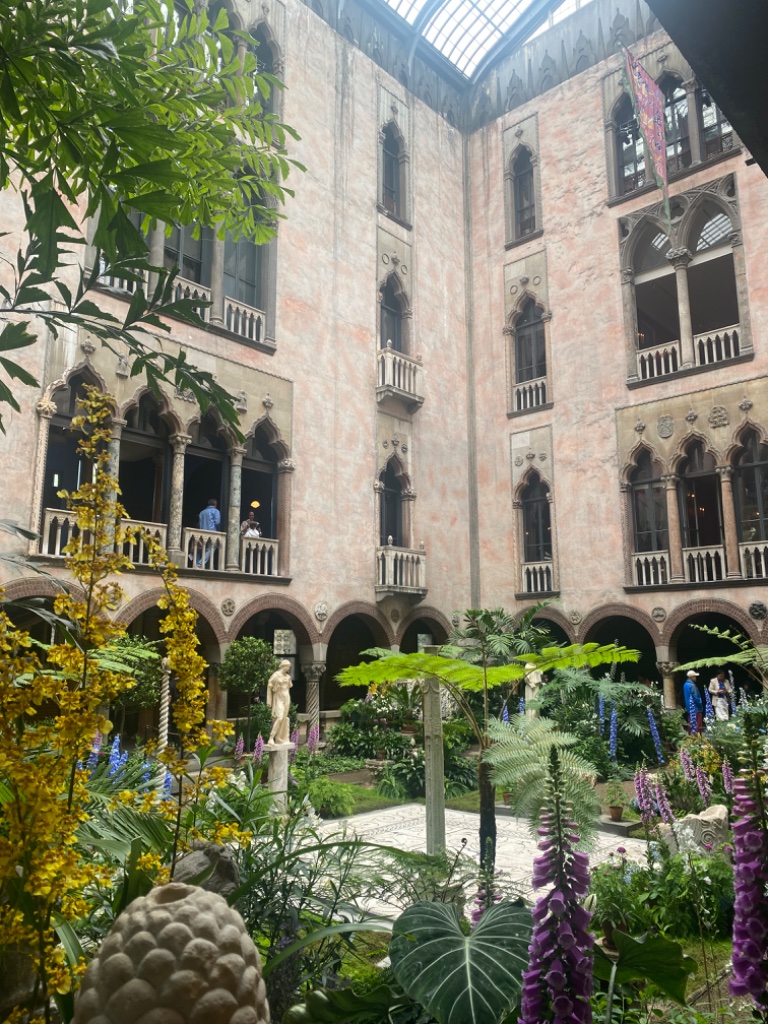
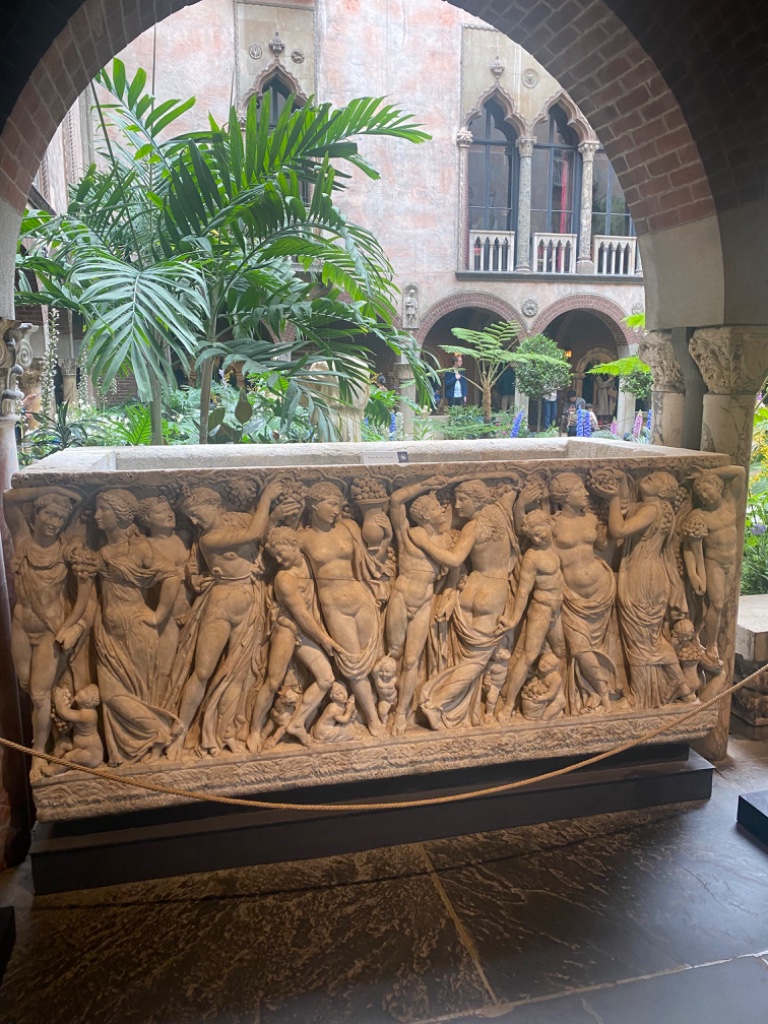
At the heart of the museum is the Courtyard — an open garden that rises four stories beneath a glass ceiling. Isabella made what the museum calls a "radical choice": to place a living, growing garden at the very centre of her collection. The plant display is rotated every week to keep it blooming year-round. On this May Monday, it was extraordinary — ferns, hydrangeas in blue and purple, foxglove reaching upward, ancient Roman columns and statuary half-hidden among the greenery, and a Roman mosaic floor at the centre of it all.
Standing in the Courtyard, looking up through the galleries toward the sky, I felt something I can only describe as gratitude — the deep, wordless kind. Beauty and nature and centuries of human longing for the sacred, all gathered in one place. Isabella loved plants because they grow. They require patience, tending, light. So does a soul.
Other Great Works & Rooms
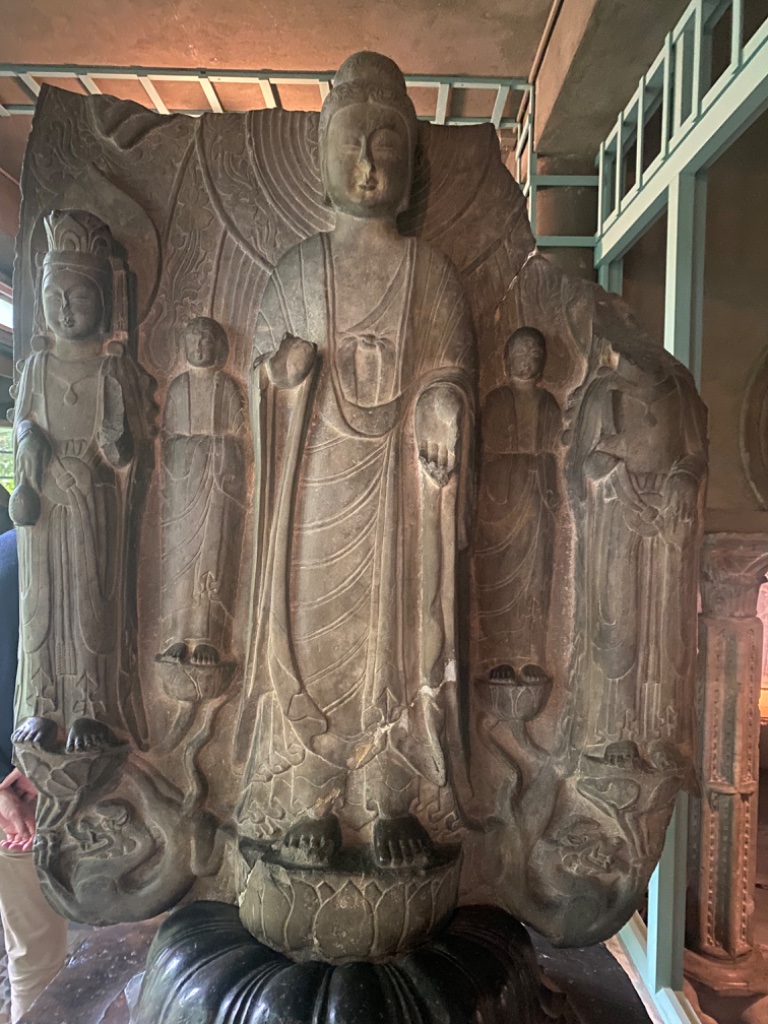
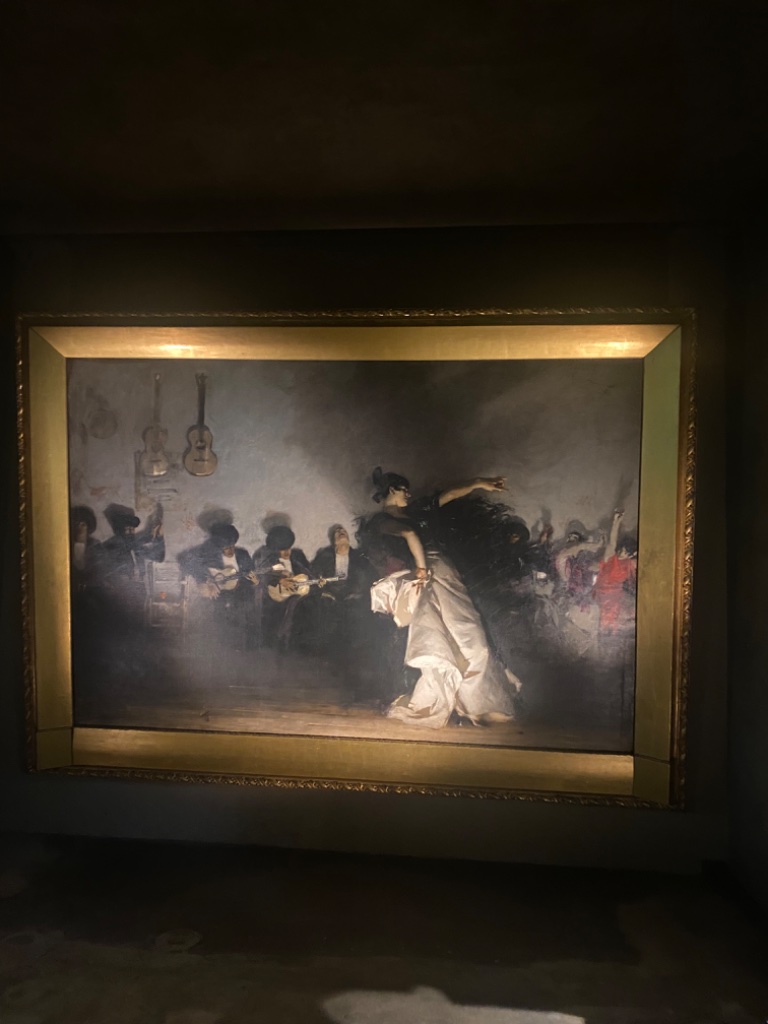
May 23, 2026
Museum of Fine Arts, Boston
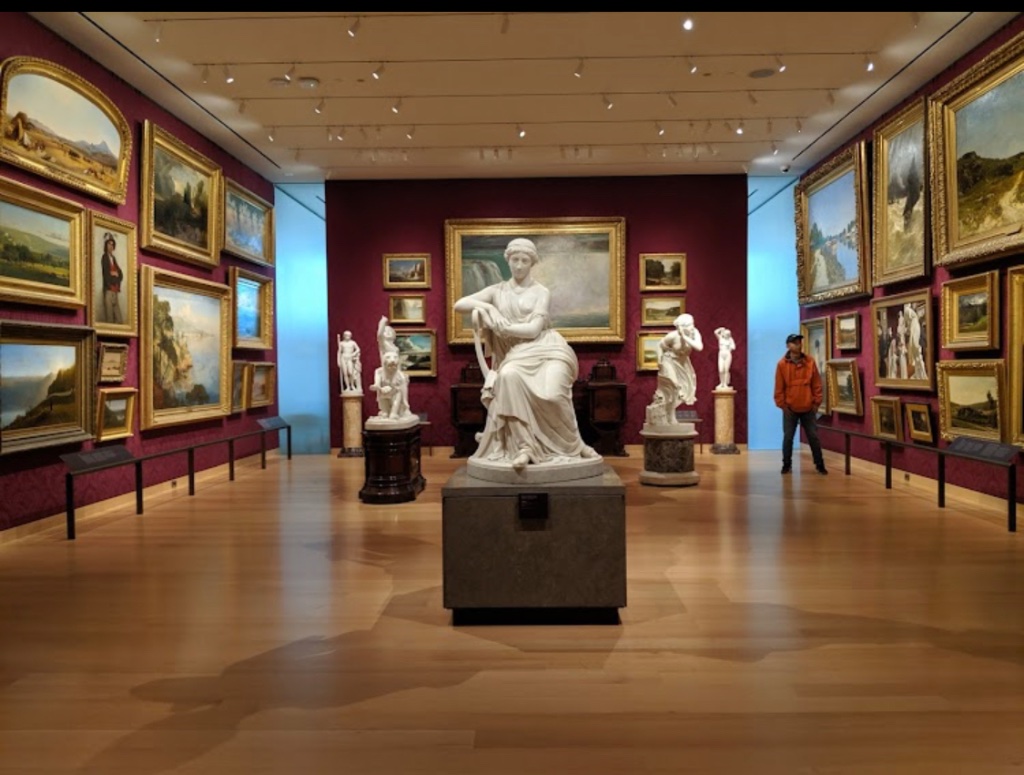
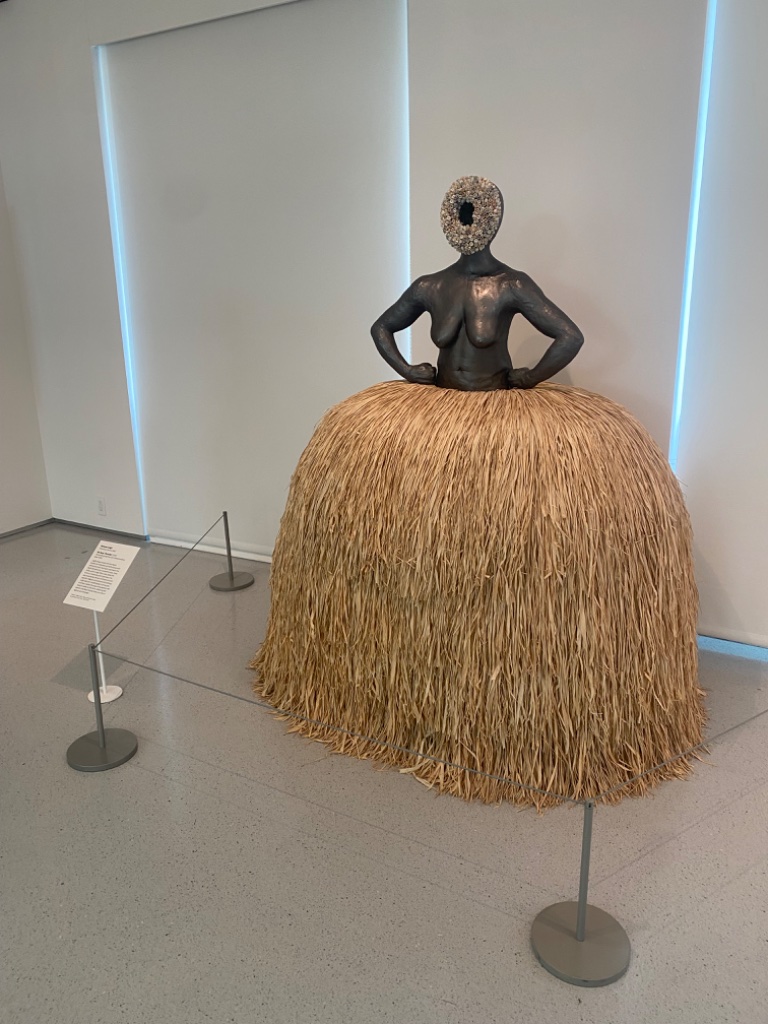
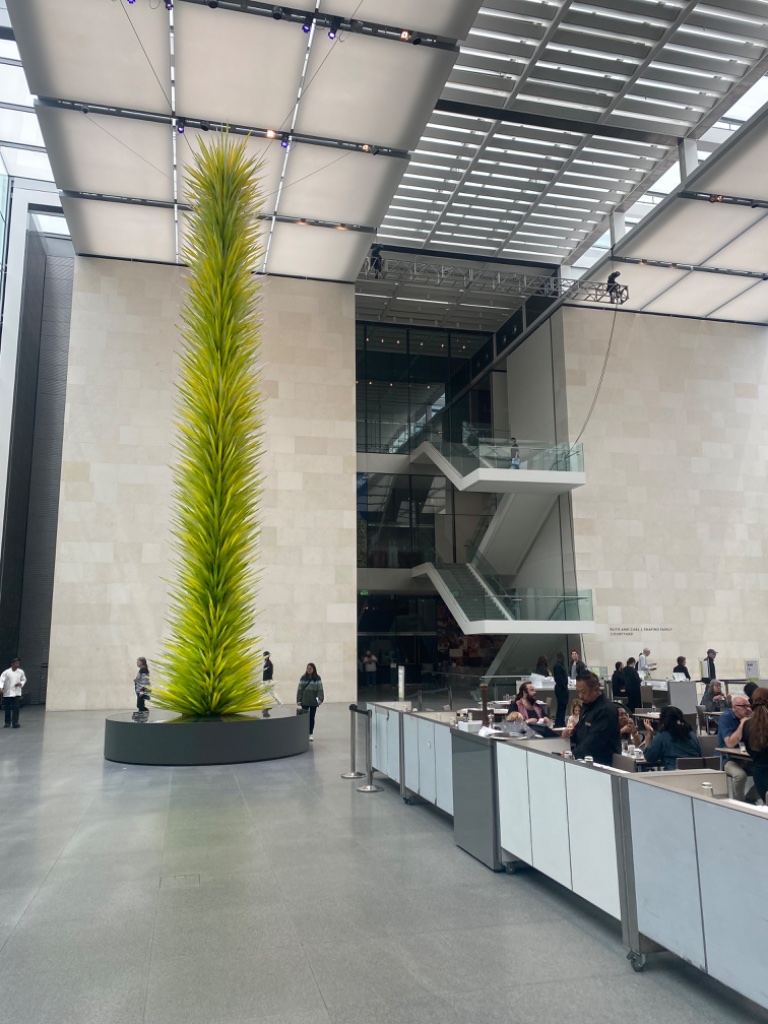
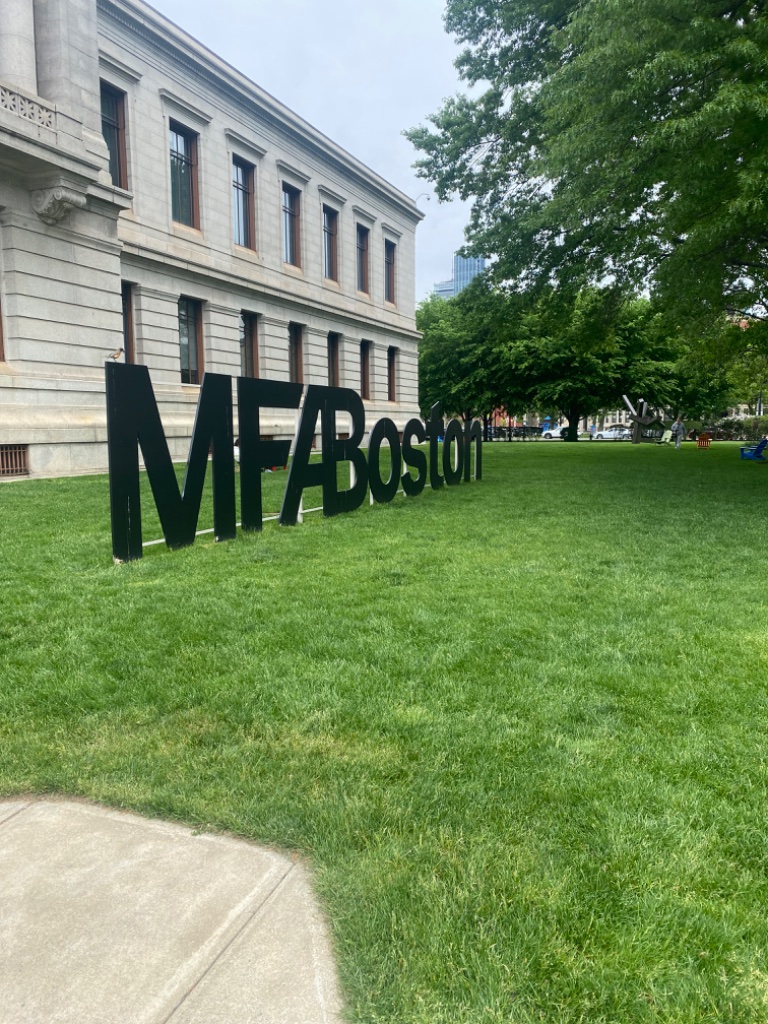
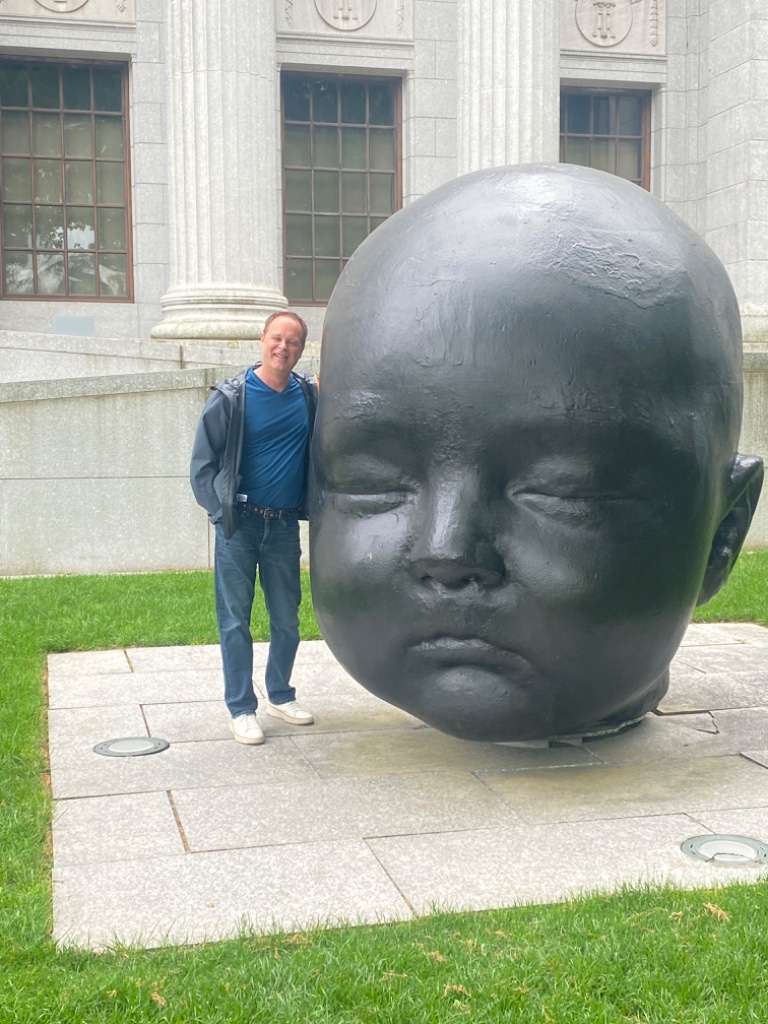
A day of quiet wonder at one of the world's great art museums — the Museum of Fine Arts, Boston. From the soaring Chihuly glass sculpture in the main atrium to the intimate galleries housing Degas, Renaissance devotional objects, and contemporary works, every room held something that stopped me in my tracks.
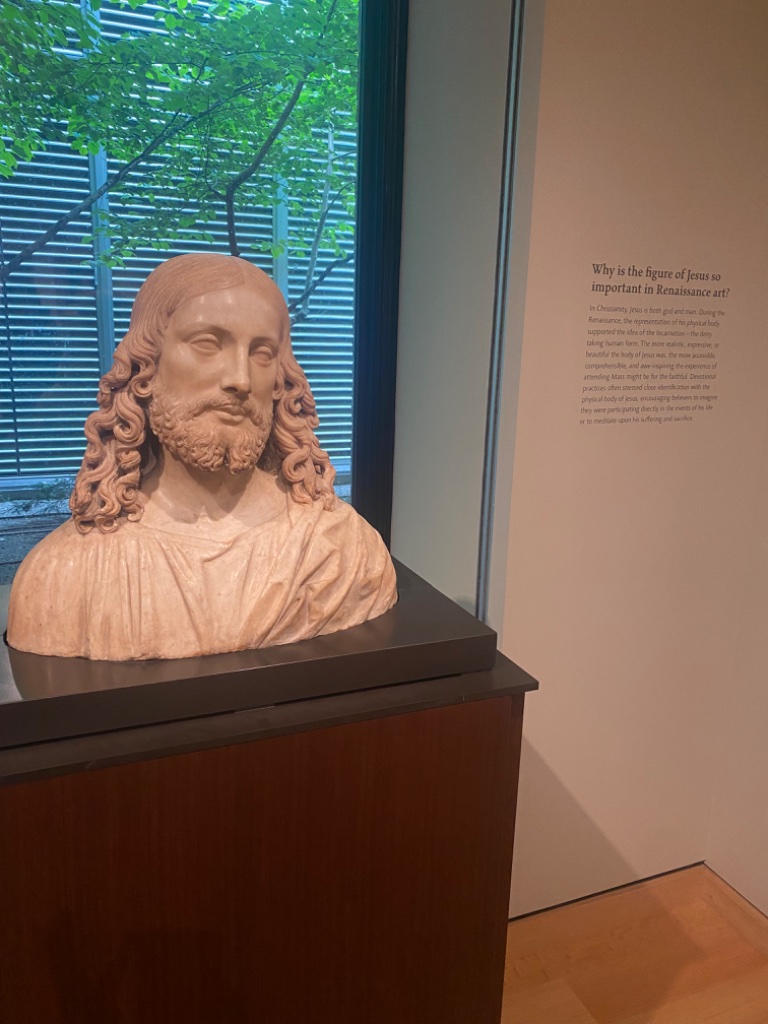
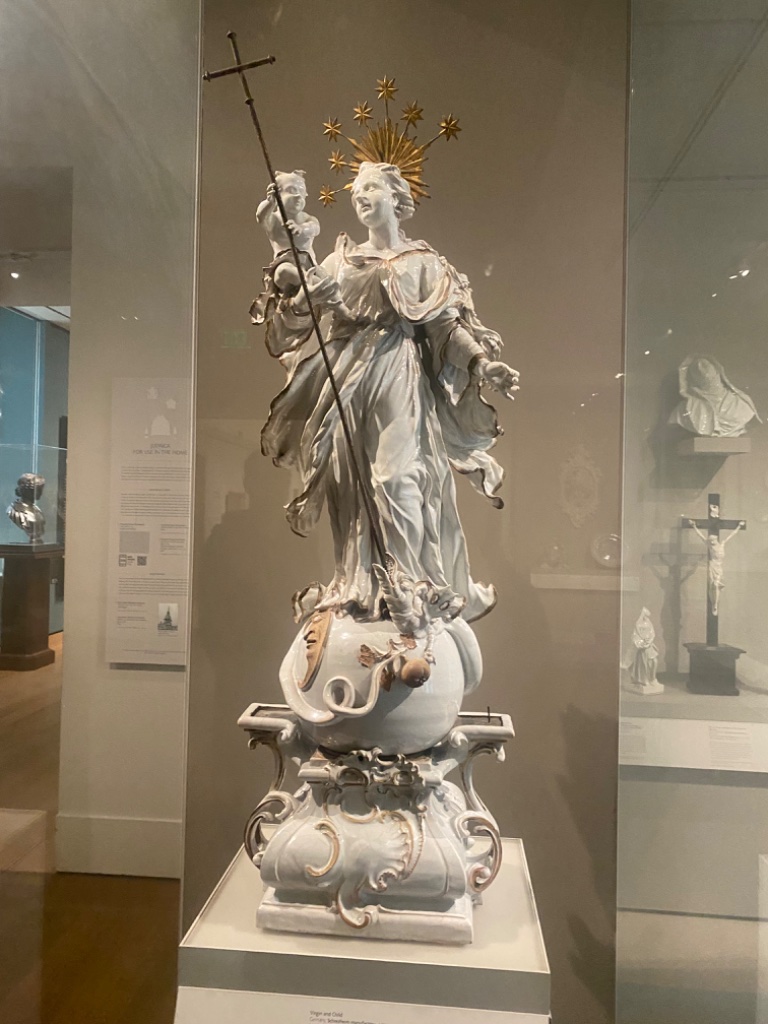
What moved me most deeply was encountering so many representations of Christ woven throughout centuries of human artistic expression — a marble bust of Jesus gazing serenely outward, a radiant porcelain Madonna holding aloft a golden cross. Art has always been one of the ways humanity reaches toward God, and today that truth was palpable.
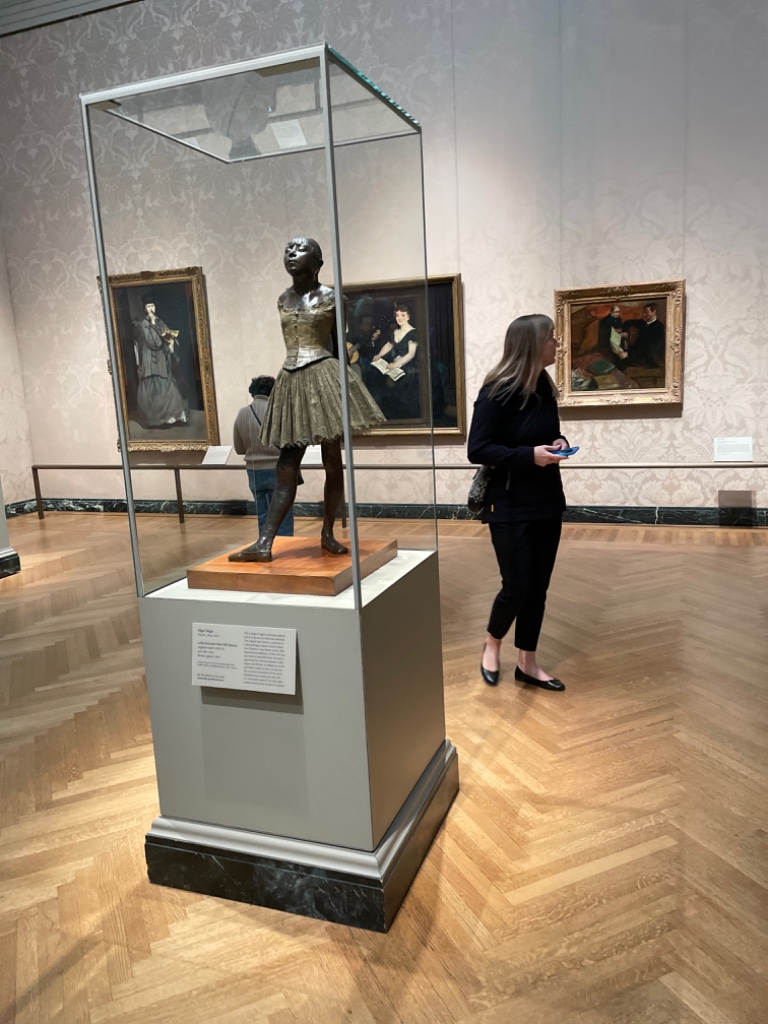
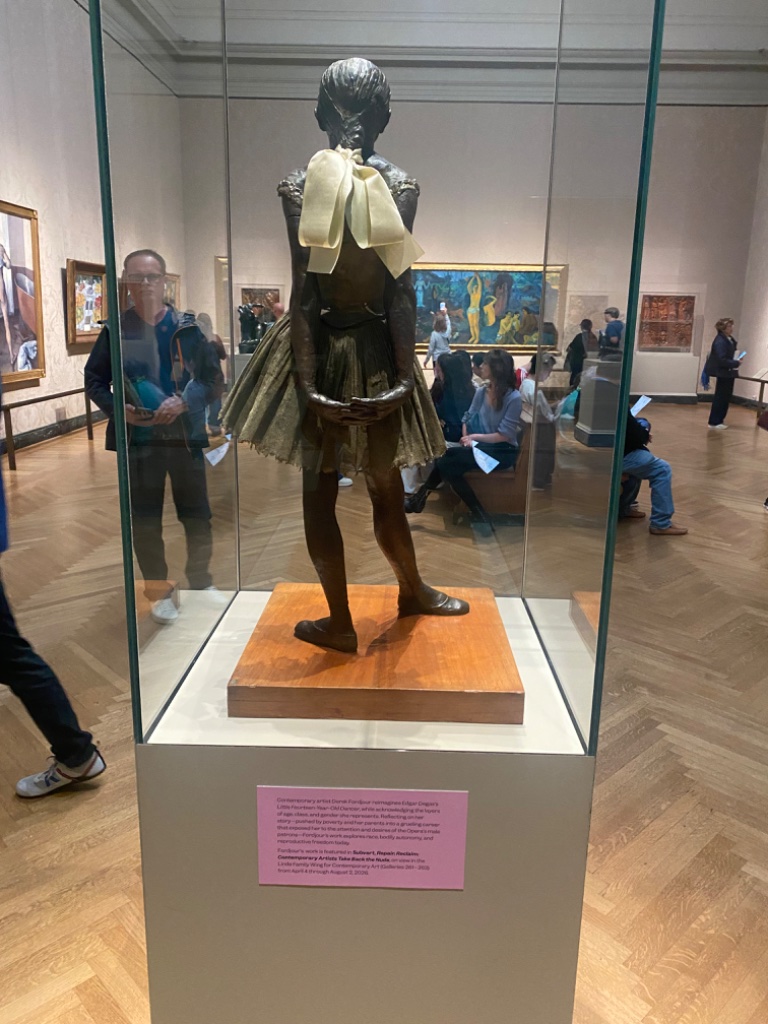
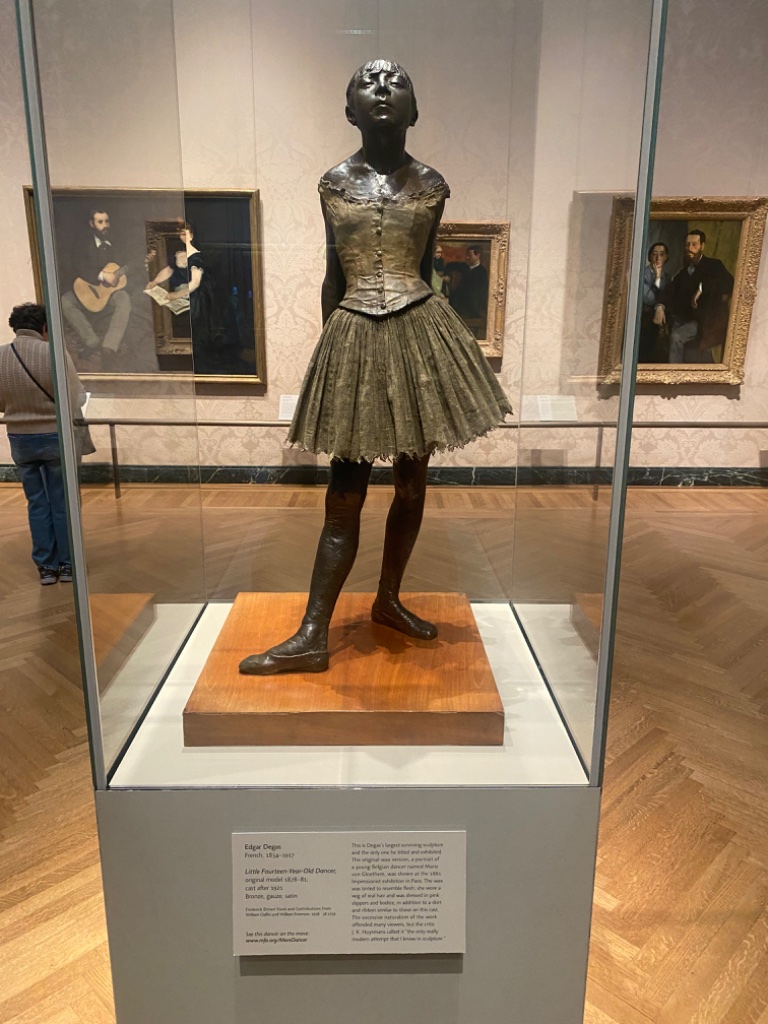
Standing before Degas' Little Fourteen-Year-Old Dancer — all four perspectives of her — I was reminded of the beauty and vulnerability of human becoming. The contemporary reinterpretation placed beside her was thought-provoking and quietly powerful.
A Special Reflection · The Japanese Garden
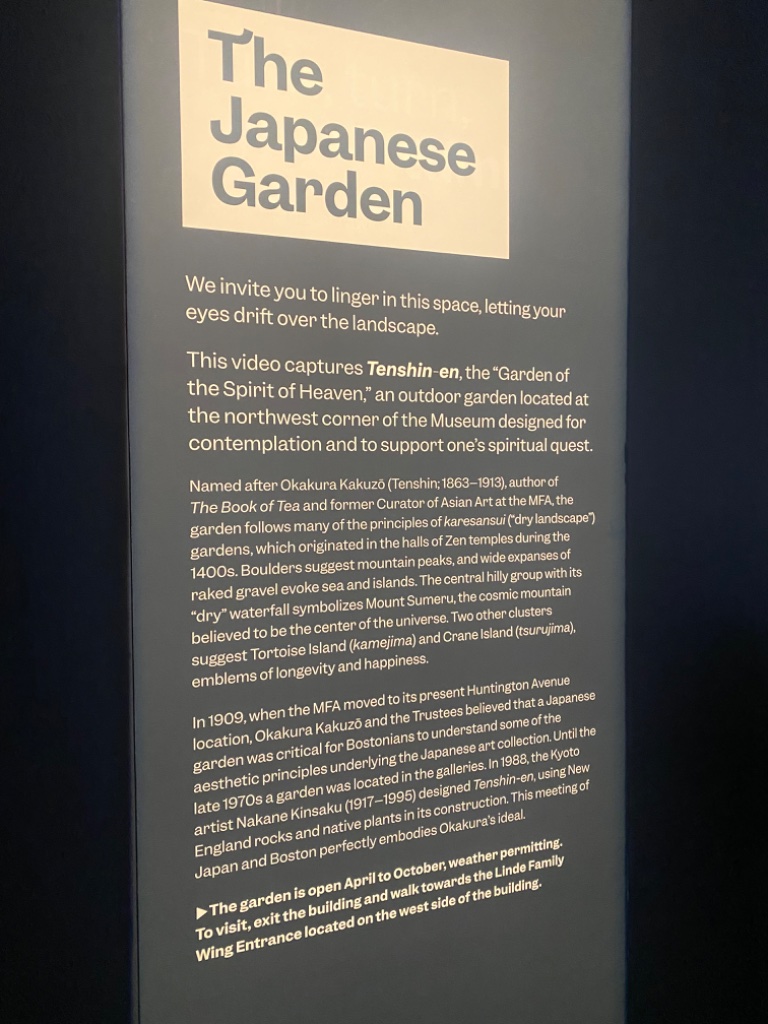

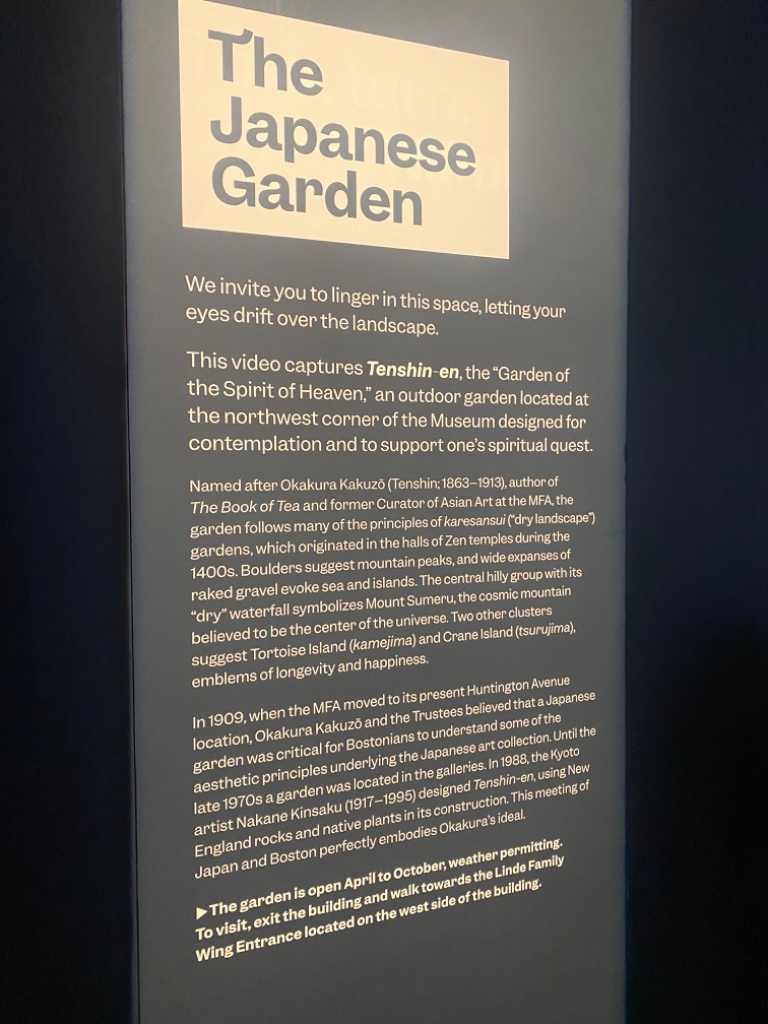
The day ended with a moment of unexpected stillness. I wandered into a darkened space where a projected film played on loop — the Tenshin-en, the "Garden of the Spirit of Heaven." This karesansui garden, tucked at the northwest corner of the museum, was designed for contemplation and to support one's spiritual quest. Raked gravel evoking sea and islands. Boulders representing mountain peaks. A dry waterfall symbolizing Mount Sumeru — the cosmic mountain at the centre of all things. I felt reflected in it. The Japanese garden became for me a mirror of this whole sabbatical season: intentional, unhurried, and quietly oriented toward the sacred.
May 23, 2026
Old North Church, Boston
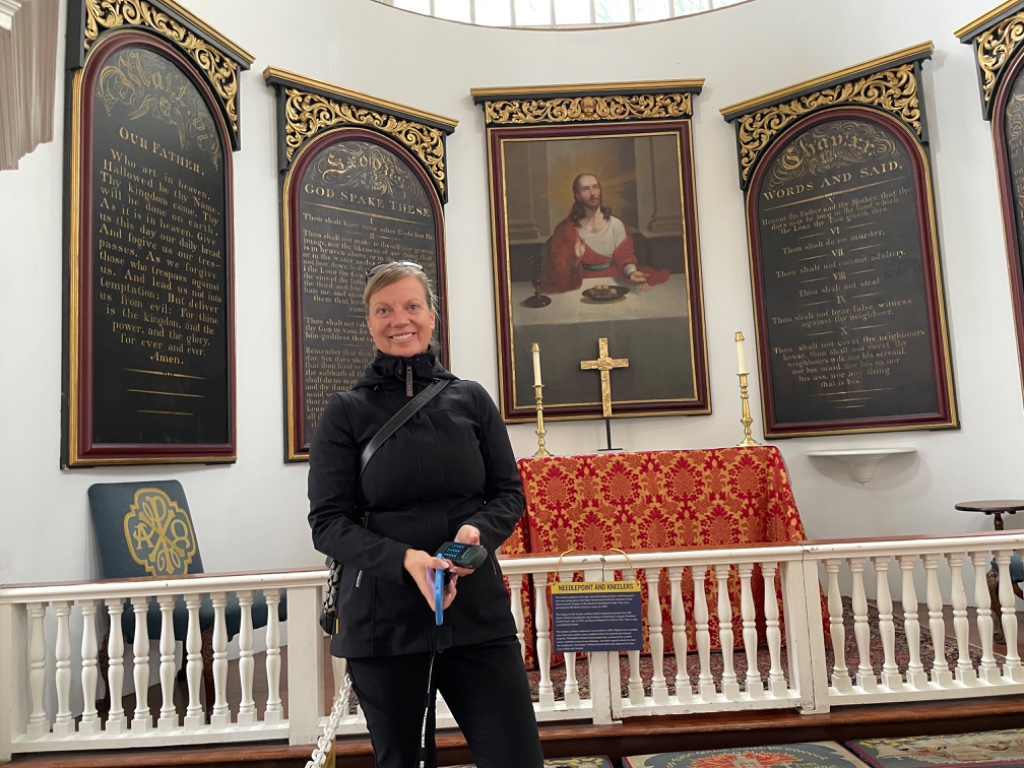
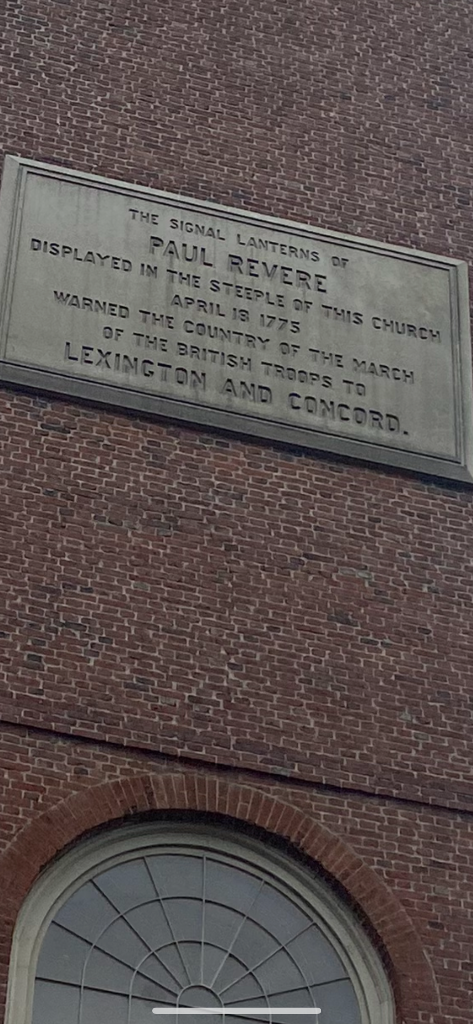
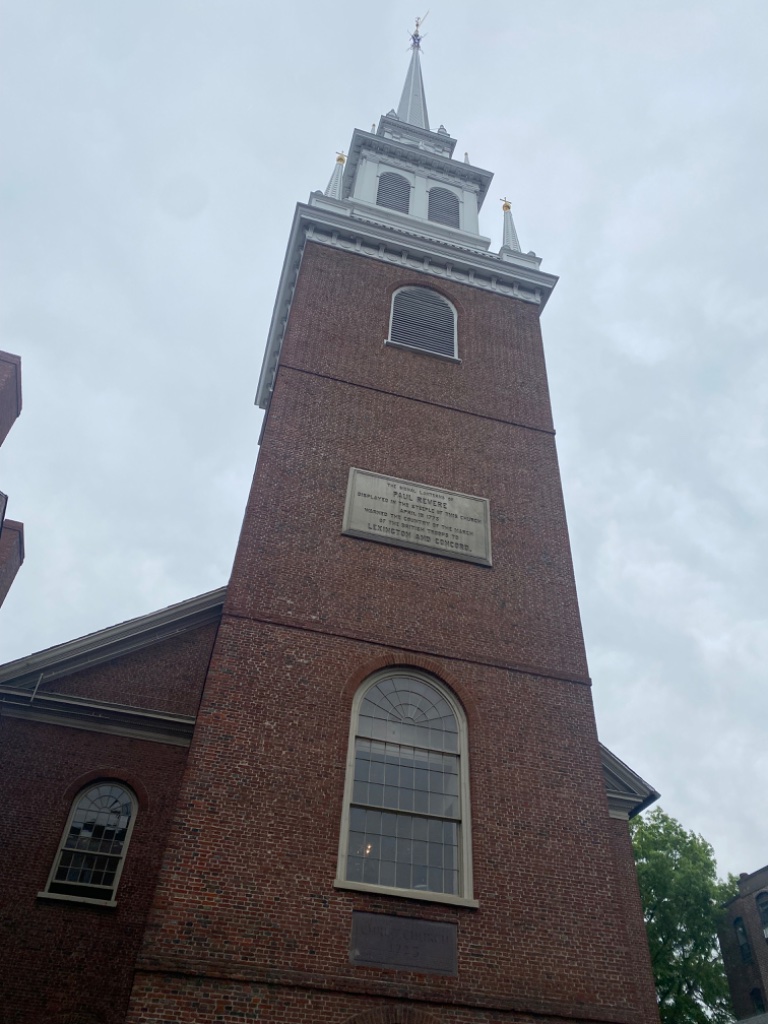
Christ Church in the City of Boston — known to all as Old North Church — stands as both a sacred landmark and a witness to history. It was from this very steeple that sexton Robert Newman hung two lanterns on the night of April 18, 1775, sending Paul Revere's signal: the British were coming by sea. That act of courage helped ignite a revolution.
Built in 1723, Old North is Boston's oldest surviving church building and today serves as an active Episcopal congregation — a tradition born of the American Revolution's untangling from the Church of England. To walk its aisles is to walk through centuries of faith, freedom, and the enduring conviction that God is present in the turning points of history.
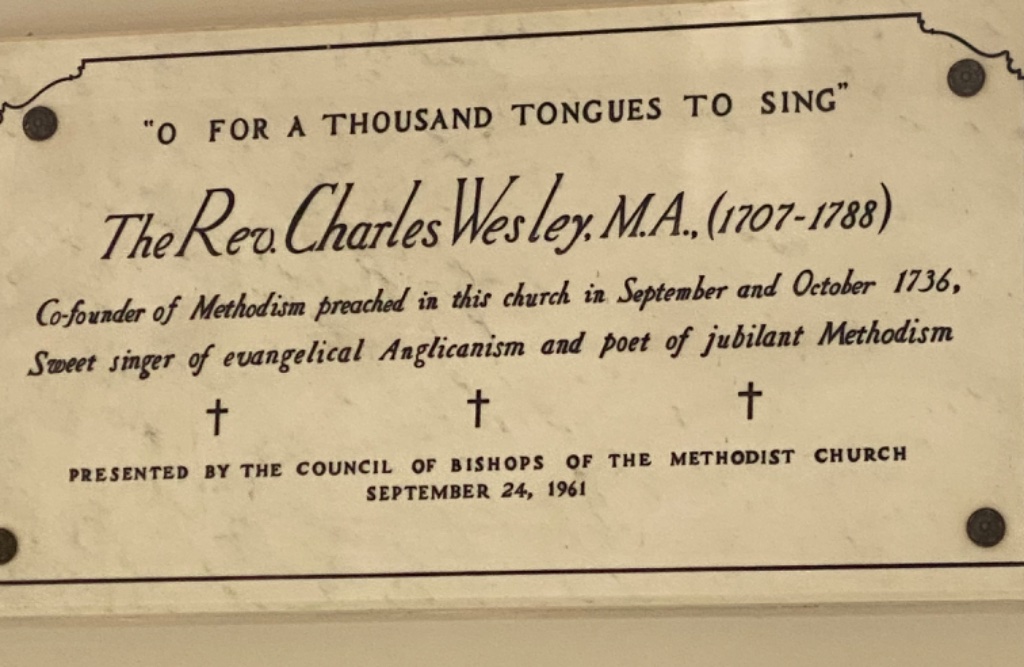
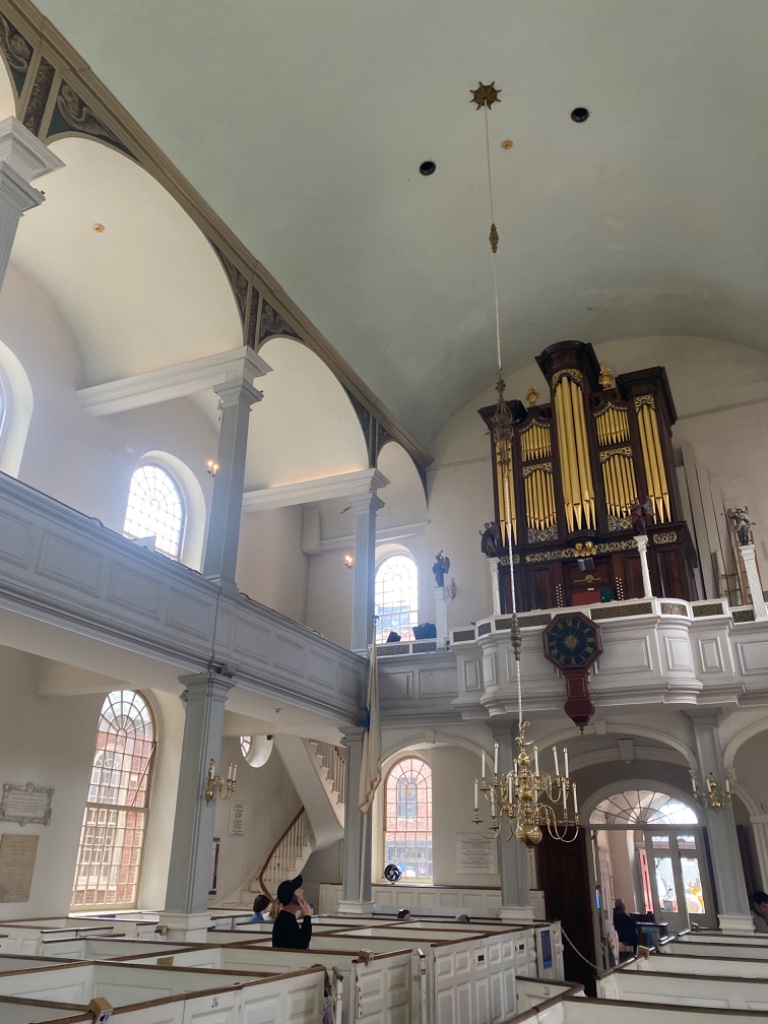
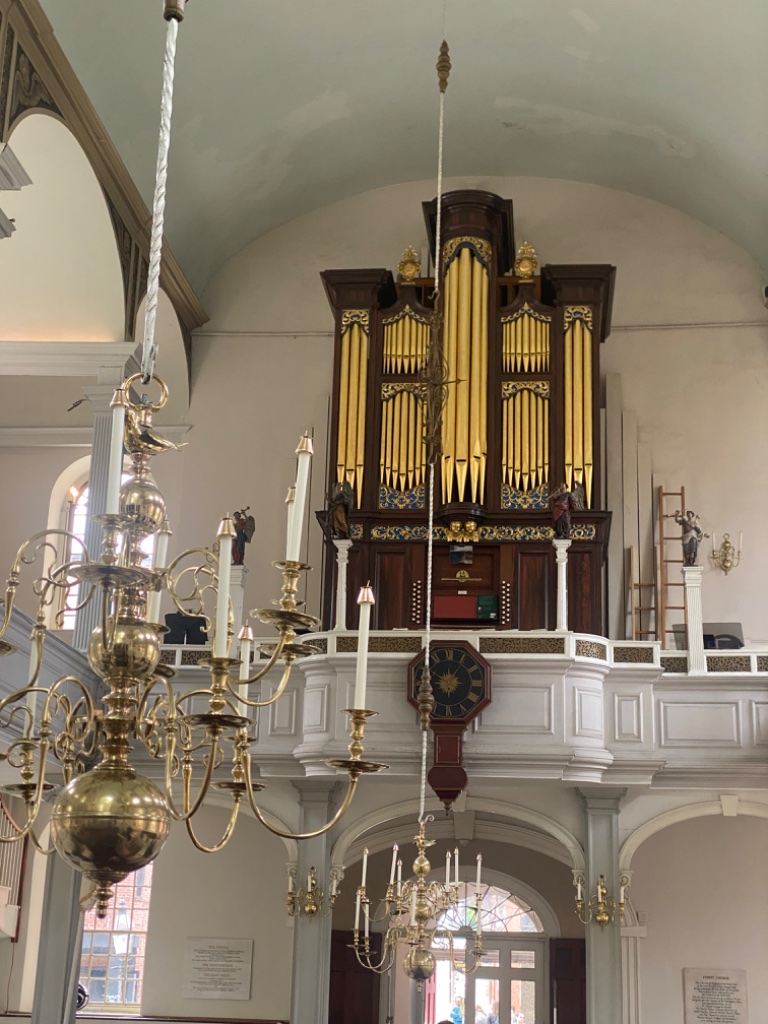
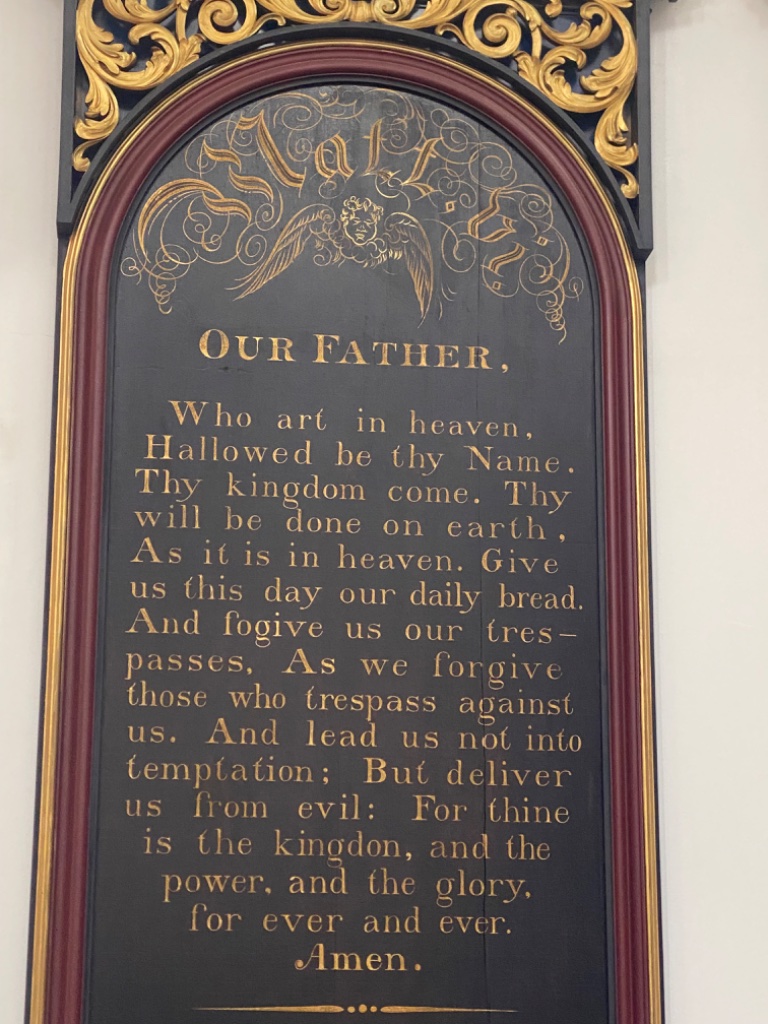
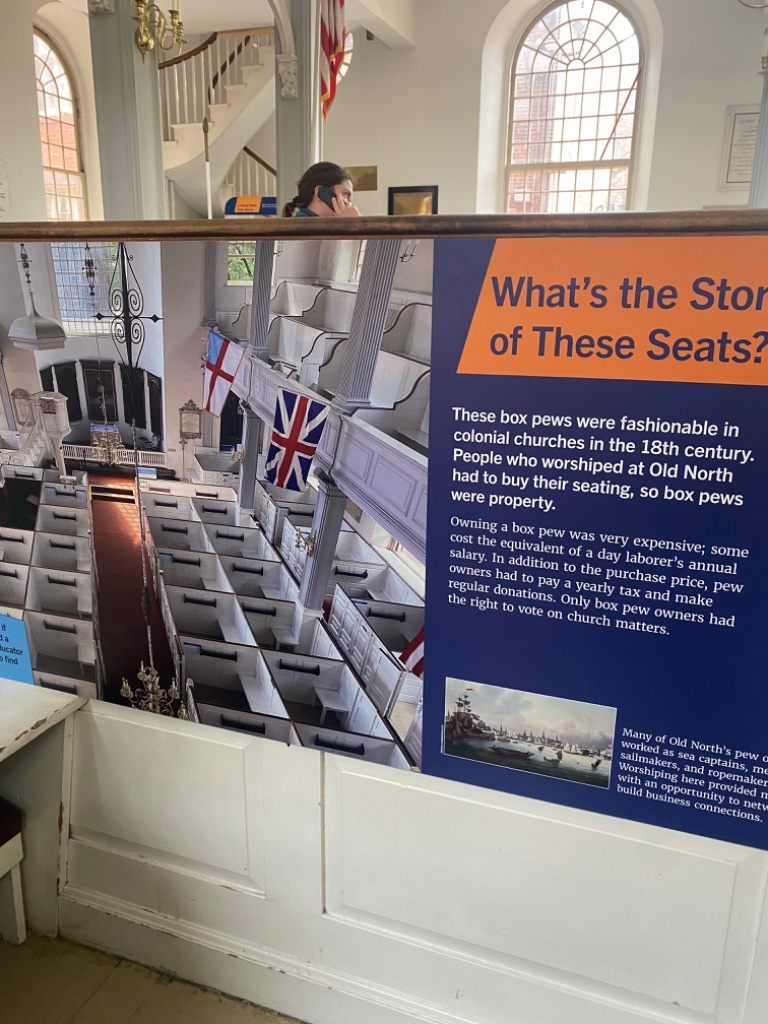
Inside, the sanctuary is breathtaking in its simplicity and grandeur — white box pews that colonial families once purchased as property, soaring brass chandeliers, a magnificent pipe organ, and gilded tablets bearing the Lord's Prayer, the Ten Commandments, and the Creed. A plaque on the wall honours The Reverend Charles Wesley (1707–1788), co-founder of Methodism, who preached here in September and October 1736 — a reminder of how deeply intertwined the threads of Christian witness have always been.
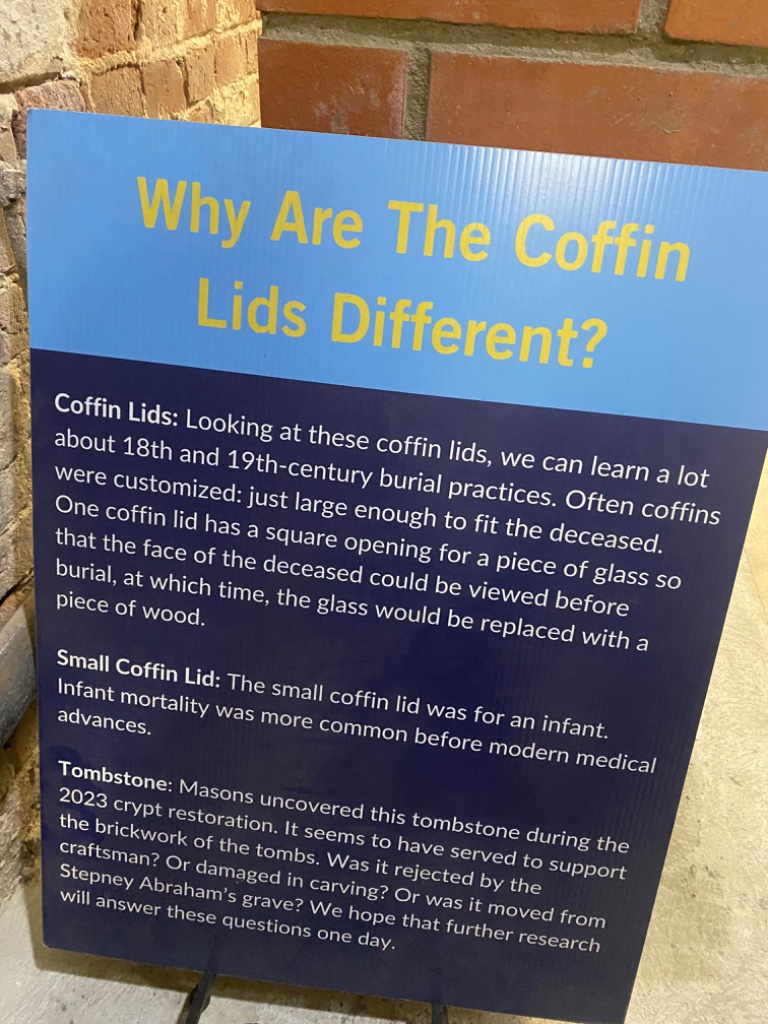
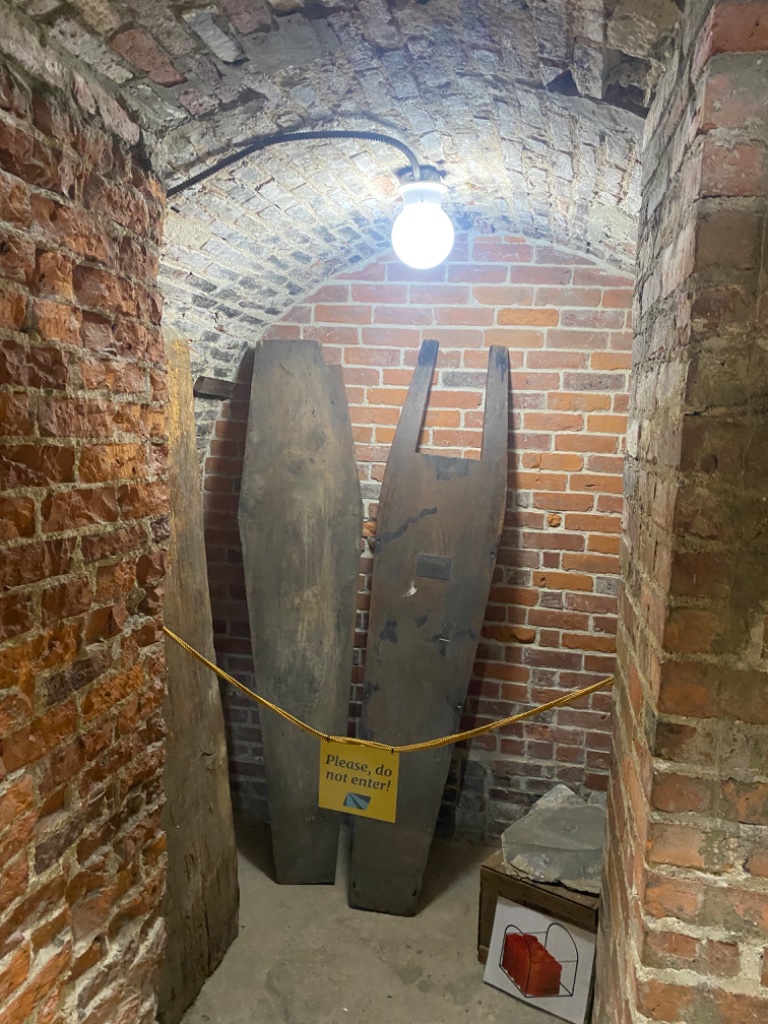
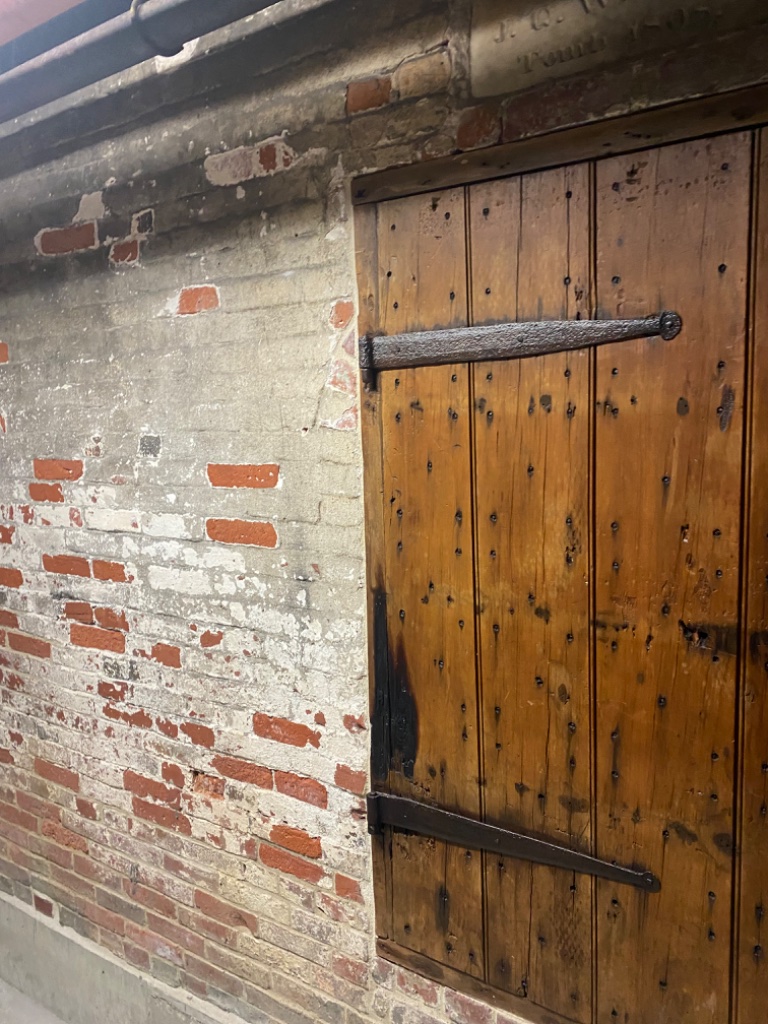
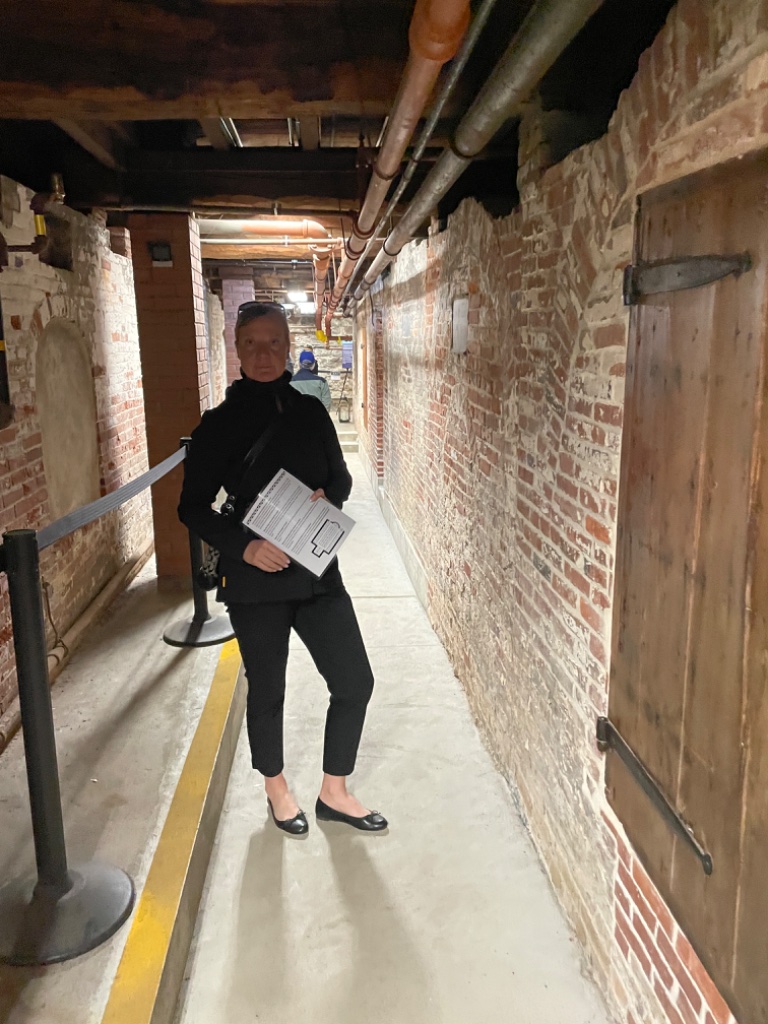
Beneath the church lies the crypt. Descending into that ancient passageway, I was moved in ways I did not anticipate. The brick walls, the worn wooden doors, the coffin lids displayed and explained with careful reverence — these remnants of mortality have a way of quietly clarifying what matters. When reminded of death, I am always drawn back to eternity. The brevity of this life — its beauty and its fragility — makes the promise of eternity with Christ not merely comforting, but luminous. We are, each of us, passing through. And that passage, when held in faith, becomes not a sorrow but a homecoming.
May 17, 2026
An Afternoon at the Apple Farm
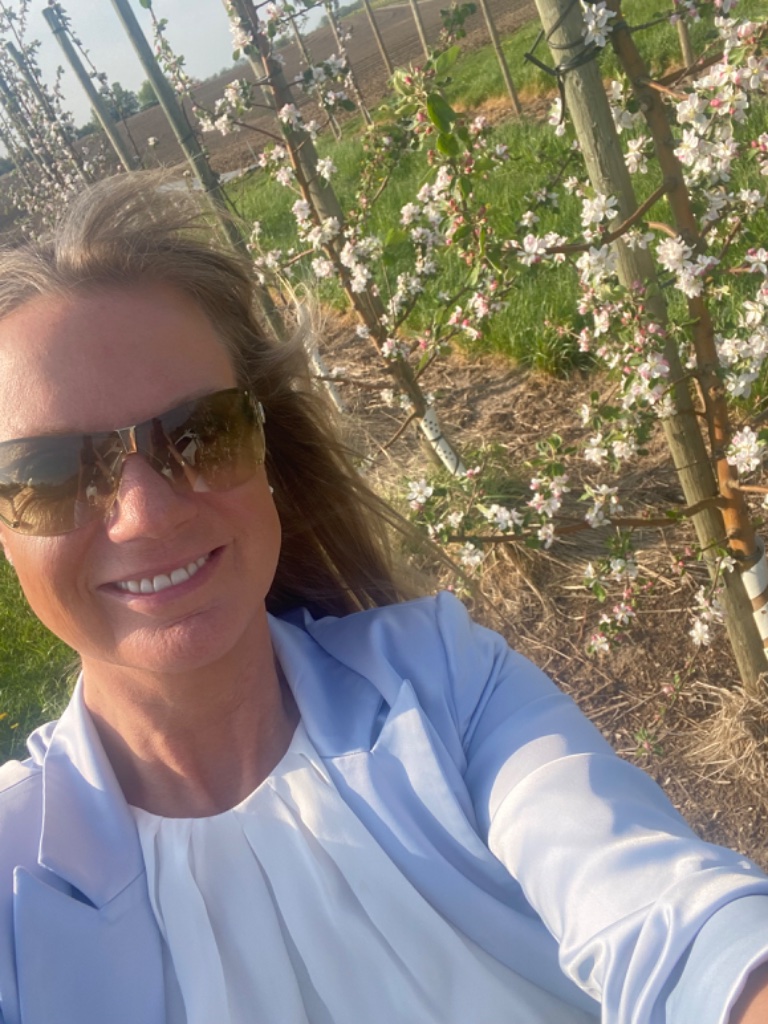
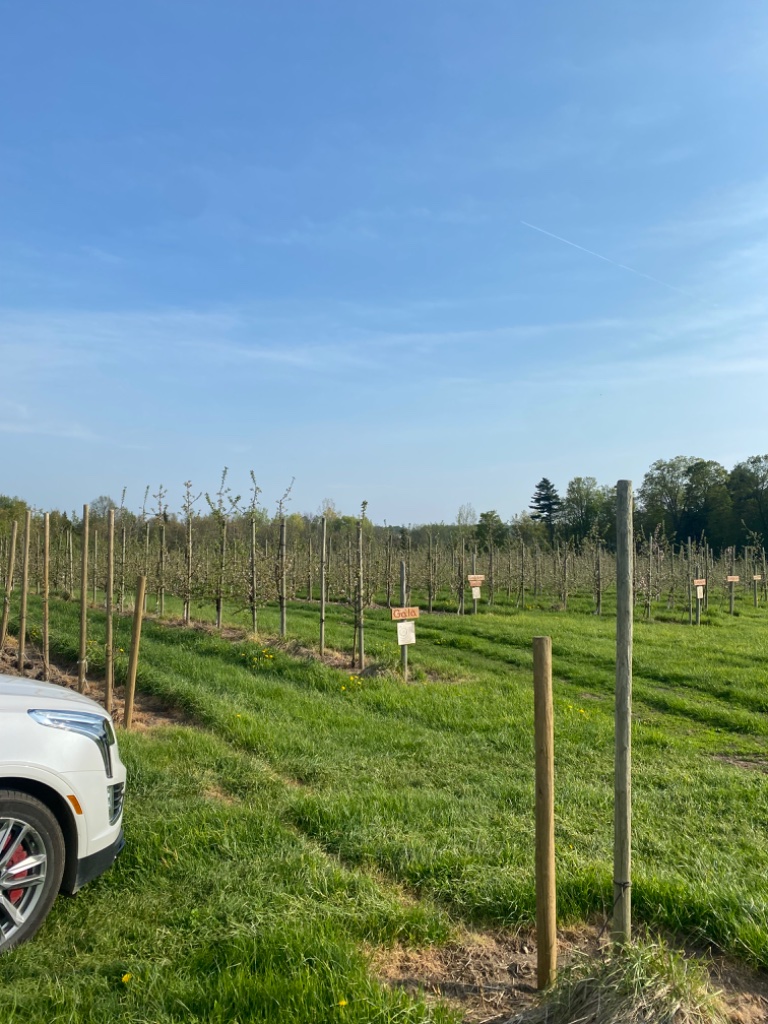
On the afternoon of May 17th, I had the unexpected pleasure of stepping into a world that moves to an entirely different rhythm — the quiet, unhurried world of the apple farm. What began as a spontaneous detour became a genuinely illuminating experience.
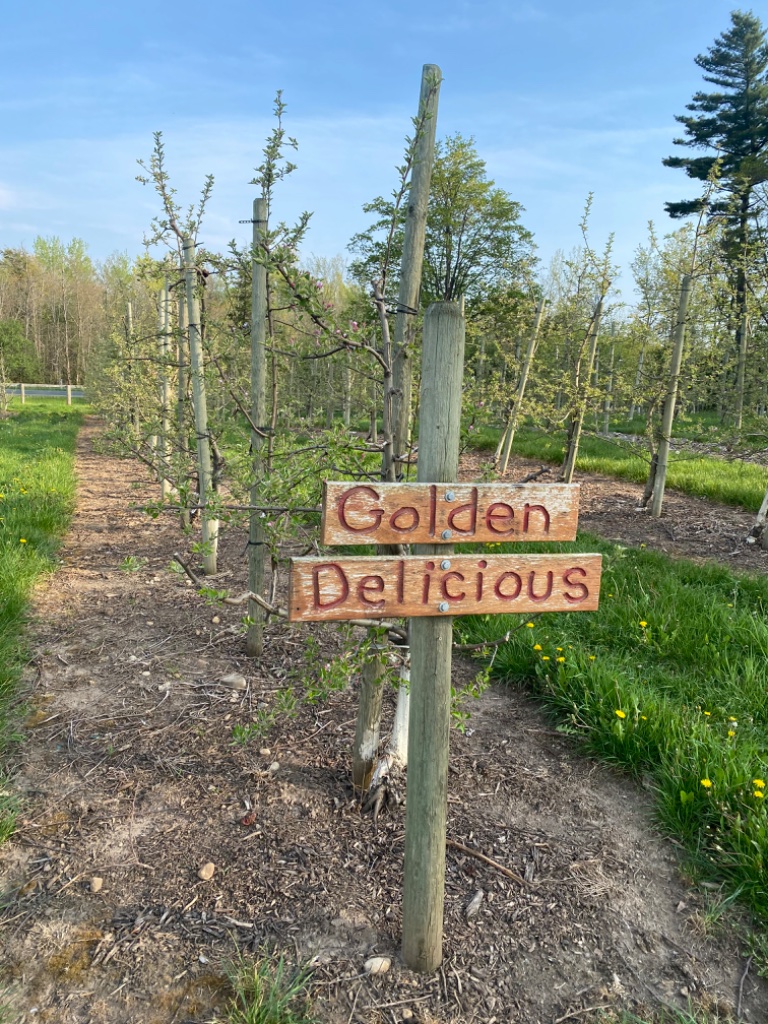
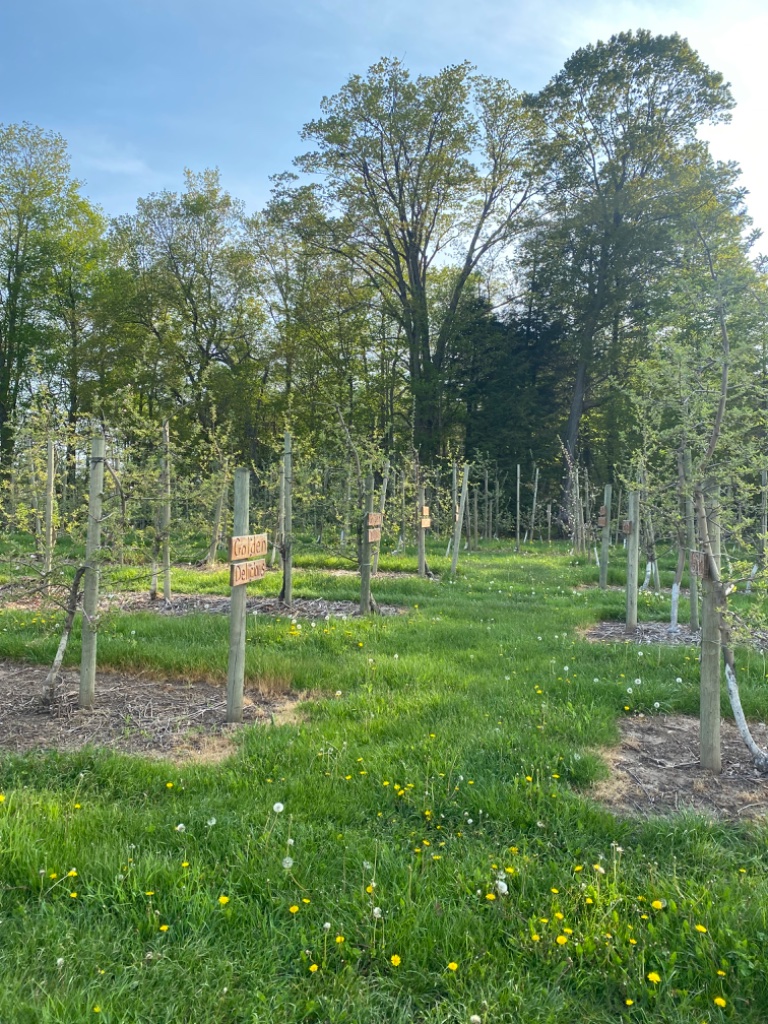
Walking the rows of carefully tended trees, each variety marked with its own handcrafted sign, I was struck by the extraordinary patience the apple business demands. There is a profound discipline in cultivating something that requires years of care before it yields its fruit — a truth that felt very much at home in this season of sabbatical.
I came away with a deepened respect for those who steward the land, and a heart quietly reminded that the most worthwhile things in life are rarely rushed.
April 25, 2025
A Serendipitous Encounter at Upper Canada Mall
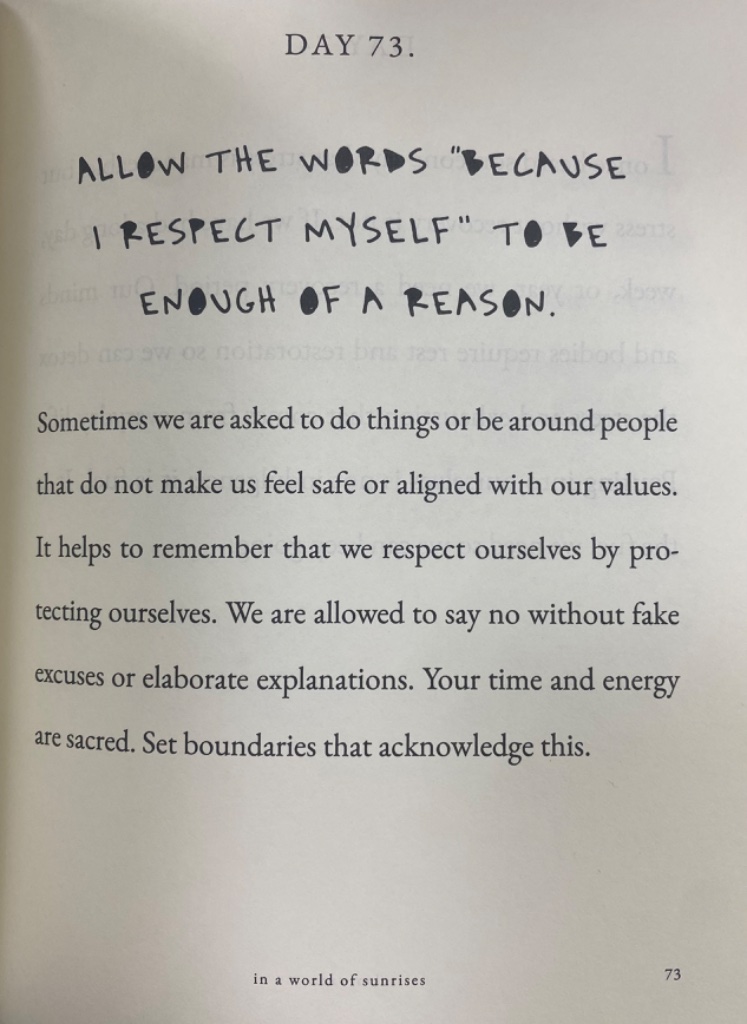
On April 25th, I took a leisurely stroll through Upper Canada Mall — a simple pleasure I had not afforded myself in quite some time. I wandered into the bookstore and, almost by instinct, reached for a book and opened it at random. The very first page that greeted me spoke directly to my heart.
This sabbatical time is sacred to me. I am learning, slowly and intentionally, to strengthen the quiet muscle of discernment — the practice of saying no to that which does not align with my deepest goals and values in this season of life.